Every spring, people are itching to get the mower out. The sun appears, the lawn looks a mess, and off they go. But cutting grass too early is one of the easiest ways to weaken a lawn before the season has even started.
Knowing when to start mowing – and why timing matters – makes the difference between a strong, healthy lawn and one that struggles all year.
Grass Doesn’t Care What Month It Is
Grass starts growing when soil temperatures rise, not when the calendar says it’s spring. Until the ground warms up, grass remains dormant.
In practical terms, grass begins to grow properly when daytime temperatures regularly sit above 7–8°C. In the UK, that’s usually March or April, but it varies every year and from garden to garden.
If you cut grass before it’s actively growing, it won’t recover well – it just sits there looking scalped and miserable.
Why Cutting Too Early Is a Bad Idea
Cold, Wet Ground Causes Damage
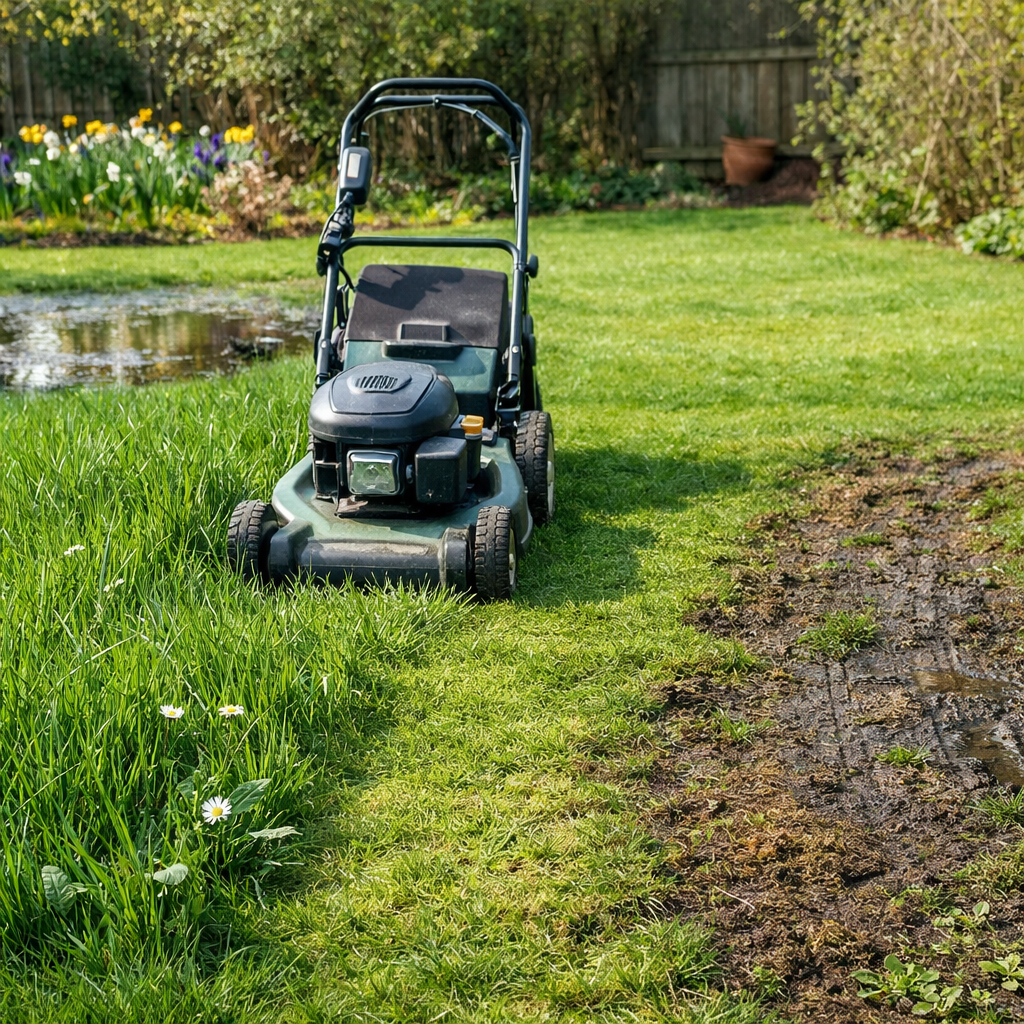
Early spring lawns are often soft and waterlogged. Mowing on wet ground:
- Compacts the soil
- Damages roots
- Leaves ruts and wheel marks
Compaction starves grass of air and water and can take months to undo.
Early Cuts Weaken the Grass
Grass needs leaf growth in spring to build strength after winter. Cutting too soon removes that energy source and encourages thin growth, moss and weeds.
A stressed lawn at the start of the season stays stressed.
When the Lawn Is Ready to Be Cut
Forget dates. Look at the lawn.
It’s ready when:
- The grass is clearly growing, not just lying flat
- It needs cutting again within a week or so
- The ground surface is dry enough to walk on without sinking
- The grass springs back underfoot
That’s the signal, not the first sunny weekend.
How to Do the First Cut Properly
The first cut sets the tone for the whole year.
- Set the mower high – take the tips off, nothing more
- Never remove more than one third of the grass height
- Use sharp blades to avoid tearing
- Choose a dry day
This encourages thicker growth without shocking the plant.
Why Timing Makes Life Easier Later
Starting mowing at the right time:
- Strengthens roots
- Helps grass outcompete moss and weeds
- Reduces stress and disease
- Creates a denser, healthier lawn
A patient start saves work later in the season.
Local Gardener’s Rule of Thumb
If the lawn looks untidy but isn’t growing, leave it alone.
If it’s growing fast enough to need another cut soon, you’re good to go.
The best lawns aren’t rushed – they’re managed.