
The Newspaper For Gardeners

Looking Out for Hedgehogs...

Hedgehogs are some of the most endearing creatures in our gardens, but winter...

Prune Apple Trees

Pruning is an essential task for maintaining healthy, productive apple trees. Proper pruning...

Dividing Snowdrops: A Step-by-Step...

Snowdrops (Galanthus spp.) are a cherished sight in late winter, heralding the arrival...

Force Rhubarb: A Gardener’s...

Forcing rhubarb is a traditional gardening technique that produces tender, sweet stalks, perfect...
Friday, January 9, 2026
QuestionsWhat’s the difference between Acanthus ‘Tasmanian Angel’ and Acanthus ‘Whitewater’?

What’s the difference between Acanthus ‘Tasmanian Angel’ and Acanthus ‘Whitewater’?

Acanthus ‘Tasmanian Angel’ vs Acanthus ‘Whitewater’

Variegated bear’s breeches are among the most architectural plants you can grow, and two of the most talked-about cultivars are Acanthus ‘Tasmanian Angel’ and Acanthus ‘Whitewater’. At first glance they look similar, but in the garden they behave quite differently.

Acanthus ‘Tasmanian Angel’

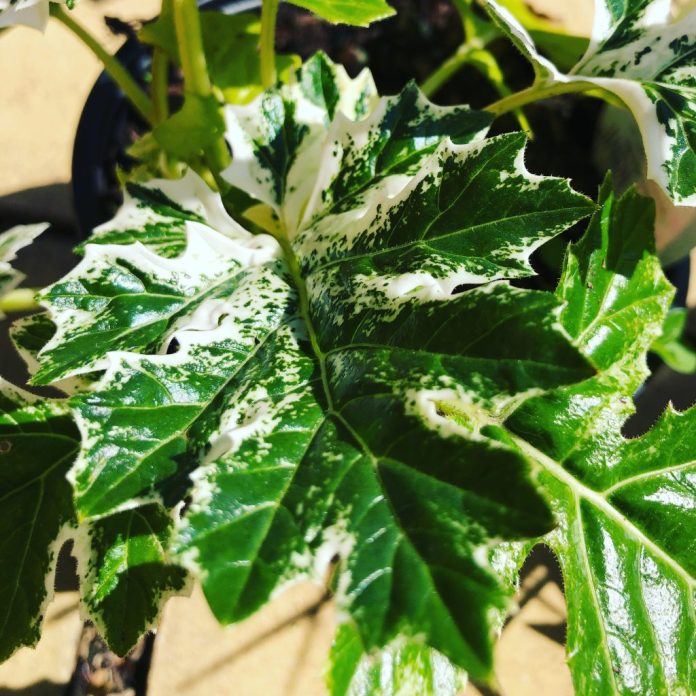
‘Tasmanian Angel’ is a variegated form of Acanthus mollis valued for its bold, glossy leaves edged and splashed with creamy white. The foliage is broad and dramatic, but the plant itself is relatively well-mannered compared with some other acanthus cultivars.

It typically forms a substantial clump rather than racing away through the border. In good conditions it reaches around 1 to 1.5 metres tall when in flower, with a similar spread. Flower spikes appear in summer, carrying white flowers softly flushed with pink.

In cooler or more exposed gardens, ‘Tasmanian Angel’ is often the more reliable choice. It tends to hold its shape better, and while the variegation can soften as the season progresses, it rarely becomes untidy or overly dominant.

Acanthus ‘Whitewater’

‘Whitewater’ was bred to be bigger, bolder and more vigorous. The leaves are more deeply cut than those of ‘Tasmanian Angel’ and heavily marbled with white, giving the plant a brighter, more dramatic appearance even from a distance.

This is a much more assertive plant. It grows faster, spreads more readily, and produces taller, more imposing flower spikes. In a generous border or large garden, it quickly becomes a focal point, but in smaller spaces it can feel overpowering if not given room.

The flowers are similar in colour to ‘Tasmanian Angel’, but the overall scale of the plant is larger, both in foliage and in height when in bloom. ‘Whitewater’ suits warm, fertile sites where its vigour can be an advantage rather than a problem.

Which one should you choose?

The choice comes down to space and temperament.

If you want a strong architectural plant that looks dramatic without taking over, Acanthus ‘Tasmanian Angel’ is usually the better option. It works well in mixed borders and is easier to live with in average-sized gardens.

If you want maximum impact and have the room to accommodate it, Acanthus ‘Whitewater’ delivers bigger foliage, stronger variegation, and a more commanding presence. It is best used where its size and vigour can be fully appreciated.

Both are excellent plants, but understanding their differences will help you place them where they can look their best rather than become a problem later on.


spot_img

lOOKING FOR MORE WORK?

The free and easy way to get more customers. Just join Find Local Gardeners.

If your Washingtonia robusta leaves are turning yellow, there could be several reasons behind this issue. Here are some common factors that can contribute...
Why Are My Fatsia Leaves Curling? Fatsia japonica is a popular evergreen shrub known for its large, glossy, tropical-looking leaves. So when those big, dramatic...
Does Hollyhock Rust Spread to Other Plants? Hollyhock rust is one of the most common and frustrating diseases gardeners encounter when growing hollyhocks. The appearance...
Why Are My Fig Leaves Going Yellow? Yellowing leaves on a fig tree can be worrying, especially when the plant otherwise looks healthy. Figs are...
Caladiums are tender tropical perennials grown for their striking foliage. They cannot survive frost, so in temperate regions like the UK, their tubers must...

Continue reading

Why are my washingtonia robusta leaves going yellow?

If your Washingtonia robusta leaves are turning yellow, there could be several reasons behind this issue. Here are some common factors that can contribute to yellowing leaves on Washingtonia robusta: Natural Aging: It is normal for older leaves to turn...

Why are my fatsia leaves curling

Why Are My Fatsia Leaves Curling? Fatsia japonica is a popular evergreen shrub known for its large, glossy, tropical-looking leaves. So when those big, dramatic leaves start to curl, it can be worrying. Leaf curling is usually a sign that...

Does hollyhock rust spread to other plants

Does Hollyhock Rust Spread to Other Plants? Hollyhock rust is one of the most common and frustrating diseases gardeners encounter when growing hollyhocks. The appearance of orange-brown pustules on the leaves often raises an immediate concern: will it spread to...

SUBSCRIBE TO OUR YOUTUBE CHANNEL

Plant advice for unusual species plus updates from our tropical garden

SUBSCRIBE