The Newspaper For Gardeners

Looking Out for Hedgehogs...

Hedgehogs are some of the most endearing creatures in our gardens, but winter...

Prune Apple Trees

Pruning is an essential task for maintaining healthy, productive apple trees. Proper pruning...

Dividing Snowdrops: A Step-by-Step...

Snowdrops (Galanthus spp.) are a cherished sight in late winter, heralding the arrival...

Force Rhubarb: A Gardener’s...

Forcing rhubarb is a traditional gardening technique that produces tender, sweet stalks, perfect...
Sunday, January 11, 2026
GardenWhat temperatures will Musa Basjoo go down to?

What temperatures will Musa Basjoo go down to?

The leaves of Muso Basjoo will stop growing at 12 degrees Centigrade. They will start to get leaf damage at zero degrees centigrade.

A young pseudostem will die at a few degrees below freezing but a more mature stem of a thickness of 4-6 inches will tolerate temperatures down to minus 8 degrees Centigrade.

The rhizome roots will survive prolonged periods of average sub zero temperatures (0 to –8 degrees centigrade) but the leaves and stem will die back if unprotected

spot_img

lOOKING FOR MORE WORK?

The free and easy way to get more customers. Just join Find Local Gardeners.

Creating a tropical-style garden can be a rewarding endeavor, especially if you choose flowers that not only add vibrant colors but also bring unique...
Tigridias, also known as tiger flowers or Mexican shellflowers, are eye-catching bulbs that add exotic flair to a garden with their brightly colored, intricate...
Tree ferns, such as the popular Dicksonia antarctica, are prized for their exotic beauty and structural presence, making them a focal point in many...
While all cannas benefit from winter protection in the UK, some varieties are notably hardier than others. These differences in hardiness depend on their...
Ensete ventricosum ‘Maurelii’, commonly known as the red Abyssinian banana, is a stunning focal point in tropical-style gardens, thanks to its bold, red-tinged leaves and...

The crazy world of bananas

The history of bananas traces back thousands of years to Southeast Asia, where the banana plant (Musa species) is believed to have been first domesticated. The earliest records suggest that bananas were cultivated in Papua New Guinea and the...

Protect Musa basjoo Bananas

Musa basjoo, also known as the hardy banana, is a popular choice for UK gardens thanks to its lush, tropical appearance and impressive cold tolerance. Native to subtropical regions of Japan, Musa basjoo can survive temperatures as low as...

What’s the best way to over winter Musa Basjoo bananas?

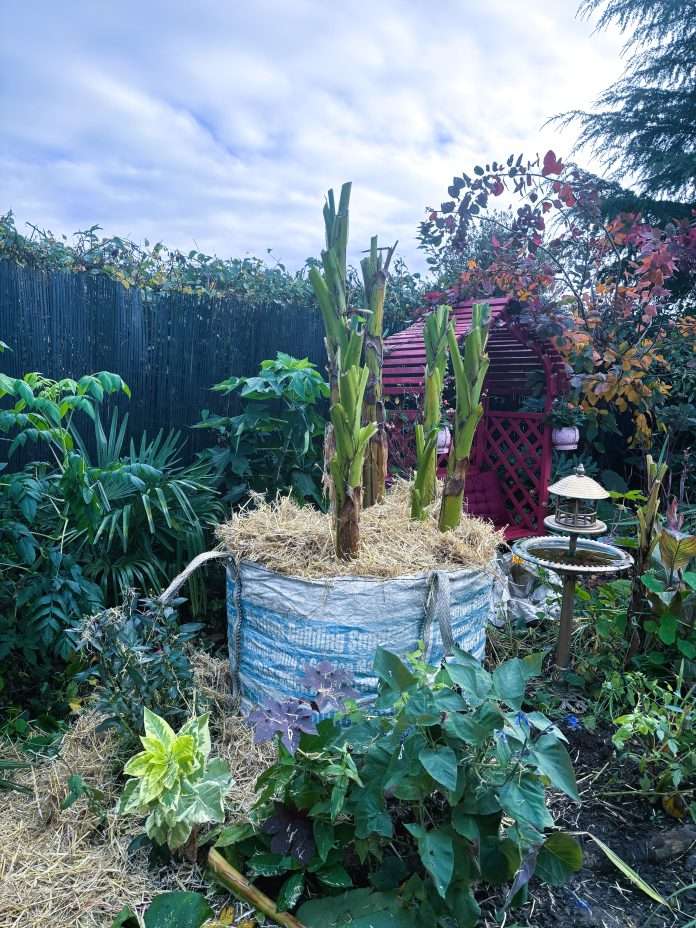
The first thing to do though is to cut off the leaves. Do this after the temperature has gone low enough to blacken the edges of the leaves. This triggers the plant to go in to a state of...

Why are my banana leaves going yellow?

Musa Basjoo are famous for their wonderful paddle leaves so when those leaves start turning yellow it is a cause for concern. Although bananas like to be well watered they also don’t like sitting with their roots in waterlogged...

Continue reading

Five Yellow Flowers for a Tropical-Style Garden: Exotic Blooms with Unique Appeal

Creating a tropical-style garden can be a rewarding endeavor, especially if you choose flowers that not only add vibrant colors but also bring unique textures and interesting stories to your garden. Here are five excellent choices to elevate your...

How hardy are tigridias in a uk garden?

Tigridias, also known as tiger flowers or Mexican shellflowers, are eye-catching bulbs that add exotic flair to a garden with their brightly colored, intricate blooms. However, they aren’t fully hardy in the UK, as they’re native to warm, frost-free...

What’s the best way to protect tree ferns over winter?

Tree ferns, such as the popular Dicksonia antarctica, are prized for their exotic beauty and structural presence, making them a focal point in many UK gardens. However, as native plants of the cool, moist forests of Australia and New...

SUBSCRIBE TO OUR YOUTUBE CHANNEL

Plant advice for unusual species plus updates from our tropical garden

SUBSCRIBE