
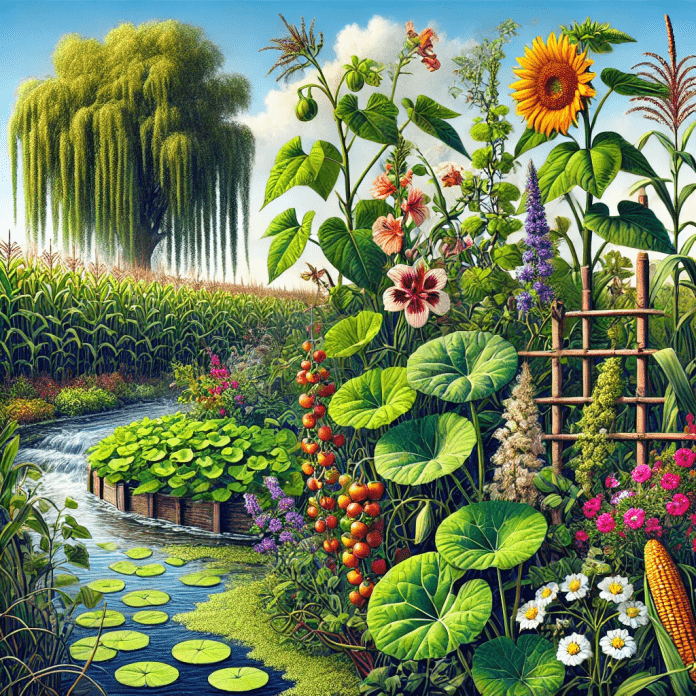
Plants are the backbone of life on Earth, not only providing food and oxygen but also playing a crucial role in maintaining the planet’s ecological balance. Two fundamental processes enable plants to perform these functions: photosynthesis and respiration. Understanding these processes is essential to appreciate how plants sustain life and the intricate balance they maintain within ecosystems.
Photosynthesis: Capturing Light Energy
Photosynthesis is the process by which plants convert light energy into chemical energy stored in glucose. This occurs primarily in the chloroplasts, which contain the green pigment chlorophyll. Chlorophyll absorbs light, predominantly in the blue and red wavelengths, and uses it to drive the synthesis of glucose from carbon dioxide (CO₂) and water (H₂O).
The Photosynthesis Equation:
The photosynthesis equation is: 6CO₂ + 6H₂O + light →Chlorophyll→ C₆H₁₂O₆ + 6O₂
This represents:
- Inputs: Carbon dioxide (CO₂), water (H₂O), and light energy.
- Outputs: Glucose (C₆H₁₂O₆) and oxygen (O₂).
Key Steps in Photosynthesis:
- Light-dependent Reactions:
- Occur in the thylakoid membranes of chloroplasts.
- Use light energy to split water molecules (“photolysis”), releasing oxygen and producing ATP and NADPH.
- Light-independent Reactions (Calvin Cycle):
- Take place in the stroma of chloroplasts.
- Utilize ATP and NADPH to fix carbon dioxide into glucose.
Photosynthesis not only provides energy for the plant but also produces oxygen, a vital byproduct that supports life on Earth.
Respiration: Releasing Stored Energy
While photosynthesis captures energy, respiration is the process by which plants release the stored energy in glucose to power their cellular activities. Unlike photosynthesis, respiration occurs in all living cells of the plant, both day and night, and primarily takes place in the mitochondria.
The Respiration Equation:
The respiration equation is: C₆H₁₂O₆ + O₂ → 6CO₂ + 6H₂O + Energy (ATP)
This represents:
- Inputs: Glucose (C₆H₁₂O₆) and oxygen (O₂).
- Outputs: Carbon dioxide (CO₂), water (H₂O), and energy in the form of ATP.
Key Stages of Respiration:
- Glycolysis:
- Occurs in the cytoplasm.
- Breaks down glucose into two molecules of pyruvate, producing a small amount of ATP.
- Krebs Cycle (Citric Acid Cycle):
- Takes place in the mitochondria.
- Pyruvate is further broken down, releasing CO₂ and generating high-energy electron carriers (NADH and FADH₂).
- Electron Transport Chain:
- Occurs in the mitochondrial membrane.
- Uses electrons from NADH and FADH₂ to produce a large amount of ATP, with oxygen acting as the final electron acceptor.
Balancing Oxygen Production and Consumption
Plants play a dual role in the oxygen cycle. During photosynthesis, they release oxygen as a byproduct, but they also consume oxygen during respiration to produce energy. On average, a single mature tree produces about 260 pounds (118 kilograms) of oxygen annually. However, it also consumes about half of this oxygen through respiration. This results in a net gain of approximately 130 pounds (59 kilograms) of oxygen per year per tree.
On a global scale, terrestrial plants and phytoplankton in the oceans produce an estimated 330 billion tons of oxygen annually. Approximately 60% of this oxygen is consumed by plants themselves, animals, and microorganisms through respiration. The remaining 40% contributes to the atmospheric oxygen supply, maintaining the balance necessary for life on Earth.
CO₂ and Oxygen Levels: Trends and Impacts
Carbon Dioxide (CO₂):
- Current Levels: Atmospheric CO₂ levels have surpassed 420 parts per million (ppm), which is equivalent to about 0.042% of the atmosphere, compared to pre-industrial levels of about 0.028%.
- Trend: CO₂ levels are increasing due to human activities such as fossil fuel combustion, deforestation, and industrial processes.
- Impact on Plants: Higher CO₂ levels can enhance photosynthesis (a phenomenon known as CO₂ fertilization), but this effect diminishes at extreme levels or under limiting conditions such as nutrient or water shortages.
Oxygen (O₂):
- Current Levels: Atmospheric oxygen makes up about 21% (210,000 ppm) of the Earth’s atmosphere.
- Trend: Oxygen levels are relatively stable but show a very slight decline over time due to increased CO₂ emissions and oxygen consumption during fossil fuel combustion and other industrial processes.
- Impact on Ecosystems: While the decline is minimal and not immediately harmful, it reflects the broader shifts in the global carbon and oxygen cycles caused by human activity.
Interdependence of Photosynthesis and Respiration
Photosynthesis and respiration are complementary processes. Photosynthesis produces glucose and oxygen, which are essential for respiration. In turn, respiration generates CO₂ and water, which are substrates for photosynthesis. This cyclical relationship maintains the balance of oxygen and carbon dioxide in the atmosphere and ensures the energy flow within ecosystems.
Factors Affecting Photosynthesis and Respiration
Photosynthesis:
- Light Intensity: Higher light levels increase the rate of photosynthesis until a saturation point is reached.
- Carbon Dioxide Concentration: Higher CO₂ levels typically enhance photosynthesis.
- Temperature: Optimal temperatures maximize enzyme efficiency, while extremes can inhibit the process.
Respiration:
- Temperature: Higher temperatures generally increase the rate of respiration.
- Oxygen Availability: Sufficient oxygen is necessary for efficient energy production.
- Glucose Availability: A steady supply of glucose ensures sustained respiration.
The Bigger Picture
Photosynthesis and respiration are fundamental to life on Earth. These processes drive the energy cycles of ecosystems, support food production, and regulate atmospheric gases. By studying and understanding these mechanisms, scientists and gardeners alike can better support plant health and productivity, contributing to a more sustainable and balanced environment.