Welcome to Local Gardener, the podcast where we explore the fascinating world of plants, gardening, and everything green. Today, we’re talking about plant types—how they’re classified, what makes them unique, and how understanding these differences can help you create a thriving garden.
From mosses and ferns to vibrant flowering plants, we’ll cover it all. Let’s dig into the roots of the plant kingdom and discover its incredible diversity!
Non-Vascular Plants – The Humble Pioneers
Let’s start with the simplest plants, non-vascular plants:
1. Mosses
• Example: Sphagnum moss, used in gardening to retain moisture.
• Found in shady, damp areas, they can carpet forest floors or grow on rocks.
2. Liverworts and Hornworts
• Liverworts like Marchantia often grow on damp soil or tree bark.
• Hornworts are less common but thrive in moist environments.
These plants are small but vital, often stabilizing soil and creating conditions for other plants to grow.
Vascular Plants – The Architects of Growth
Vascular plants include ferns, trees, and flowering plants. They have xylem and phloem to transport water and nutrients, allowing them to grow tall and complex.
1. Seedless Vascular Plants
• Ferns
• Example: Dryopteris filix-mas (male fern), often used in shaded gardens.
• Their iconic fronds unfurl in a process called “fiddleheading.”
• Horsetails
• Example: Equisetum, known for its segmented, bamboo-like appearance.
(Trivia: Did you know that ancient ferns and horsetails formed the coal deposits we use today?)
Segment 3: Seed Plants – Gymnosperms vs. Angiosperms
Gymnosperms
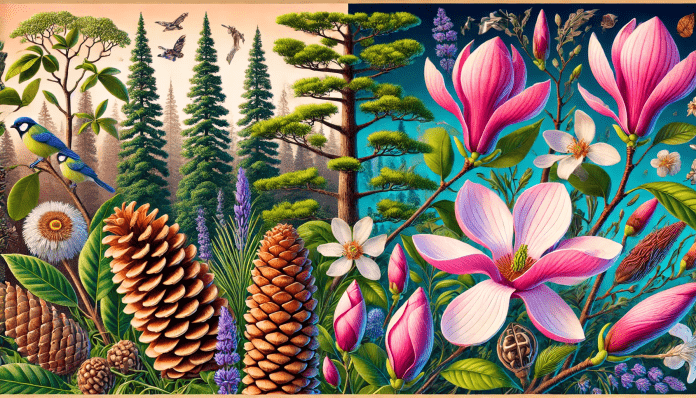
These plants don’t produce flowers or fruits. Instead, their seeds are exposed.
1. Conifers
• Example: Pinus sylvestris (Scots pine), a hardy evergreen.
• Perfect for year-round structure in gardens.
2. Ginkgo
• Example: Ginkgo biloba, the “living fossil,” with fan-shaped leaves.
• Often planted in urban areas for its resilience.
3. Cycads
• Example: Cycas revoluta (sago palm), a tropical-style garden favorite.
Angiosperms
Flowering plants, the most diverse and abundant group.
1. Deciduous Trees
• Example: Acer palmatum (Japanese maple), prized for its stunning autumn colors.
2. Grasses
• Example: Miscanthus sinensis (maiden grass), great for ornamental borders.
3. Flowering Shrubs
• Example: Rosa rugosa (rugosa rose), a hardy shrub with fragrant flowers.
Botanically speaking, all flowering plants (angiosperms) produce “fruit”, even if they do not produce what we commonly recognize as fruit, like apples or berries. In botanical terms, a fruit is defined as the mature ovary of a flower, which contains the seeds. However, the type of fruit and its appearance can vary widely depending on the plant.
Why All Flowering Plants Produce Fruit
1. Fruit as a Reproductive Structure
• In flowering plants, after pollination and fertilization, the ovary of the flower develops into a fruit.
• The fruit protects the seeds and often aids in their dispersal, ensuring the plant’s reproductive success.
2. Types of Fruits
The term “fruit” in botany encompasses a wide range of structures, not just the fleshy, edible fruits we associate with the word. Fruits can be:
• Fleshy Fruits:
• Examples: Apples (Malus), tomatoes (Solanum lycopersicum), grapes (Vitis vinifera).
• These are what most people think of as “fruit.”
• Dry Fruits:
• Examples:
• Capsules (Iris), which split open to release seeds.
• Samaras (Acer), winged fruits that spin through the air.
• Grains (Triticum aestivum, wheat), where the fruit is tightly fused with the seed.
• Dry fruits may not appear “fruit-like,” but they still originate from the ovary of a flower.
• Indehiscent Fruits:
• These fruits don’t open to release seeds, like nuts (Quercus, oak) or achenes (Helianthus annuus, sunflower seeds).
3. Exceptions That Aren’t Really Exceptions
• Some flowering plants seem not to produce fruit (e.g., ornamental flowers like tulips or daffodils). However, these plants do form fruits botanically—it’s just that the fruits are small, dry, or not noticeable, and their primary focus is on seed production.
Key Takeaway
While not all flowering plants produce edible or showy fruits, all angiosperms, by definition, produce a structure that qualifies as a fruit in botanical terms. This structure is the result of the ovary maturing after fertilization, whether it develops into a fleshy apple, a dry seedpod, or a grain.
Lifecycles – The Gardener’s Guide
Understanding how plants grow helps us work with their natural rhythms.
1. Annuals
• Example: Tagetes patula (French marigold), which adds bright color for one season.
2. Biennials
• Example: Digitalis purpurea (foxglove), blooming in its second year before setting seed.
3. Perennials
• Example: Geranium pratense (meadow cranesbill), a favorite for perennial borders.
Perennials are some of the most rewarding plants for gardeners, offering longevity, seasonal interest, and often lower maintenance compared to annuals and biennials. Let’s dive deeper into their lifecycle and why they’re a cornerstone of any successful garden.
What Defines a Perennial?
A perennial is a plant that lives for more than two years, often thriving for decades or even centuries. Unlike annuals that complete their lifecycle in one season, perennials go through repeated cycles of growth, flowering, seed production, and dormancy.
Their ability to regenerate from roots, rhizomes, bulbs, or other underground structures is what gives them this enduring nature.
Lifecycle of a Perennial
1. Year 1: Establishment
• When a perennial is first planted, most of its energy goes into developing a strong root system rather than flowering.
• Some perennials, like Delphinium elatum (delphinium), might produce flowers in the first year, but the show truly begins in subsequent years.
• Tip: During this phase, focus on soil preparation and consistent watering to help your plants settle in.
2. Year 2 and Beyond: Growth and Renewal
• Perennials grow more vigorously after the first year, producing larger blooms and fuller foliage.
• They follow a seasonal rhythm:
• Spring: New shoots emerge as temperatures warm.
• Summer: Many perennials, like Echinacea purpurea (coneflower), reach their peak flowering.
• Autumn: Seed production begins, and plants start to prepare for dormancy.
• Winter: Above-ground growth dies back, but the plant’s roots remain alive underground.
3. Maintenance and Longevity
• With proper care, many perennials can thrive indefinitely.
• Some, like peonies (Paeonia lactiflora), can live for over 50 years, often becoming heirloom plants passed down through generations.
Examples of Perennial Favorites
1. Herbaceous Perennials
• These die back to the ground in winter and return in spring.
• Examples:
• Hemerocallis (daylilies): Known for their reliability and vibrant flowers.
• Hosta species: Loved for their lush, shade-tolerant foliage.
2. Woody Perennials
• These retain some structure year-round.
• Examples:
• Lavandula angustifolia (English lavender): A fragrant favorite.
• Hydrangea macrophylla (bigleaf hydrangea): Known for its colorful flower heads.
3. Bulbous Perennials
• Perennials that grow from underground bulbs, corms, or tubers.
• Examples:
• Tulipa (tulips): A springtime classic.
• Dahlia species: Provide stunning summer-to-autumn blooms.
The Benefits of Perennials
1. Economical and Sustainable
• While they may cost more upfront, perennials save money over time since they don’t need replacing each year.
• Their longevity makes them an eco-friendly choice, reducing the need for replanting and associated resources.
2. Seasonal Continuity
• Perennials offer a sense of stability in the garden. Even as annuals and biennials come and go, perennials provide a dependable backbone.
3. Wildlife Habitat
• Many perennials, such as Rudbeckia hirta (black-eyed Susan) and Sedum spectabile (ice plant), attract pollinators like bees, butterflies, and even birds.
Tips for Growing Healthy Perennials
1. Prepare the Soil
• Rich, well-draining soil gives perennials the best chance to thrive. Amend with compost or organic matter before planting.
2. Divide and Conquer
• Many perennials, like Hemerocallis (daylilies) and Aster species, benefit from being divided every 3–5 years. This prevents overcrowding and promotes vigorous growth.
3. Deadheading and Pruning
• Removing spent flowers encourages more blooms and tidies up the garden. In late autumn, cutting back the foliage of herbaceous perennials can help prepare for the next growing season.
4. Seasonal Mulching
• A layer of mulch in spring helps retain moisture and suppress weeds.
A Perennial in the Spotlight: Geranium pratense
Since I know perennial geraniums are a favorite of many gardeners, let’s focus on Geranium pratense, or the meadow cranesbill.
• Why It’s Loved: This hardy perennial thrives in a variety of conditions and produces beautiful blue to violet flowers that attract pollinators.
• Care Tip: Cut it back after flowering to encourage a second bloom.
Specialized Plant Types – Nature’s Oddities
Let’s explore some plants with extraordinary adaptations:
1. Succulents and Cacti
• Example: Echeveria elegans (Mexican snowball), perfect for rockeries or pots.
• Cacti like Carnegiea gigantea (saguaro cactus) are icons of the desert.
2. Epiphytes
• Example: Tillandsia (air plants), which thrive without soil by absorbing moisture from the air.
3. Carnivorous Plants
• Example: Drosera rotundifolia (sundew), which traps insects with sticky hairs.
4. Aquatic Plants
• Example: Nymphaea (water lily), known for its serene beauty on ponds.
Conclusion
Plants come in all shapes, sizes, and types, each with its role in ecosystems and gardens. Whether you’re drawn to the resilience of mosses, the grandeur of trees, or the quirky charm of succulents, there’s always more to discover.
Thank you for joining me on this journey through the plant kingdom. If you enjoyed this episode, please subscribe to Local Gardener and share it with fellow green thumbs.
Until next time, happy gardening—and may your plants flourish!