
The Newspaper For Gardeners

December Gardening Tips From...

Ooohhhhh …it's nearly here…Christmas! A time for cosy evenings by the fire and...

Looking Out for Hedgehogs...

Hedgehogs are some of the most endearing creatures in our gardens, but winter...

Protecting Your Plants from...

Winter can be a challenging time for gardeners, particularly when wildlife like deer...

Winter Compost: Digging Out...

Winter is an excellent time to dig out your compost heap and spread...
Tuesday, December 23, 2025
HomeNewsEnvironmentSprayed Before You...

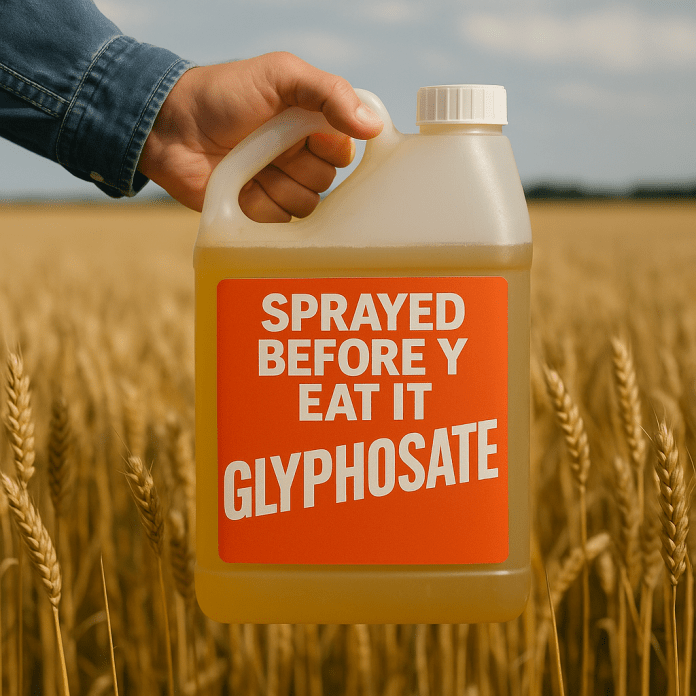
Sprayed Before You Eat It: The UK’s Hidden Use of Glyphosate on Food Crops

Most people know glyphosate as the weedkiller in Roundup — something you spray on driveways or patios to kill unwanted growth. But in UK agriculture, glyphosate is also sprayed directly onto food crops just before harvest.

It’s called pre-harvest desiccation, and it’s more common than you might think.


What is Pre-Harvest Desiccation?

In short: it’s a way to speed up harvesting.

Farmers use glyphosate to kill the crop uniformly, which helps it dry out and ripen at the same time. This allows for quicker, cleaner harvesting — especially useful in the UK, where wet summers can delay combining and damage crops.

The herbicide is sprayed when the grain has reached maturity but while the stems and leaves are still green. After a few days, the whole crop dies back evenly, making it easier to cut, thresh, and store.

Crops commonly treated this way include:

  • Wheat (used in bread and flour)
  • Barley (used in beer and livestock feed)
  • Oats
  • Field beans and peas
  • Oilseed rape

Why Do Farmers Use It?

The reasons are practical and economic. Pre-harvest spraying helps to:

  • Speed up drying and ripening
  • Prevent patchy maturity
  • Stop weed growth in the final weeks
  • Avoid delays in bad weather
  • Allow one-pass combining without leaving green patches

In the modern farming calendar, glyphosate helps meet deadlines and reduce costs. But it doesn’t come without concerns — especially for consumers.


Is Glyphosate Getting Into Our Food?

Yes — and it’s been found repeatedly in UK food products.

A 2016 survey by the Pesticide Action Network UK found that 63% of wholemeal bread samples contained glyphosate residues. Other studies have found it in oats, cereals, and even beer.

While residue levels are below legal limits, campaigners and scientists have raised red flags about long-term exposure.

The World Health Organization’s cancer research agency (IARC) has classified glyphosate as “probably carcinogenic to humans.” Other agencies, including the UK HSE and EFSA, maintain that it is safe when used correctly.

But for consumers, the idea of weedkiller being sprayed on a wheat field just days before harvest is unsettling.


Can You Avoid It?

There’s no label telling you whether your cereal was treated with glyphosate — but here’s what you can do:

  • Choose organic products, which prohibit glyphosate
  • Support brands that use glyphosate-free grain
  • Ask questions — especially about oats, bread, and baby food
  • Wash produce, though this has limited effect on grains
  • Follow campaigns pushing for clearer labelling and stricter regulation

Are There Alternatives?

Yes, though they’re not always easy or cost-effective.

  • Mechanical swathing (cutting and windrowing the crop to dry)
  • Natural ripening, with careful variety selection
  • Post-harvest drying using fans or heated air

Organic and regenerative farmers already manage without desiccation sprays — but it requires more time, better timing, and sometimes lower yields.


The Future of Glyphosate in the UK

Glyphosate is still legal in the UK, though its use is under review. After Brexit, the UK is free to set its own policy independent of the EU.

Some food retailers — especially in the organic and natural sectors — are calling for a ban on pre-harvest use. Others are lobbying for tighter residue limits and better monitoring.

What’s clear is that public awareness is rising. Many consumers simply had no idea that weedkiller could be sprayed on food crops just before harvest.


Final Thoughts

We’re not saying the bread in your kitchen is dangerous — but we are saying it may have been sprayed with glyphosate just days before harvest, and you wouldn’t know.

That’s why more people are calling for transparency, alternatives, and a better-informed public. For something as basic as food, shouldn’t we all know what’s being done to it?

spot_img

lOOKING FOR MORE WORK?

The free and easy way to get more customers. Just join Find Local Gardeners.

A quietly growing movement has been transforming landscapes and communities across Britain.  The UK’s Community Tree Nurseries (CTNs) are producing around 250,000 mostly native trees...
For thousands of years, farmers saved seeds from their crops and replanted them the next season. Seeds were part of the natural cycle —...

Defra Ministers appoint Sir Andrew Steer as Chair of the Board of Trustees of the Royal Botanic Gardens, Kew 

Monday, 22 December 2025 Sir Andrew Steer, a prominent global leader in sustainable development and climate change has been announced as the new Chair of RBG Kew, taking over from Dame Amelia Fawcett who held the post for two terms.    Sir Andrew’s appointment is for four years and...

BigPlantPots: Bold Design, Built for Growing Big

As gardeners continue to embrace statement planting and flexible outdoor design, one UK brand is helping both professionals and home growers think bigger. BigPlantPots specialises in oversized plant containers that combine strong visual design with serious growing capacity, making...

Green-tech ends the year on a high by surpassing its charity target for St Leonard’s Hospice

Green‑tech is delighted with the success of its 2025 charity fundraising campaign for St Leonard’s Hospice, York. Their efforts have raised over £1,600. Green‑tech is the UK’s leading landscape provider, supplying products that help create greener, more resilient and biodiverse spaces...

Conservation of Scotland’s rarest moss boosted by Air-Pot® innovation

THE TEAM at Royal Botanic Garden Edinburgh (RBGE) has been able to successfully cultivate one of Scotland’s rarest mosses – Round‑leaved bryum – during ex‑situ conservation trials with the help of Air-Pot® (December 2025). The Air-Pot container’s innovative design, which...

Continue reading

Defra Ministers appoint Sir Andrew Steer as Chair of the Board of Trustees of the Royal Botanic Gardens, Kew 

Monday, 22 December 2025 Sir Andrew Steer, a prominent global leader in sustainable development and climate change has been announced as the new Chair of RBG Kew, taking over from Dame Amelia Fawcett who held the post for two terms.    Sir Andrew’s appointment is for four years and...

BigPlantPots: Bold Design, Built for Growing Big

As gardeners continue to embrace statement planting and flexible outdoor design, one UK brand is helping both professionals and home growers think bigger. BigPlantPots specialises in oversized plant containers that combine strong visual design with serious growing capacity, making...

Green-tech ends the year on a high by surpassing its charity target for St Leonard’s Hospice

Green‑tech is delighted with the success of its 2025 charity fundraising campaign for St Leonard’s Hospice, York. Their efforts have raised over £1,600. Green‑tech is the UK’s leading landscape provider, supplying products that help create greener, more resilient and biodiverse spaces...

SUBSCRIBE TO OUR YOUTUBE CHANNEL

Plant advice for unusual species plus updates from our tropical garden

SUBSCRIBE