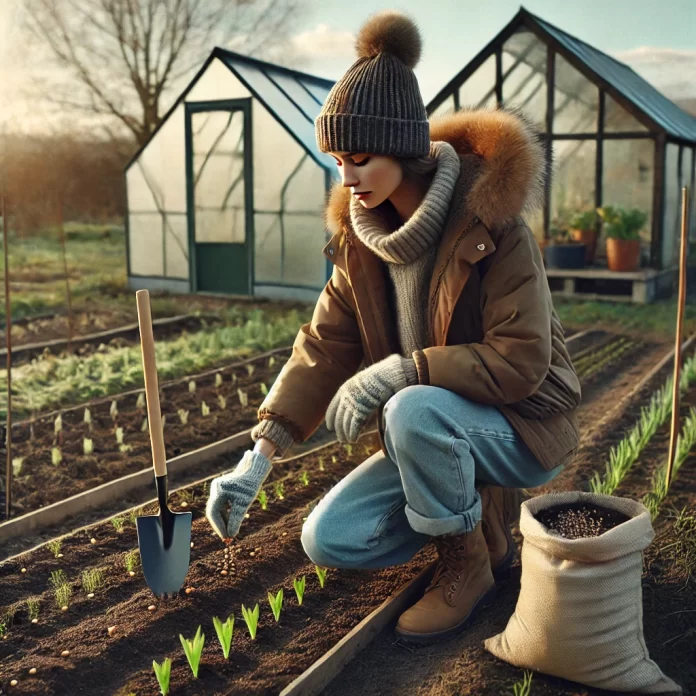
February is a great time to start sowing early crops, even though it’s still cold. With a little protection, you can get ahead of the season by starting hardy vegetables outdoors and tender crops indoors. This allows you to enjoy an earlier harvest and make full use of the growing season.
Here’s how to successfully sow early crops in February.
Why Start Sowing in February?
- Extends the growing season – Gives plants more time to mature.
- Avoids peak pest periods – Early crops often escape the worst of summer pests.
- Stronger seedlings – Plants are well-established before outdoor conditions improve.
- Earlier harvests – Enjoy homegrown produce sooner.
What Can You Sow in February?
Hardy Vegetables (Direct Sowing Outdoors or Under Cover)
These crops can handle the cold but may need fleece, cloches, or a cold frame for protection:
- Broad beans – Sow directly in the ground or in pots under cover.
- Peas – Hardy varieties like ‘Meteor’ or ‘Douce Provence’ can be sown in well-drained soil.
- Spinach – Best sown under cloches to encourage early growth.
- Radishes – Fast-growing and suitable for sowing under cover.
- Spring onions – Hardy types like ‘White Lisbon’ can be sown outdoors if the soil isn’t frozen.
- Carrots – Early varieties such as ‘Amsterdam Forcing’ can be sown under fleece or in a greenhouse.
Tender Crops (Indoor Sowing Only)
These crops need warmth and should be started indoors on a windowsill, in a greenhouse, or in a heated propagator:
- Tomatoes – Start in seed trays indoors for planting out later.
- Peppers and chillies – Need a long growing season, so early sowing is essential.
- Aubergines – Start in a heated propagator for best results.
- Lettuce – Can be sown in modules indoors or under cover.
- Brassicas (Cabbage, cauliflower, Brussels sprouts) – Sow in trays for planting out later.
Where to Sow Early Crops in February?
1. Directly Outdoors (with Protection)
Hardy crops can be sown directly in the ground if the soil is workable (not frozen or waterlogged).
Tips:
- Warm the soil first by covering it with fleece or cloches.
- Choose a sheltered, sunny spot.
- Use fleece, cloches, or polytunnels to protect seedlings from frost.
2. In an Unheated Greenhouse, Cold Frame, or Polytunnel
These structures provide extra warmth and protection for early sowings.
Tips:
- Ventilate on warm days to prevent fungal diseases.
- Use bubble wrap insulation inside greenhouses if temperatures drop too low.
3. Indoors (Windowsill or Heated Propagator)
Perfect for tender crops that need warmth.
Tips:
- Use a bright, south-facing window.
- Rotate seedlings regularly to prevent leggy growth.
- A heat mat or propagator helps germinate warmth-loving plants.
How to Sow Early Crops in February
1. Use Fresh Seeds
Older seeds may have lower germination rates—check expiry dates before sowing.
2. Prepare the Soil
- Outdoors: Work in compost and rake soil to a fine tilth before sowing.
- Indoors: Use seed compost rather than garden soil to prevent disease.
3. Sow at the Correct Depth
- Small seeds (lettuce, carrots) – Sow shallowly and lightly cover.
- Large seeds (beans, peas) – Plant deeper, about 2-3 cm down.
4. Water Carefully
- Keep the soil moist but not waterlogged.
- Use a fine spray to avoid disturbing small seeds.
5. Provide Warmth and Light
- Most seeds need temperatures of 15-20°C to germinate.
- Use a heated propagator for tomatoes, peppers, and aubergines.
Caring for Early Seedlings
1. Protect Against Cold
- Use fleece, cloches, or tunnels to shield outdoor seedlings from frost.
- In greenhouses, use bubble wrap insulation if temperatures drop too low.
2. Thin Out Seedlings
- Overcrowding weakens plants—thin seedlings to the recommended spacing.
3. Harden Off Before Planting Out
- Gradually introduce indoor-grown seedlings to outdoor conditions over 7-10 days before transplanting.
4. Watch for Pests
- Slugs, snails, and mice may attack young seedlings. Protect plants with barriers or organic deterrents.
Looking Ahead
Sowing early in February gives you a strong start to the season. With a bit of protection and care, your seedlings will be ready to thrive when spring arrives.
By making use of greenhouses, cold frames, and fleece, you can enjoy fresh homegrown vegetables well before summer.
Happy growing!