When frost grips the ground and rain turns soil to sludge, the pressure to “carry on regardless” remains. But should professional gardeners really be working in wintery conditions — and at what cost to safety and the garden itself?
Each winter, as temperatures fall and daylight shortens, gardeners across the country face the same unspoken expectation: turn up as normal, whatever the weather.
Lawns may be frozen solid, paths slick with ice, borders saturated beyond repair — yet many clients still assume gardening is a year-round service that operates without pause. In reality, winter exposes a long-standing misunderstanding about what responsible gardening actually looks like.
Gardening Is Not All-Weather Labour
There is, of course, valuable work to be done in winter. Dormant pruning, hedge cutting in suitable conditions, repairs, planning, and general tidying all have their place. Winter is also a crucial period for soil recovery and plant rest.
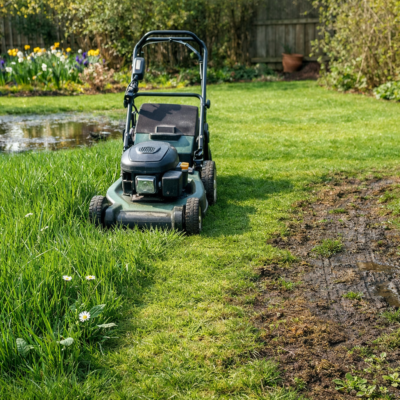
What winter is not suited to is repeated foot traffic on frozen lawns, heavy machinery on waterlogged ground, or rushed productivity when conditions are unsafe. Frosted turf bruises and blackens underfoot. Wet soil compacted now may take years to recover.
Gardening is not a factory process. It is work carried out on living systems, and winter is part of their natural pause.
Safety Cannot Be an Afterthought
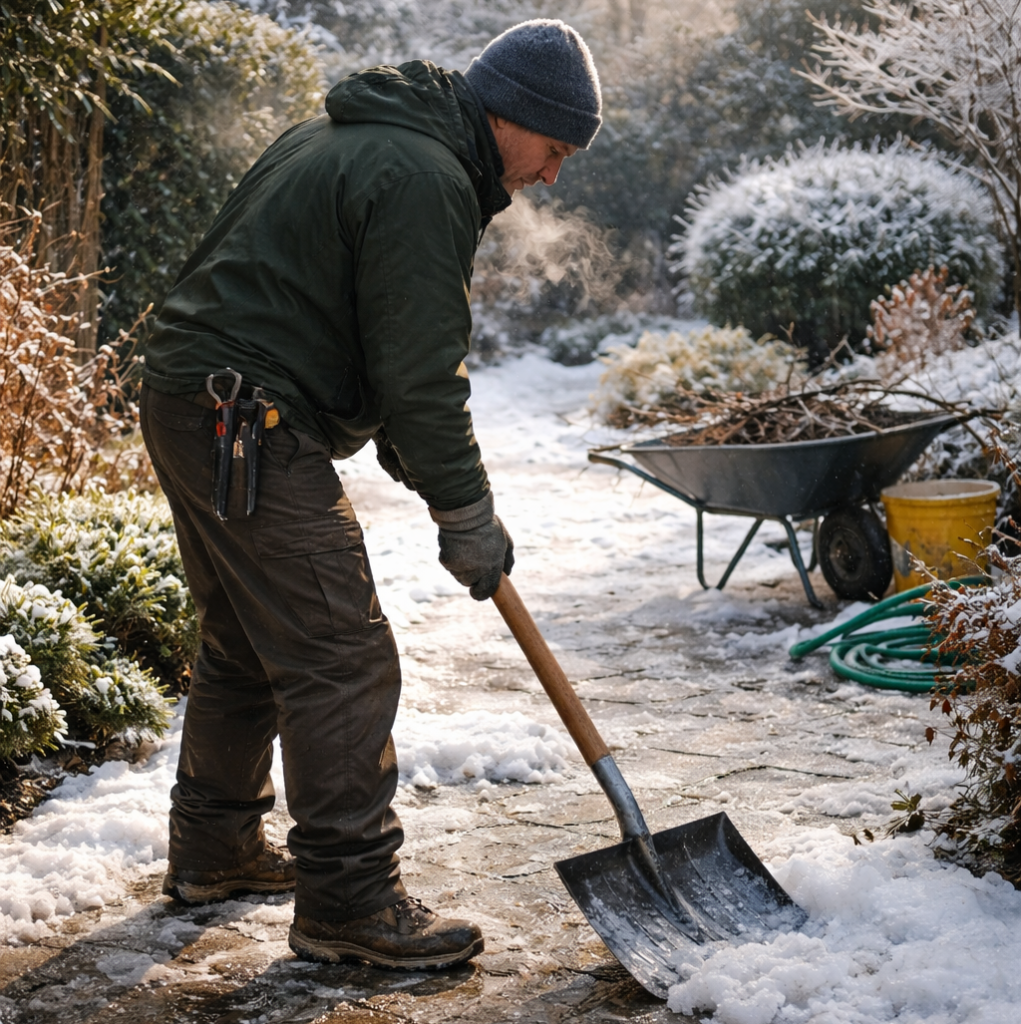
Slips, falls, and cold-related injuries rise sharply during winter months. Ice hidden beneath leaves, unstable ground, and numb hands handling sharp tools all pose genuine risks.
No border tidy or hedge cut is worth a broken wrist, a back injury, or worse. Professional gardeners have a duty of care — to themselves, to any staff they employ, and to the property they are responsible for.
Yet many still feel compelled to work in poor conditions, not because it is sensible, but because expectations have not been set clearly enough.
The Real Issue: Unclear Expectations
When winter work becomes a source of tension, the problem is rarely the weather itself. More often, it is the absence of clear agreement.
Vague arrangements leave gardeners feeling guilty for cancelling and clients feeling short-changed. Clear contracts remove emotion from the decision and replace it with professional judgement.
Good contracts acknowledge that:
- Weather and ground conditions vary
- Some tasks are unsuitable in winter
- Safety and garden health come first
They also protect both parties from dispute.
What Should Contracts Say?
Many experienced gardeners now include specific clauses addressing winter conditions. These commonly allow work to be postponed, modified, or substituted when frost, snow, ice, or saturated soil make normal tasks unsafe or damaging.
Some contracts state plainly that the gardener’s assessment of conditions is final. Others clarify that monthly fees are averaged across the year, so missed winter visits are balanced by heavier workloads in spring and summer.
Clear wording benefits clients as much as gardeners. It reassures householders that decisions are made in the garden’s long-term interest, not out of convenience.
Knowing When Not to Work Is Professionalism
There remains a stubborn belief that turning up in all conditions demonstrates commitment. In truth, the opposite is often the case.
A gardener who refuses to walk on frozen turf, avoids compacting wet soil, and prioritises safety is not being difficult — they are being professional.
Winter is not a failure of gardening. It is part of its rhythm.
Those who respect that rhythm tend to produce healthier gardens, avoid injuries, and still be working — effectively — when spring arrives.
And spring, after all, is what every winter decision should be working towards.