
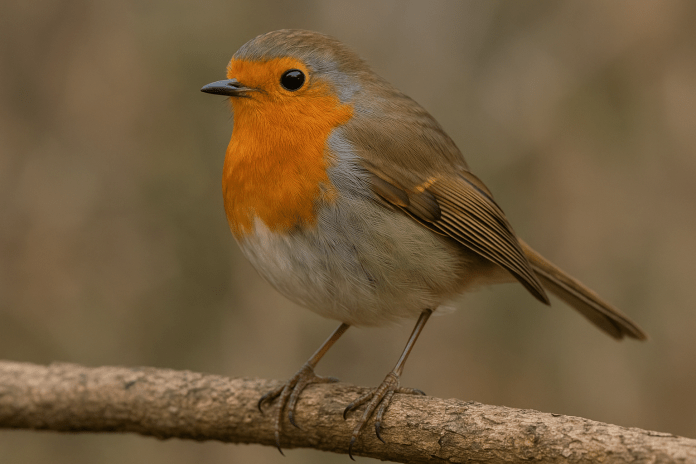
Top ten ‘did you know’ facts about our favourite Christmas garden bird, by FeatherSnap’s ornithologist, Maria Kincaid
Robins are strongly associated with Christmas and regularly feature on Christmas cards and decorations. But did you know the tradition stems from British folklore, due to legends about the bird at the birth and crucifixion of Jesus, and the red uniforms of Victorian postmen who delivered Christmas cards?
Although Robins are one of the UK’s most common and best loved garden birds, there is plenty more to learn about these pretty red breasted birds.
Here, Maria Kincaid, in-house ornithologist for FeatherSnap, the Wi-Fi enabled smart bird feeder that connects people to nature, gives us her top ten ‘did you know’ facts about Robins:
- The inclusion of Robins on Christmas cards and decorations is thought to be because of Victorian-era postmen, which were nicknamed “robins” due to the bright red uniforms they wore.
- Another story claims that when the baby Jesus was in the manger, a robin flew to the stable to keep him warm and protect him from the fire. The robin’s breast was scorched by the flames, and this red colour was passed down to all its descendants.
- Robins were once thought to be in the Thrush family, much like the American Robin (so named because of its red breast, similar to the European Robin. Through genetic analysis, it’s been found that they’re actually Old-World Flycatchers.
- There are between 6.7 and 7 million breeding pairs in the UK (13.4 million -14 million adult individuals) – approximately 10% of the global population of Robins. Their population numbers are stable, and even increasing.
- The average lifespan for a Robin is about a year, as there is relatively high juvenile mortality. If they make it to adulthood, however, they’re much more likely to live for several more years, and the oldest known European Robin was 19 years old!
- Both male and female robins sing! During the spring, it’s mostly the males that will sing, but during the non-breeding season, both the males and females will sing – and the male’s song changes throughout the year, being softer and with longer phrases in the autumn and winter.
- While Robins are migratory in other parts of Europe, in the UK they’re present year-round, so it’s always a good time to see them in your gardens! It’s thought that UK birds are partial migrants, with some of the individuals migrating out of the UK, and some in during the breeding and non-breeding seasons. There’s a bit of a male bias in the wintering population of robins in the UK, so it’s thought that the females migrate more readily than the males do.
- Aside from their song and their variable defence of territories (males defend a territory all year, females defend a different territory in the non-breeding season), their plumage is the same, so it’s difficult to tell a male and female robin apart at a glance.
- There are different birds that are called robins, but the European Robin is the only species in its genus, Erithacus, and is the only “robin” found in the UK. There is also the American Robin, which is a thrush and more closely related to the European Blackbird than the European Robin. There are also robins found in Australia, like the Pink Robin and the Rose Robin, but they are in a different family, Petroicidae, or Australian Robins, while European Robins are a member of the Muscicapidae family, or Old World Flycatchers. Needless to say – even though they’re all called Robins, they’re not closely related.
- European Robins are largely insectivorous, dining on a wide variety of invertebrates like worms, beetles, ants, crickets and spiders. They particularly like mealworms if offered in feeders. They’ll also occasionally eat small vertebrates, like fish and lizards. They are also quite opportunistic, and not above an easy snack, making them regular visitors at bird feeders and in gardens for seeds and fruits, and will even eat carrion when they find it. They’ll forage for fruit when it’s available, eating strawberries, juniper, apples, and cherries to name a few.
Visit www.uk.feathersnapcam.com to start your journey into the wonderful world of birds with FeatherSnap.
Everything you need to begin your birding adventure:
The FeatherSnap Scout – RRP £159.99
FeatherSnap Wi-Fi Subscription – RRP £5.99/month or £49.99 annually
Simply download the user-friendly FeatherSnap App and you’re ready to go!
Source Hornby George PR vuelio