
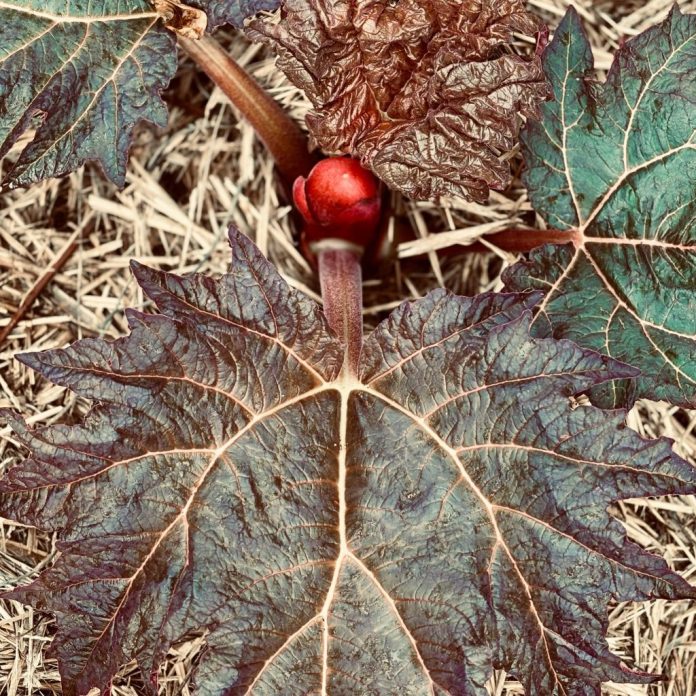
Rheum palmatum, commonly known as Chinese rhubarb or ornamental rhubarb, can be excellent ornamental plants for gardens and landscapes. Here are several reasons why:
1. Striking Foliage: Rheum palmatum boasts large, deeply lobed leaves that can measure up to two feet across. The foliage is often a rich green color with contrasting veins, providing a bold and dramatic presence in the garden.
2. Architectural Appeal: The robust growth habit of Rheum palmatum lends itself well to creating focal points or structural elements within the landscape. Its upright stems and large leaves can add height and architectural interest to borders, beds, or containers.
3. Seasonal Interest: In addition to its impressive foliage, Rheum palmatum produces tall flower spikes adorned with small, bell-shaped flowers in shades of red, pink, or white. These blooms appear in late spring to early summer, adding another layer of visual interest to the plant.
4. Versatility: While Rheum palmatum is often grown for its ornamental value, it also has culinary and medicinal uses. The stalks of some varieties can be harvested and used in cooking, similar to common rhubarb (Rheum rhabarbarum), although Chinese rhubarb is typically less flavorful. Additionally, certain parts of the plant have been used in traditional medicine for their purported health benefits.
5. Low Maintenance: Once established, Rheum palmatum is relatively low maintenance, requiring minimal care beyond occasional watering and fertilization. It is generally tolerant of a wide range of soil types and can thrive in full sun to partial shade, making it adaptable to various garden conditions.
6. Wildlife Attraction: The flowers of Rheum palmatum attract pollinators such as bees and butterflies, contributing to the biodiversity of the garden. Additionally, the dense foliage can provide shelter for small animals and insects.
7. Longevity: Rheum palmatum is a long-lived perennial, with some specimens living for several decades when provided with suitable growing conditions. This longevity makes it a valuable investment for gardeners looking to establish a lasting landscape feature.
8. Seasonal Color: In addition to its green foliage and colorful flowers, Rheum palmatum foliage can turn shades of red, purple, or bronze in the fall, providing further seasonal interest and adding depth to the autumn garden palette.
Overall, Rheum palmatum is an excellent choice for gardeners seeking a bold, architectural plant with ornamental value. Its impressive foliage, seasonal blooms, and adaptability make it a standout addition to any garden or landscape design.
Rheum palmatum – Grow Guide
Common name: Chinese Rhubarb
Family: Polygonaceae
Type: Herbaceous perennial
Hardiness: RHS H5 – fully hardy in the UK
Ultimate size: 2–3 m tall × 1.5–2 m wide
Overview
Rheum palmatum is a bold, architectural perennial prized for its large, deeply lobed leaves and dramatic flower panicles. Leaves often have a reddish stem and midrib, creating striking colour contrast. It is ideal for tropical-style or herbaceous borders in the UK. While technically edible, its main use in gardens is ornamental.
Position
- Light: Full sun to partial shade
- Performs best in sheltered positions, protected from strong winds
- Morning sun is ideal; afternoon shade helps prevent scorching
Soil
- Type: Moist, fertile, humus-rich soil
- pH: Neutral to slightly acidic
- Add compost or well-rotted manure at planting for vigour
- Ensure good drainage to prevent crown rot
Planting
- When: Spring or autumn
- Space plants 1–2 m apart to allow full leaf development
- Mulch around base to retain moisture and suppress weeds
Watering
- Keep soil evenly moist, especially during hot summer months
- Deep watering encourages strong leaf and flower growth
- Avoid waterlogging around the crown
Feeding
- Apply a balanced fertiliser in spring
- Supplement with organic compost annually
- Additional liquid feed during rapid growth may encourage larger leaves
Growth & Habit
- Clump-forming herbaceous perennial
- Large palmate leaves on thick, upright stems
- Fast-growing; can dominate borders if not spaced properly
- Dies back naturally in autumn
Flowering
- Months: June–August (UK)
- Flowers: Large, panicle-like clusters of pink to crimson flowers on tall stems
- Flowers add architectural impact, excellent for cutting
Maintenance
- Remove dead or damaged leaves to tidy appearance
- Cut back foliage after it dies in late autumn
- Mulch in winter to protect crowns in colder regions
- Divide clumps every 4–5 years to maintain vigour
Propagation
- Division: Early spring or autumn; separate the crown into offsets
- Seed: Slow to germinate; flowers may take 3–4 years to appear
Pests & Problems
- Slugs and snails on young leaves
- Occasional aphids
- Crown rot in poorly drained soil
Garden Use
- Herbaceous or tropical-style borders
- Architectural focal plant
- Excellent combined with:
- Gunnera
- Tetrapanax
- Rodgersia
- Large-leaved Hostas
Quick Reference Table
| Feature | Details |
|---|---|
| Hardiness | RHS H5 – fully hardy |
| Height | 2–3 m |
| Spread | 1.5–2 m |
| Flowering | June–August |
| Position | Full sun to partial shade; sheltered |
| Soil | Moist, fertile, humus-rich |
| Water | Keep evenly moist; avoid waterlogging |
| Feeding | Balanced fertiliser in spring; organic compost annually |
| Propagation | Division; seed (slow) |
| Maintenance | Remove damaged leaves; cut back after foliage dies; mulch in winter |
| Best feature | Bold, palmate foliage and architectural flower panicles |