
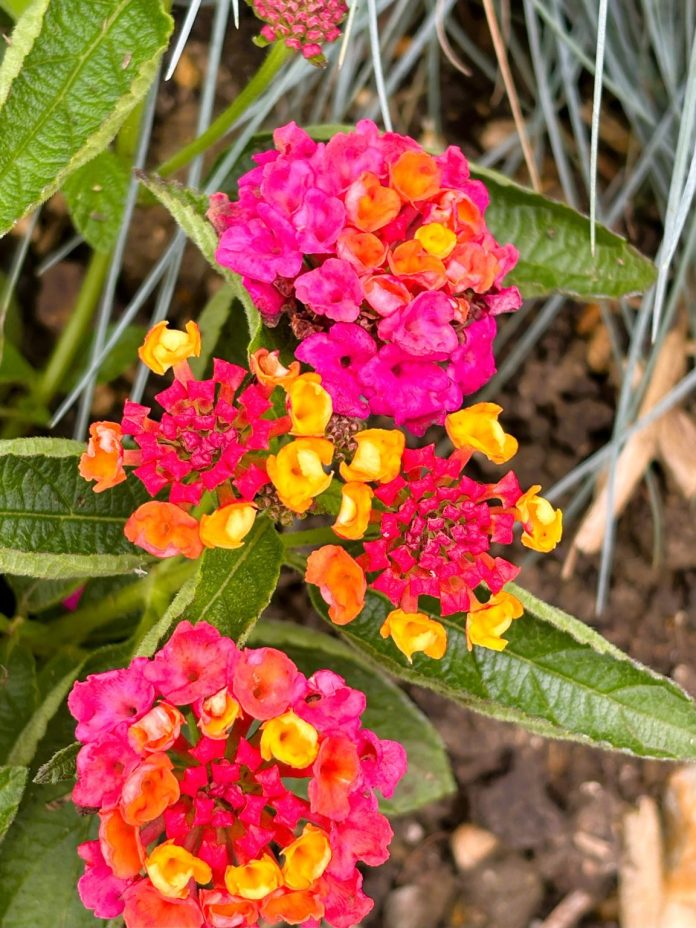
Lantana is generally considered to be a tender perennial in the UK, meaning it is not fully hardy and cannot withstand severe frost. It thrives in warmer climates and can be grown outdoors in the UK during the summer months but needs protection or to be brought indoors during the winter.
Here are some tips for growing lantana in the UK:
- Planting Location: Choose a sunny, sheltered spot for planting lantana outdoors. It prefers well-drained soil and a location that gets plenty of sunlight.
- Winter Care: Before the first frost, either bring the plants indoors or provide protection. If growing in containers, they can be moved to a greenhouse or a bright indoor location. For plants in the ground, consider using a thick mulch or horticultural fleece to protect the roots from frost.
- Pruning: Prune lantana in early spring to encourage new growth. This helps keep the plant healthy and encourages a more compact shape.
- Watering and Feeding: Regular watering and feeding during the growing season will help lantana thrive. Reduce watering in the winter when the plant is not actively growing.
Growing lantana in the UK requires some special care due to the country’s cooler climate. Here are detailed steps and facts to help you successfully grow lantana:
Facts about Lantana
- Scientific Name: Lantana camara.
- Common Names: Lantana, Spanish flag, West Indian lantana.
- Origin: Native to tropical regions of the Americas.
- Flowering Season: Blooms from late spring to the first frost.
- Flower Colors: Can be yellow, orange, red, pink, purple, or white, often with multiple colors on one plant.
- Growth Habit: Shrubby, can grow up to 1.5 meters tall and wide, but is often smaller in cooler climates.
Steps to Grow Lantana in the UK
1. Planting Location
- Sunlight: Choose a sunny, sheltered spot in your garden. Lantana thrives in full sun and needs at least 6 hours of direct sunlight daily.
- Soil: Plant in well-drained soil. If your garden soil is heavy clay or very sandy, consider amending it with organic matter to improve drainage and fertility.
2. Planting Time
- Spring: Plant lantana in the spring after the last frost. This gives the plant time to establish before the growing season.
3. Watering and Feeding
- Watering: Water regularly during the growing season to keep the soil moist but not waterlogged. Reduce watering in the winter when the plant is dormant.
- Feeding: Feed with a balanced fertilizer every 4-6 weeks during the growing season to promote healthy growth and flowering.
4. Container Growing
- Pots: Lantana can be grown in pots, which makes it easier to move them indoors during the winter. Use a good quality potting mix and ensure the pot has drainage holes.
- Mobility: Containers allow for easy relocation to a greenhouse or indoors when temperatures drop.
5. Winter Protection
- Indoors: Before the first frost, bring potted lantana plants indoors. Place them in a bright, cool room, ideally with temperatures around 10-15°C (50-59°F).
- Outdoor Plants: For lantanas planted in the ground, apply a thick layer of mulch around the base to protect the roots from frost. Alternatively, use horticultural fleece or a cloche to cover the plants.
6. Pruning and Maintenance
- Pruning: Prune lantana in early spring before new growth begins. Remove any dead or damaged wood and shape the plant to encourage bushier growth.
- Deadheading: Regularly remove spent flowers to encourage continuous blooming.
Additional Tips
- Pest and Disease Control: Watch for common pests like aphids and whiteflies. Treat infestations promptly with appropriate insecticides or natural remedies.
- Propagation: Lantana can be propagated from cuttings taken in late summer. Root the cuttings in a mix of sand and peat under high humidity.
By following these guidelines, you can successfully grow and enjoy lantana in your UK garden, despite the cooler climate.
By following these steps, you can enjoy lantana in your garden despite the UK’s cooler climate.
Lantana – Grow Guide
Common name: Lantana, Shrub Verbena
Family: Verbenaceae
Plant type: Tender perennial / subshrub
Hardiness: RHS H1–H2 – frost-tender; grown as a summer bedding plant or container plant in the UK
Height & spread: 0.5–1.5 m tall × 0.5–1.5 m wide (depending on variety)
Overview
Lantana is a vibrant, flowering shrub valued for its long-lasting clusters of small, brightly coloured flowers, often multi-coloured. It blooms from summer to autumn, attracting bees, butterflies, and other pollinators, making it ideal for borders, patios, and containers. In the UK, it is usually grown as an annual or overwintered indoors.
Position
- Full sun for best flowering and growth
- Needs shelter from strong winds
- Performs poorly in shade; flowering will be reduced
Soil
- Well-drained, fertile soil
- Tolerates slightly acidic to neutral soil
- Avoid waterlogged conditions, which can cause root rot
Planting
- Outdoors: Plant after the last frost, typically late May
- Containers: Use a free-draining potting mix
- Space plants 30–50 cm apart
- Incorporate organic matter to support strong growth
Watering
- Water regularly to establish young plants
- Once established, moderately drought-tolerant
- Avoid letting the soil dry out completely in hot weather
Feeding
- Fertilise every 2–3 weeks during the growing season with a high-potash feed to encourage flowers
- Slow-release fertiliser at planting can also help
Growth & Habit
- Bushy, sprawling or compact habit depending on variety
- Some varieties trail or cascade, perfect for hanging baskets
- Leaves are aromatic when crushed
Flowering
- Months: June–October
- Flowers: Small clustered florets in red, orange, yellow, pink, purple, often multicoloured
- Excellent for cut flowers and pollinator gardens
Maintenance
- Deadhead regularly to prolong flowering
- Pinch back young growth to encourage bushiness
- Overwinter tender plants indoors at minimum 5–10 °C
- Prune lightly in spring before new growth
Pests & Problems
- Susceptible to whitefly, aphids, spider mites in glasshouses or indoors
- Leaf scorch if exposed to hot sun in dry soil
- Root rot if soil is poorly drained
Propagation
- Cuttings: Softwood cuttings in late spring or early summer root easily
- Seed: Possible, but slower and less reliable in the UK
Garden & Display Use
- Summer bedding or borders
- Containers, hanging baskets, and patio pots
- Pollinator-friendly gardens
- Companion plants:
- Salvia
- Verbena
- Pelargonium
- Fuchsia
Quick Reference Table
| Feature | Details |
|---|---|
| Hardiness | RHS H1–H2 – frost-tender |
| Height | 0.5–1.5 m |
| Spread | 0.5–1.5 m |
| Flowering | June–October |
| Position | Full sun, sheltered |
| Soil | Well-drained, fertile |
| Water | Regular while establishing |
| Feeding | High-potash every 2–3 weeks |
| Propagation | Softwood cuttings |
| Maintenance | Deadhead, pinch back, overwinter indoors |
| Best feature | Long-lasting, multicoloured flowers |