
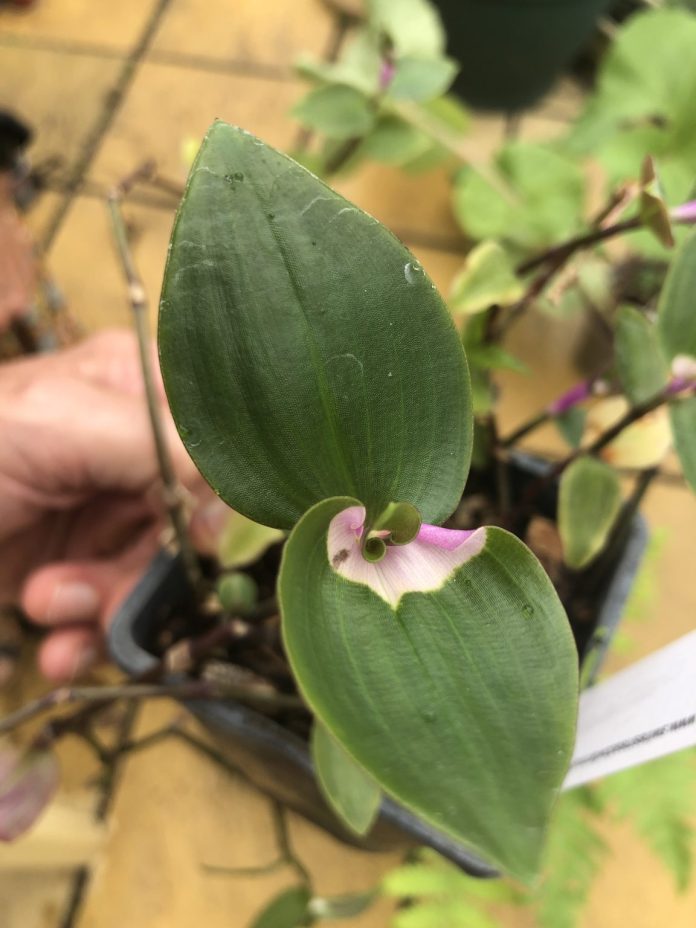
Tradescantia fluminensis ‘Maiden’s Blush’ is a beautiful and popular houseplant known for its colorful foliage and trailing growth habit. Here’s a guide to help you grow and care for this lovely plant:
- Light: ‘Maiden’s Blush’ prefers bright, indirect light. Avoid placing it in direct sunlight, as the intense rays can scorch its delicate leaves. However, it can tolerate lower light conditions, but its colors may not be as vibrant.
- Temperature: Maintain a warm and consistent temperature for the plant. Ideally, keep it between 65°F to 75°F (18°C to 24°C). Avoid exposing it to sudden temperature fluctuations or cold drafts.
- Watering: Keep the soil evenly moist but not waterlogged. Allow the top inch of the soil to dry out before watering again. Overwatering can lead to root rot, so it’s essential to strike a balance between keeping the soil moist and avoiding excessive moisture.
- Humidity: Tradescantia fluminensis ‘Maiden’s Blush’ prefers higher humidity levels. You can increase humidity by misting the plant regularly or placing a tray of water near the plant to provide localized moisture. Placing the plant in a room with a humidifier can also be beneficial.
- Soil: Use a well-draining and fertile potting mix. A mix formulated for houseplants or a combination of peat moss, perlite, and vermiculite works well.
- Fertilizer: During the growing season (spring and summer), you can feed the plant with a balanced liquid fertilizer diluted to half the recommended strength. Apply the fertilizer once every 2-4 weeks. In the dormant season (fall and winter), reduce or stop fertilizing.
- Pruning: Regularly pinch back the tips of the plant to encourage bushier growth and to control its trailing habit. Pruning will also help to maintain the plant’s shape and prevent it from becoming leggy.
- Propagation: ‘Maiden’s Blush’ can be easily propagated through stem cuttings. Take a 4-6 inch (10-15 cm) cutting just below a node and remove the lower leaves. Place the cutting in water or a moist potting mix until roots develop. Once the roots are well-established, you can transplant the new plant into a separate pot.
- Pest and Disease Control: Keep an eye out for common houseplant pests like spider mites, aphids, or mealybugs. Regularly inspect the plant and take appropriate action if you notice any infestations. Ensure good air circulation around the plant to prevent fungal diseases.
- Potting and Repotting: Tradescantia fluminensis ‘Maiden’s Blush’ can become root-bound over time. When you notice the roots are filling the pot and the plant has outgrown its container, it’s time to repot it into a slightly larger pot with fresh potting mix.
Tradescantia fluminensis ‘Maiden’s Blush’ – Grow Guide
Common name: Inch plant, Wandering Jew
Family: Commelinaceae
Type: Evergreen trailing perennial
Hardiness: Tender; best in frost-free conditions or under glass (H3 in UK)
Ultimate size: Trailing stems up to 60 cm long
Overview
Tradescantia fluminensis ‘Maiden’s Blush’ is a compact, trailing plant prized for its silvery-green leaves tinged with pink, giving a soft “blushing” effect. It’s ideal for pots, hanging baskets, or as ground cover in sheltered spots.
Position
- Light:
- Bright, indirect light
- Avoid direct hot sun (leaves may scorch)
- Aspect:
- East- or west-facing windows indoors
- Sheltered spots outdoors under frost-free conditions
Soil
- Type:
- Well-draining potting mix
- Peat-based or loam with added grit/perlite
- pH:
- Neutral to slightly acidic
Planting
- Indoors:
- Grow in a container; repot every 2 years
- Outdoors (sheltered, frost-free):
- Can be planted as a trailing groundcover
- Use mulch to retain moisture
Watering
- Keep soil consistently moist but not waterlogged
- Reduce watering in winter
- Avoid letting stems sit in water
Feeding
- Feed every 2–3 weeks in growing season (spring–summer)
- Use liquid fertiliser at half strength
Growth Habit
- Vigorous, trailing stems with spreading habit
- Can root along stems if in contact with moist soil
- Responds well to pinching to encourage bushier growth
Flowering
- Month: Summer (July–August in UK)
- Flowers: Small, three-petalled, white
- Note: Ornamental leaves are the main feature; flowers are minor
Maintenance
- Trim regularly to maintain shape and prevent legginess
- Remove dead or damaged leaves
- Can propagate trimmings easily
Propagation
- Stem cuttings:
- Root in water or directly in moist potting mix
- Very fast and reliable
Pests & Problems
- Susceptible to spider mites, aphids, and mealybugs indoors
- Overwatering may cause root rot
- Frost will kill outdoor plants
Garden Use
- Trailing over walls, shelves, or baskets
- Container displays indoors or in frost-free greenhouses
- Groundcover in sheltered, frost-free tropical-style borders
⚠️ Note: Tradescantia fluminensis can be invasive in mild, wet climates if planted outdoors. In the UK, it is generally safe if grown in pots or controlled areas.