
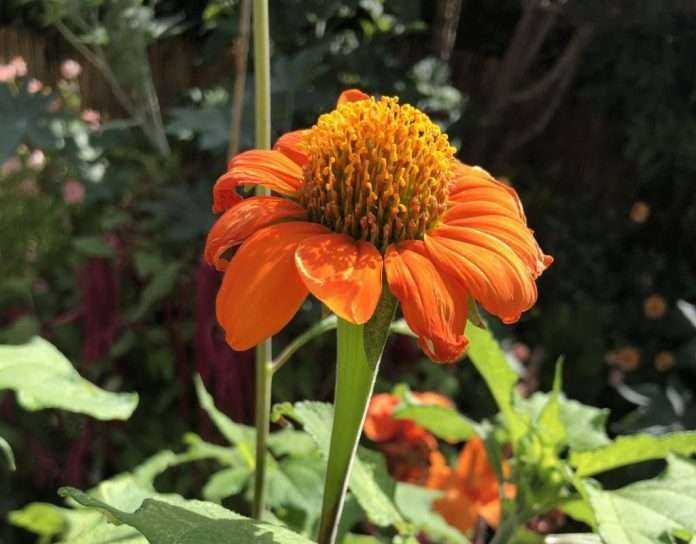
If you are looking for a tall dazzler then Tithonia rotundifolia might be for you. This orange whopper grows to a height of about 6ft (1.8m) and towers over other plants. it tends to topple over in high winds so it’s a good idea to stake the plants.
It can be grown as a perennial but in the UK it is mainly grown as an annual.
Tithonia rotundifolia likes to be well drained but the soil needs only to be poor to average for the plant to do well. It’s best not to plant them in a particularly rich or heavy clay soil. It is best not to fertilise the plants as this tends to only increase foliage growth to the detriment of flower production.
Tithonia rotundifolia prefer to be positioned in full sun.
The flowers appear in mid summer and can continue until the first frosts. In cool or dull and wet summers then Tithonia rotundifolia might not flower.
Plants grown from seed should be only put out when all risk of frosts has gone
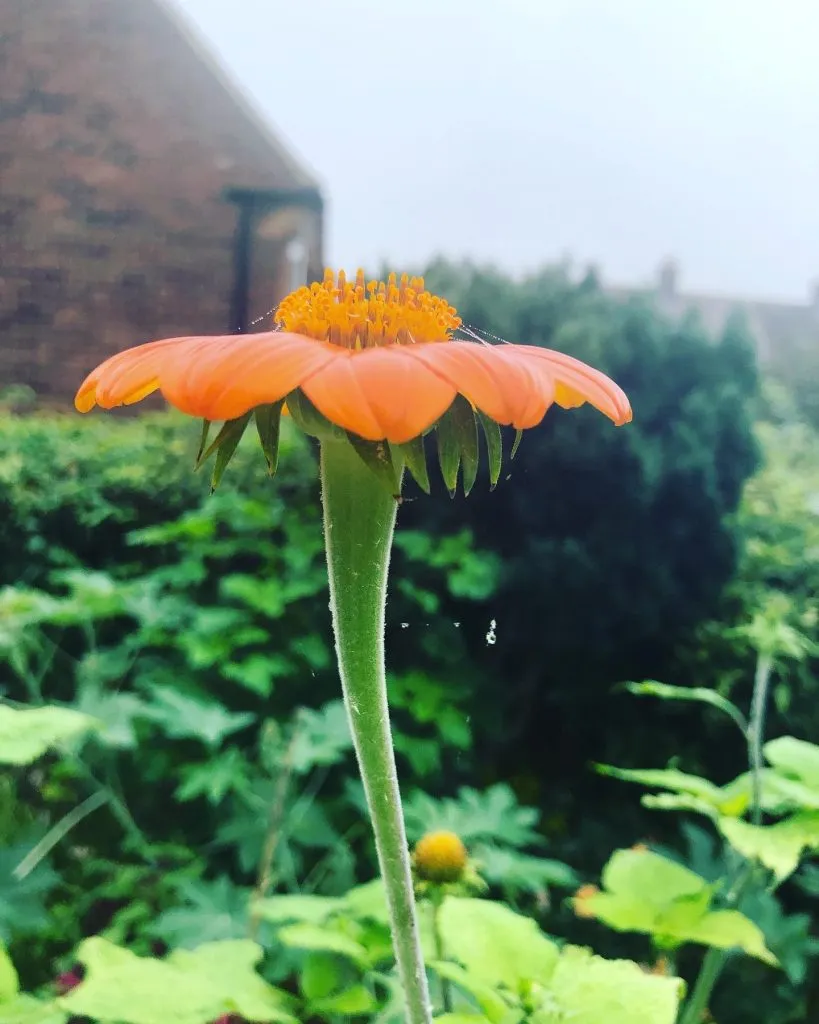
How to Grow Tithonia rotundifolia (Mexican Sunflower)
Tithonia rotundifolia, commonly called Mexican Sunflower, is a fast-growing, annual flowering plant celebrated for its large, bright orange-red daisy-like flowers. It’s perfect for summer borders, pollinator gardens, and cutting beds, attracting bees, butterflies, and hummingbirds.
Botanical Profile
- Family: Asteraceae (Sunflower family)
- Genus: Tithonia
- Species: rotundifolia
- Common Names: Mexican Sunflower
- Plant Type: Tender annual (frost-sensitive)
- Height: 1–2.5 m depending on variety and support
- Foliage: Large, coarse, dark green, rough-textured leaves
- Flowers: Bright orange-red, daisy-like, 5–8 cm across
- Flowering Season: Summer to first frost
- Origin: Native to Mexico and Central America
Tithonia rotundifolia is an annual, meaning it completes its life cycle in one growing season and must be replanted each year, either from seed or nursery-grown seedlings.
Best Planting Conditions
Light
- Full sun is essential for strong growth and prolific flowering
- Tolerates partial shade, but flower production is greatly reduced
Soil
- Prefers rich, well-drained soil
- Tolerates moderately poor soils but performs better with added compost or garden fertiliser
- Avoid heavy, waterlogged soil
Position
- Ideal for back borders, wildlife gardens, and large containers
- Needs room for spreading stems, as plants can become bushy and top-heavy
Planting Guide
- Sowing seeds:
- Indoors: 6–8 weeks before last frost, in seed trays or pots
- Outdoors: After all danger of frost, in warm, sunny soil
- Germination: 7–14 days at 20–25°C
- Plant spacing: 45–60 cm apart to allow for mature growth
- Transplanting: Harden off seedlings for a week before planting outside
Tip: Pinch back young plants to encourage bushier growth and more flowers.
Watering & Feeding
- Watering: Keep soil evenly moist while establishing
- Once established, fairly drought-tolerant, but flowers benefit from regular watering in dry spells
- Feeding: A light feed with balanced liquid fertiliser every 2–3 weeks encourages bigger blooms
Maintenance
- Support: Taller varieties may need stakes or canes to prevent flopping
- Deadheading: Remove spent flowers to extend flowering
- Pests/Diseases: Relatively trouble-free; watch for aphids and occasional powdery mildew in humid conditions
Companion Plants
- Tall summer perennials: Rudbeckia, Helianthus, Echinacea
- Pollinator plants: Lavender, Salvia, Buddleja
- Annuals: Cosmos, Zinnia, Tagetes
Its vibrant flowers make it perfect for bold summer colour schemes and pollinator-friendly borders.
Quick Summary
- Type: Tender annual
- Height: 1–2.5 m
- Light: Full sun
- Soil: Rich, well-drained; tolerates moderate soils
- Planting: Sow indoors 6–8 weeks before frost or outdoors after frost; 45–60 cm spacing
- Flowering: Summer to first frost
- Care: Pinch for bushiness, deadhead to prolong blooms, support tall plants
With the right conditions, Tithonia rotundifolia produces dramatic, long-lasting summer colour and is a magnet for bees, butterflies, and hummingbirds.