
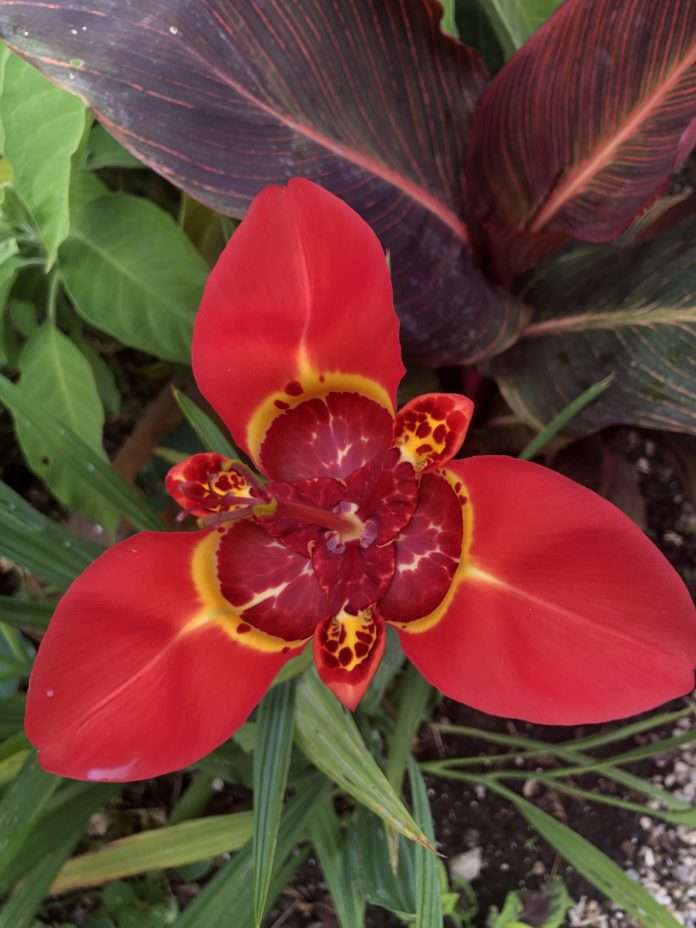
Tigridia pavonia might be a short lived flower but when it opens, wow, what a flower! Tigridia pavonia flowers in July and August for about two to three weeks. For best flowers they should be planted in full sun. The flowers come in yellow, red, purple, and white
Although they’re native to warmer climates, they can thrive in the UK if given the right care. This guide covers everything you need to know about growing Tigridias in a British tropical-style garden, from selecting varieties to overwintering.
Choosing the Best Tigridia Varieties
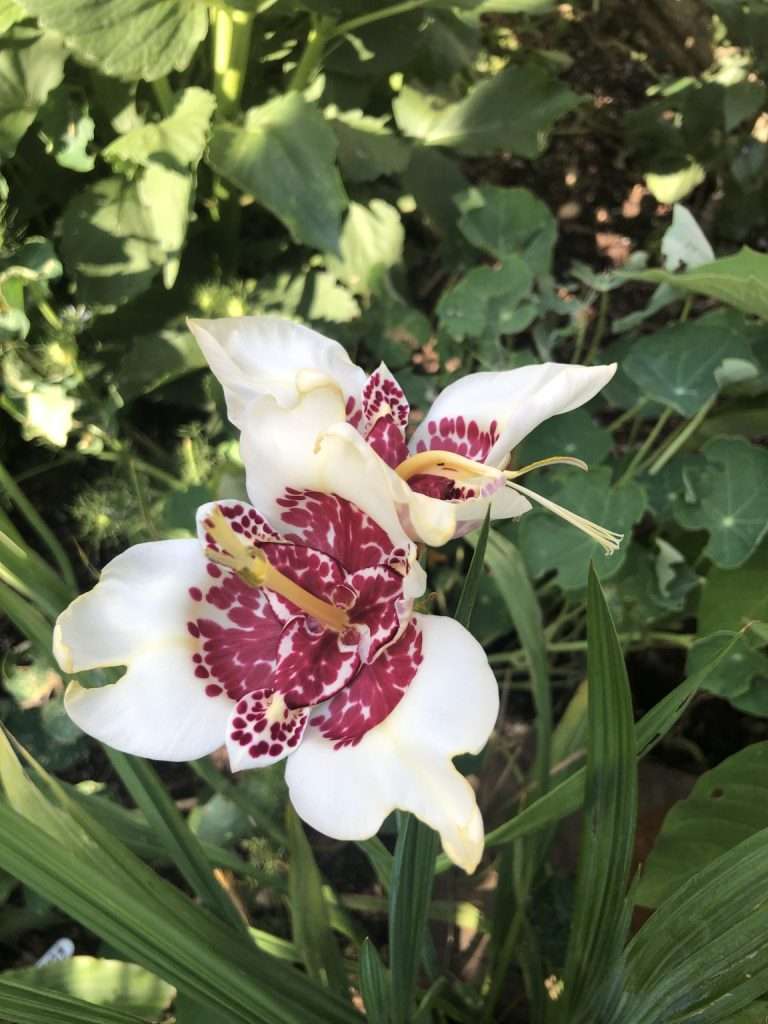
Tigridia pavonia is the most commonly grown species and has multiple stunning varieties, each offering different vibrant colours and patterns:
- ‘Speciosa’: A deep red with a yellow-speckled center, ideal for making a bold, tropical statement.
- ‘Canariensis’: Sunny yellow petals with orange speckles and a red center, bringing warmth to the garden.
- ‘Alba’: White petals with pale yellow markings, a softer option for subtle contrast among lush foliage.
- ‘Lilacina’: Delicate pink or lilac petals with deep purple speckles, providing an unusual yet striking colour for a tropical theme.
Each flower lasts only one day, but with multiple blooms per stem, Tigridias put on a continuous show throughout summer.
Ideal Placement in a Tropical Garden
Tigridias thrive in sunny, sheltered spots that replicate the warmth of their native habitat. They pair well with other bold, leafy plants like cannas, bananas, or palms, adding brilliant color against the lush, green backdrop. Select a spot with full sun exposure and well-draining soil, as Tigridias dislike being waterlogged, especially in colder months. Consider raised beds or slight mounds to improve drainage and protect their roots.
Eye-Catching Colours and Plant Pairings
With their range of intense colors—red, yellow, white, pink, purple, and orange—Tigridias work well in combinations with other tropical garden plants. They make excellent companions for Crocosmia, Hedychium (ginger lilies), and dahlias, all of which share their vivid coloring and bring varied textures to the garden.
Caring for Tigridias in the UK
Though not as hardy as some bulbs, Tigridias are straightforward to care for during the growing season. Here’s a quick care guide:
- Planting Depth: Plant the corms 10-15 cm (4-6 inches) deep and 10-15 cm apart in the spring, once frost risk has passed.
- Watering: They prefer consistently moist soil, but avoid waterlogging. Regular watering during dry spells helps support flowering.
- Fertilizing: Apply a balanced, all-purpose fertilizer monthly from late spring to the end of flowering. This boosts growth and enhances bloom production.
- Aftercare: Tigridia blooms last a single day, so deadheading isn’t necessary. Allow the foliage to die back naturally, which will help feed the corms for next year’s growth.
Overwintering Tigridias
In the UK, Tigridias need protection from frost. The safest method is to lift and store corms indoors:
- In late autumn, after foliage has died back, carefully dig up the corms.
- Let them dry in a well-ventilated space for a few days.
- Store the corms in a paper bag or container filled with sand, peat moss, or vermiculite, keeping them in a frost-free spot between 5-10°C.
For milder UK areas, you may try leaving them in the ground under a thick mulch layer (such as bark, straw, or leaf mold) and additional fleece cover if needed.
Growing Tigridias adds vibrant, tropical color to UK gardens, rewarding with stunning blooms and an exotic flair that enhances any tropical-themed setting. With the right planting, care, and winter protection, Tigridias will become a dazzling addition to your garden year after year.
How to Grow Tigridia pavonia (Tiger Flower)
Tigridia pavonia, commonly known as Tiger Flower, is a striking bulbous perennial famous for its brightly patterned, tropical-looking flowers that resemble wild orchids or lilies. Native to Mexico and Central America, it produces dramatic, cup-shaped blooms in summer, adding a bold splash of colour to borders, containers, and summer beds.
Botanical Profile
- Family: Iridaceae (Iris family)
- Genus: Tigridia
- Species: pavonia
- Common Names: Tiger Flower, Mexican Shell Flower
- Plant Type: Bulbous perennial (dormant in winter)
- Height: 40–60 cm
- Foliage: Narrow, lance-shaped leaves
- Flowers: Cup-shaped, brightly coloured, often red, orange, yellow or spotted, 6–10 cm across
- Flowering Season: Summer (July to September)
- Origin: Native to Mexico and Central America
Tigridia grows from bulbs that die back to the ground after flowering, remaining dormant in winter.
Best Planting Conditions
Light
- Full sun is essential for flowering
- Tolerates partial shade, but flower production may be reduced
Soil
- Prefers rich, well-drained soil
- Bulbs are prone to rot in waterlogged conditions
- Adding well-rotted compost improves growth and flowering
Position
- Summer borders, containers, or alpine beds
- Sheltered from strong winds to prevent stems from flopping
Planting Guide
- Planting depth: 8–10 cm
- Spacing: 15–20 cm apart
- Planting time: Spring, after the risk of frost has passed, or overwinter bulbs in frost-free conditions
- Overwintering: In colder climates, lift bulbs after foliage dies back and store in a cool, dry, frost-free place
Tip: Plant in groups of 3–5 bulbs for the best visual impact.
Watering & Feeding
- Watering: Keep soil moist during active growth, reduce watering when bulbs go dormant
- Feeding: Apply a balanced fertiliser or well-rotted compost at planting and during active growth to encourage vigorous flowering
Maintenance
- Remove spent flowers to tidy the plant and prevent seed set if desired
- Lift and divide bulbs every 3–4 years to maintain vigour
- Protect from slugs and snails, which can damage young shoots
Companion Plants
- Tall summer perennials: Crocosmia, Hemerocallis, Dahlias
- Border plants: Salvia, Rudbeckia, Echinacea
- Containers: Combine with low-growing ornamental grasses or trailing plants
The bold, tropical flowers make Tigridia pavonia ideal for summer drama in sunny borders or patio pots.
Common Problems
- Poor flowering: Too much shade or overcrowding
- Rotting bulbs: Waterlogged soil
- Leaf damage: Slugs and snails
Quick Summary
- Type: Bulbous perennial
- Height: 40–60 cm
- Light: Full sun
- Soil: Rich, well-drained; avoid waterlogging
- Planting: Spring, 8–10 cm deep, 15–20 cm apart
- Flowering: July – September
- Care: Water during growth, lift bulbs in winter in cold climates, protect from pests
With proper care, Tigridia pavonia produces show-stopping flowers all summer and returns reliably each year in milder regions or from lifted bulbs in colder climates.