
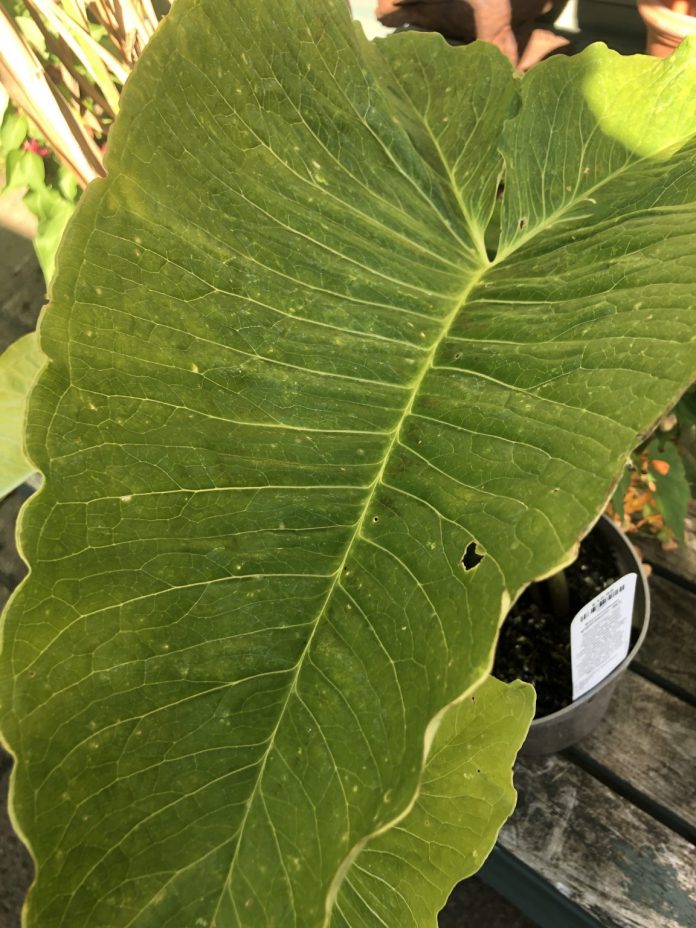
Sauromatum giganteum, commonly known as the voodoo lily or giant voodoo lily, is an unusual and fascinating plant known for its large, exotic-looking leaves and unique bloom. It can be grown in the UK, but it requires specific care due to its native tropical and subtropical habitat. Here’s how to grow Sauromatum giganteum in the UK:
1. Choose a Suitable Location:
- Select a planting location that receives dappled or indirect sunlight. Avoid direct sun exposure, especially during the hottest part of the day.
2. Soil Preparation:
- Voodoo lilies prefer well-draining, rich, and organic soil. You can amend your garden soil with organic matter like compost to improve its fertility and drainage.
3. Planting:
- Plant the tuber-like corms of Sauromatum giganteum in early spring after the last frost date. Plant them about 4-6 inches deep and spaced 12-18 inches apart.
4. Watering:
- Keep the soil consistently moist during the growing season (spring and early summer). Water when the top inch of soil feels dry to the touch. Reduce watering in late summer when the plant goes dormant.
5. Fertilization:
- Fertilize your voodoo lily sparingly with a balanced, slow-release fertilizer in early spring when new growth starts. Avoid over-fertilizing, as excessive nutrients can harm the plant.
6. Mulching:
- Apply a layer of mulch around the base of the plant to help retain moisture and regulate soil temperature. This is especially important during the colder months.
7. Protect from Frost:
- Voodoo lilies are frost hardy to a certain degree but must be kept reasonably dry. If they are wet over winter then the bulbs will rot. (If you are going to leave them out and take a chance it is best to cover in a thick mulch) In the UK, it’s important to protect them from frost during the winter as our winters tend to be wet. Before the first frost, dig up the corms and store them in a cool, dry place for the winter, ideally at temperatures around 50-60°F (10-15°C). Replant them in spring.
8. Maintenance:
- As the plant grows, it will produce large, tropical-looking leaves. Prune any damaged or yellowing leaves to maintain the plant’s appearance.
9. Blooming and Dormancy:
- Sauromatum giganteum has a fascinating bloom that resembles a corpse flower. The inflorescence appears in late spring to early summer.
- After flowering, the plant will start to go dormant, and the leaves will die back. This is a natural part of its growth cycle. Reduce watering during this period.
10. Pests and Diseases:
- Keep an eye out for slugs and snails, as they can damage the foliage. You can use organic slug and snail control methods to protect your plant.
By following these guidelines, you can successfully grow Sauromatum giganteum in the UK. Remember to provide protection from frost during the winter months to ensure the longevity of your voodoo lily.
Sauromatum giganteum – Grow Guide
Common name: Giant Voodoo Lily, Giant Sauromatum
Family: Araceae
Type: Tuberous perennial
Hardiness: RHS H4 – hardy in mild UK gardens with good drainage and winter protection
Ultimate size: 1.2–1.5 m tall × 60–90 cm spread
Overview
Sauromatum giganteum is a bold, architectural aroid grown for its huge, glossy, deeply divided leaves and its dramatic spring inflorescence, which appears before the foliage. Like many aroids, the flower emits a strong scent to attract pollinators, but the real garden impact comes from its tropical foliage through summer.
Position
- Light: Full sun to partial shade
- Performs best in light shade in the UK
- Sheltered from strong winds to protect tall stems and large leaves
Soil
- Type: Free-draining, fertile, humus-rich soil
- pH: Neutral to slightly acidic
- Good drainage is essential, especially in winter
Planting
- When: Spring, once soil begins to warm
- Plant tubers 10–15 cm deep
- Space 60–90 cm apart
- Suitable for borders or very large containers
Watering
- Water regularly during active growth
- Keep soil evenly moist but not waterlogged
- Reduce watering once foliage begins to die back in autumn
Feeding
- Feed with a balanced fertiliser in spring
- Follow with liquid feed every 3–4 weeks during the growing season
- Avoid excessive nitrogen which can cause soft growth
Growth & Habit
- Upright, dramatic perennial with thick, mottled stems
- Single or few large leaves emerge after flowering
- Dies back completely in autumn
Flowering
- Month: April–May
- Flower: Large spathe and spadix, greenish-purple to maroon
- Scent: Strong and unpleasant, short-lived (a few days)
Maintenance
- Remove spent flower once it collapses
- Mulch in autumn to protect tubers in the ground
- In colder or wetter areas, lift tubers and store frost-free over winter
- Divide congested tubers every few years
Propagation
- Tuber division: Best in spring
- Offsets form naturally around the main tuber
Pests & Problems
- Generally trouble-free
- Slugs may damage emerging shoots
- Tubers may rot in poorly drained soil
Garden Use
- Tropical or jungle-style borders
- Architectural focal plant
- Woodland-edge planting
- Excellent with:
- Colocasia
- Tetrapanax
- Ricinus
- Large ferns
Quick Reference Table
| Feature | Details |
|---|---|
| Hardiness | RHS H4 |
| Height | 1.2–1.5 m |
| Spread | 60–90 cm |
| Flowering | April–May |
| Position | Sun to partial shade |
| Soil | Fertile, free-draining |
| Water | Regular in growth |
| Feeding | Monthly during season |
| Propagation | Tuber division |
| Maintenance | Mulch or lift in winter |
| Best feature | Huge tropical foliage |