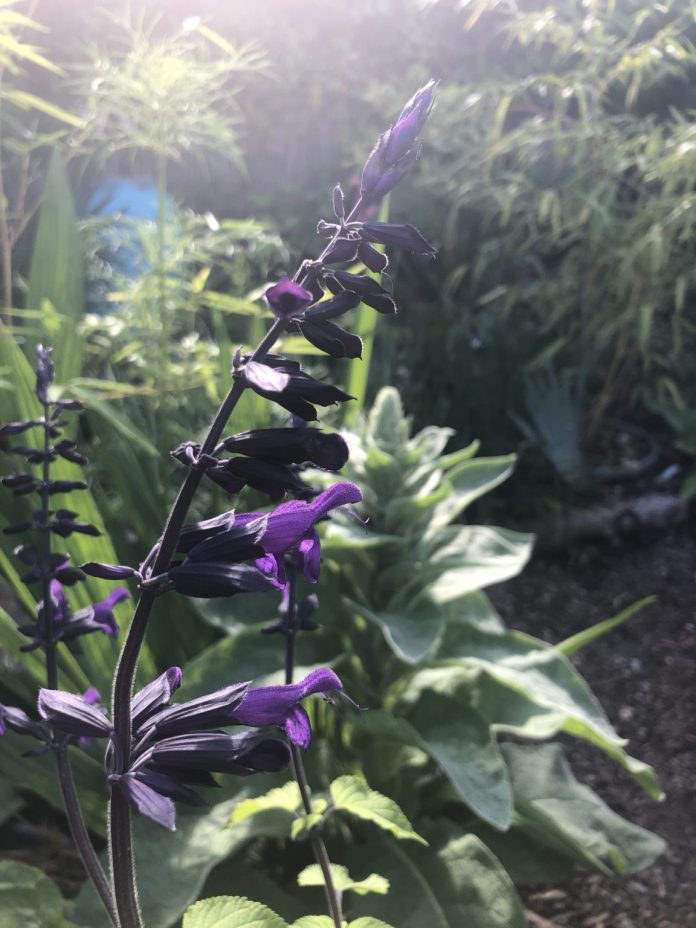
Salvia ‘Amistad’ is a beautiful perennial plant known for its striking deep purple flowers and velvety green leaves. Here’s a guide on how to grow Salvia ‘Amistad’:
- Climate and location: Salvia ‘Amistad’ thrives in warm climates, ideally in USDA hardiness zones 8-11. It requires full sun to partial shade. Choose a location in your garden that receives at least 6-8 hours of direct sunlight each day.
- Soil preparation: The plant prefers well-draining soil with good organic matter content. Prepare the soil by loosening it with a garden fork or tiller. Incorporate compost or well-rotted manure into the soil to improve its fertility and drainage.
- Planting: Plant Salvia ‘Amistad’ in the spring after the last frost date in your area. Dig a hole that is slightly larger than the root ball of the plant. Place the plant in the hole, making sure the top of the root ball is level with the soil surface. Fill the hole with soil and gently firm it around the plant.
- Watering: After planting, water the Salvia ‘Amistad’ thoroughly to help establish its roots. Once established, the plant is somewhat drought-tolerant but will perform best with regular watering. Water deeply whenever the top inch of soil feels dry. Avoid overwatering, as excessive moisture can lead to root rot.
- Mulching: Apply a layer of organic mulch, such as wood chips or bark, around the base of the plant. Mulching helps retain soil moisture, suppresses weeds, and regulates soil temperature.
- Fertilization: Salvia ‘Amistad’ benefits from occasional feeding. Use a balanced slow-release fertilizer or a liquid fertilizer with a higher phosphorus content to promote flower production. Follow the manufacturer’s instructions for application rates and frequency.
- Pruning: Prune Salvia ‘Amistad’ in early spring or late winter before new growth begins. Cut back the old stems to about 6-8 inches above the ground to encourage fresh growth and a more compact shape. Deadhead spent flowers regularly to promote continuous blooming.
- Winter care: In colder regions, Salvia ‘Amistad’ may not be fully hardy. Apply a layer of mulch around the base of the plant in late fall to protect it from frost and cold temperatures. Alternatively, you can also dig up the plant and overwinter it indoors in a cool, bright location.
- Propagation: Salvia ‘Amistad’ can be propagated through stem cuttings. Take 3-4 inch long cuttings from healthy, non-flowering stems in late spring or early summer. Remove the lower leaves and dip the cut end in a rooting hormone powder. Plant the cuttings in well-draining soil and keep them moist until roots develop.
Here’s a full grow guide for Salvia ‘Amistad’, covering all the key details for gardeners:
Salvia ‘Amistad’ – Grow Guide
Salvia ‘Amistad’ is a stunning, long-flowering perennial known for its deep violet-blue flowers and aromatic foliage. It’s a favourite in borders, containers, and pollinator-friendly gardens due to its extended summer bloom and attractive scent.
Botanical Information
- Botanical Name: Salvia guaranitica × Salvia longispicata ‘Amistad’
- Family: Lamiaceae (mint family)
- Common Name: Amistad Sage
- Plant Type: Herbaceous perennial (tender in frost-prone areas)
Growth Habit
- Height: 90–120 cm (occasionally up to 1.5 m)
- Spread: 60–80 cm
- Form: Upright, bushy perennial with multiple flower spikes
- Foliage: Aromatic, dark green leaves with a slightly hairy texture
- Flowers: Deep violet-blue tubular flowers arranged in spikes
Soil Requirements
- Type: Well-drained, fertile soils; tolerates loam or sandy soils
- Moisture: Prefers evenly moist soil, but tolerant of short dry periods once established
- pH: Neutral to slightly acidic (pH 6.0–7.0)
- Fertilization: Feed in spring and summer with a balanced or high-potash fertilizer for continuous flowering
Position and Sunlight
- Sun: Full sun to light shade
- Shade: Flowering reduced in full shade
- Air Circulation: Good airflow reduces mildew risk
Hardiness
- Hardiness: Hardy to USDA zones 8–10; in the UK, often treated as a half-hardy perennial
- UK Care: Needs mulch or fleece protection in colder areas, or lift and overwinter indoors
- Winter Care: Cut back to 10–15 cm above the ground in late autumn; protect crown with mulch or move pots to frost-free locations
Flowering
- Months: June to October
- Flower Type: Deep violet-blue tubular flowers in spikes
- Pollinators: Very attractive to bees, butterflies, and hummingbirds
- Flower Duration: Long-lasting; deadheading encourages continuous bloom
Propagation
- Cuttings: Softwood or semi-hardwood cuttings in late spring or early summer root readily
- Seed: Rarely used for named cultivars as offspring may not be true to type
- Division: Not commonly used
Cultivation Tips
- Support: Staking usually unnecessary, but taller spikes may benefit from light support in windy areas
- Deadheading: Optional; removes old flowers and encourages continued blooming
- Spacing: 60–80 cm apart to allow airflow and avoid crowding
- Companion Plants: Grasses, Echinacea, Rudbeckia, or other pollinator-friendly perennials
- Pests/Diseases: Generally low-maintenance; occasional aphids, slugs, or powdery mildew
Garden Uses
- Borders: Adds late-summer and autumn colour with upright architectural spikes
- Containers: Works well in large pots or patio planters
- Pollinator-Friendly: Excellent for attracting bees and butterflies
- Cut Flowers: Long-lasting flowers suitable for floral arrangements
Summary
Salvia ‘Amistad’ is a long-flowering, striking perennial with deep violet-blue blooms and aromatic foliage. It thrives in well-drained, fertile soil with full sun to light shade. While half-hardy in colder climates, it can be overwintered with mulch protection or in frost-free conditions. Its pollinator-friendly flowers, long flowering season, and easy maintenance make it a favourite in UK borders, woodland-style plantings, and container gardens.