
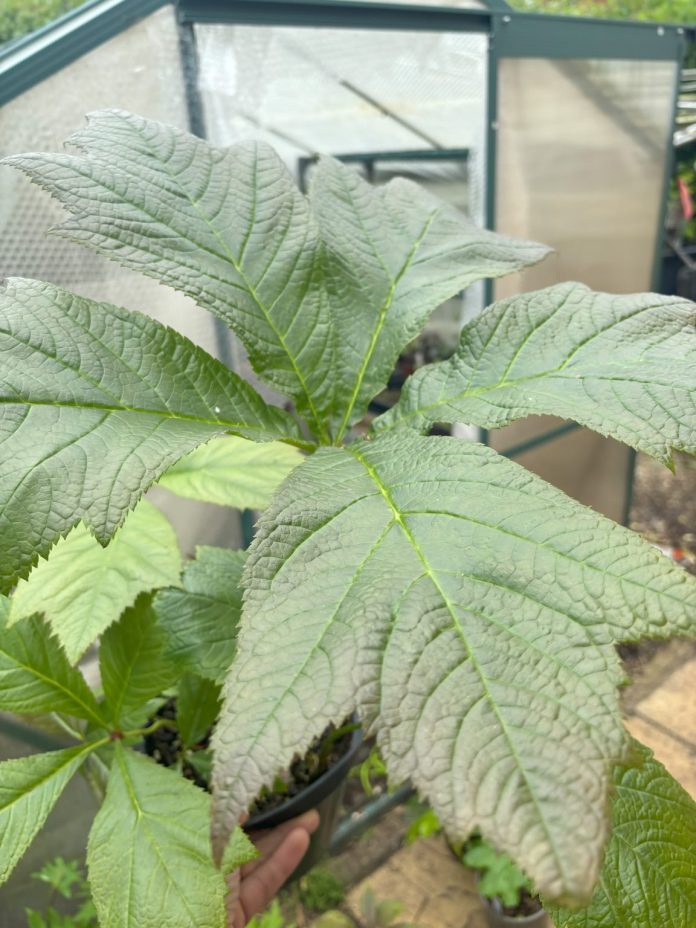
Rodgersia podophylla ‘Braunlaub’ is a striking perennial known for its bold, palmate leaves and creamy white flower clusters. Native to East Asia, this plant thrives in woodland settings, making it an excellent choice for shaded gardens in the UK. With proper care, ‘Braunlaub’ can become a stunning focal point in your garden. Here’s how to grow Rodgersia podophylla ‘Braunlaub’
Understanding Rodgersia podophylla ‘Braunlaub’
Botanical Name: Rodgersia podophylla ‘Braunlaub’
Common Name: Bronze-leaf Rodgersia
Family: Saxifragaceae
Height & Spread: 1.2 to 1.5 meters in height and spread
Flowering Period: June to July
Foliage: Large, bronze to dark green, palmate leaves
Site Selection
Light Requirements:
Rodgersia podophylla ‘Braunlaub’ prefers partial to full shade. While it can tolerate some morning sun, too much direct sunlight, especially in the afternoon, can scorch its delicate leaves.
Soil Requirements:
The plant thrives in moist, fertile, and well-drained soil. A slightly acidic to neutral pH is ideal. Incorporate plenty of organic matter, such as compost or well-rotted manure, to enhance soil structure and fertility.
Planting Rodgersia podophylla ‘Braunlaub’
Planting Time:
The best time to plant Rodgersia is in the spring or early autumn. This allows the plant to establish its roots before the onset of extreme temperatures.
Planting Steps:
- Prepare the Soil: Dig a hole twice the width of the root ball and slightly deeper than its height. Amend the soil with organic matter.
- Planting Depth: Place the plant in the hole at the same depth it was growing in the pot. The crown should be level with the soil surface.
- Backfill and Water: Fill the hole with soil, firming gently around the base. Water thoroughly to settle the soil and eliminate air pockets.
Care and Maintenance
Watering:
Rodgersia requires consistently moist soil. Water regularly, especially during dry spells, but avoid waterlogging. Mulching with organic matter helps retain moisture and suppress weeds.
Feeding:
Apply a balanced, slow-release fertilizer in early spring. Supplement with a liquid feed during the growing season if necessary.
Mulching:
Apply a thick layer of mulch around the base of the plant in spring. Mulching helps retain moisture, regulate soil temperature, and add nutrients.
Pruning:
Deadhead spent flowers to encourage a tidy appearance and prevent self-seeding. In autumn, after the foliage has died back, cut back the old stems to ground level.
Pests and Diseases
Rodgersia podophylla ‘Braunlaub’ is generally resistant to pests and diseases. However, slugs and snails can be an issue, particularly with young plants. Use organic slug pellets or traps to manage these pests.
Winter Care
Rodgersia is hardy in the UK, but in colder regions, a layer of mulch or leaf litter can provide extra protection for the roots during winter. Ensure the mulch is kept away from the crown to prevent rot.
Propagation
Division:
The easiest way to propagate Rodgersia is by division in spring or autumn. Lift the clump and divide it into sections, each with a piece of the rhizome and several shoots. Replant immediately.
Companion Planting
Rodgersia podophylla ‘Braunlaub’ pairs well with other shade-loving plants like ferns, hostas, and astilbes. Its bold foliage contrasts beautifully with the fine textures of these plants, creating a lush, layered effect in the garden.
Conclusion
With its dramatic foliage and architectural presence, Rodgersia podophylla ‘Braunlaub’ is a standout choice for UK gardens. By providing the right conditions and care, you can enjoy this striking plant for many years. Whether you’re looking to create a woodland garden or add interest to a shaded border, ‘Braunlaub’ is sure to impress.
Rodgersia podophylla ‘Braunlaub’ – Grow Guide
Common name: Rodgersia
Family: Saxifragaceae
Plant type: Herbaceous perennial
Hardiness: RHS H6 – fully hardy throughout the UK
Height & spread: 80–120 cm tall × 90–120 cm wide
Overview
Rodgersia podophylla ‘Braunlaub’ is a bold, moisture-loving perennial grown primarily for its dramatic foliage. The large, palmate leaves emerge rich bronze-purple in spring, gradually turning deep green as the season progresses. It is ideal for woodland gardens, damp borders, and planting near water, where it adds strong structure and texture.
Position
- Partial shade to full shade is ideal
- Tolerates full sun only if soil remains consistently moist
- Shelter from strong winds to protect large leaves
Soil
- Moist, fertile, humus-rich soil
- Neutral to slightly acidic preferred (pH 5.5–7.0)
- Performs poorly in dry or sandy soils
- Excellent for bog gardens and pond margins (not submerged)
Planting
- Plant in spring or autumn
- Space plants 90–120 cm apart
- Mulch well after planting to retain moisture
Watering
- Requires consistently moist soil, especially in summer
- Water deeply during dry spells
- Mulching is essential to prevent drying out
Feeding
- Apply well-rotted manure or garden compost in spring
- A balanced fertiliser in late spring supports strong foliage growth
- Avoid over-feeding, which may produce weak growth
Growth & Habit
- Forms a large clump of dramatic, deeply lobed leaves
- Spring foliage colour is strongest in cool, moist conditions
- Clump slowly increases in size without becoming invasive
Flowering
- Months: June–July
- Flowers: Creamy-white plumes held above the foliage
- Flowers add lightness but the plant is mainly grown for foliage impact
Maintenance
- Remove spent flower stems if desired
- Cut back foliage in autumn once it dies back
- Mulch annually to maintain soil moisture and fertility
Pests & Problems
- Generally trouble-free
- Young leaves may suffer from slugs and snails
- Leaf scorch can occur if soil dries out
Propagation
- Division in spring as growth begins
- Sections should include healthy crowns and roots
- Seed propagation is possible but slow and variable
Garden & Display Use
- Woodland and shade borders
- Damp or boggy areas
- Pond and stream margins
- Pairs well with:
- Hostas
- Astilbes
- Darmera
- Ferns
Quick Reference Table
| Feature | Details |
|---|---|
| Hardiness | RHS H6 |
| Height | 80–120 cm |
| Spread | 90–120 cm |
| Flowering | June–July |
| Position | Partial to full shade |
| Soil | Moist, fertile, humus-rich; pH 5.5–7.0 |
| Water | High moisture requirement |
| Feeding | Compost or manure in spring |
| Propagation | Division |
| Best feature | Bronze spring foliage and bold architectural leaves |