
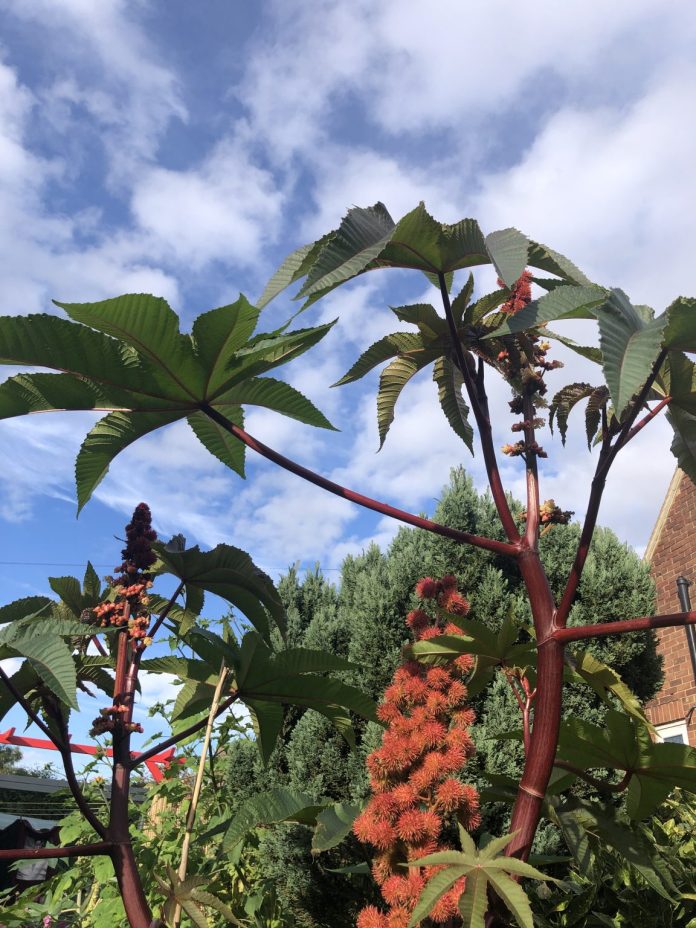
Ricinus communis, commonly known as the castor oil plant, is a versatile and striking plant prized for its unique foliage and valuable oil. Native to the tropical regions of Africa and India, this plant can grow as an annual in temperate climates and as a perennial in tropical and subtropical regions. Here’s a detailed guide on how to grow Ricinus communis successfully.
1. Understanding Ricinus communis
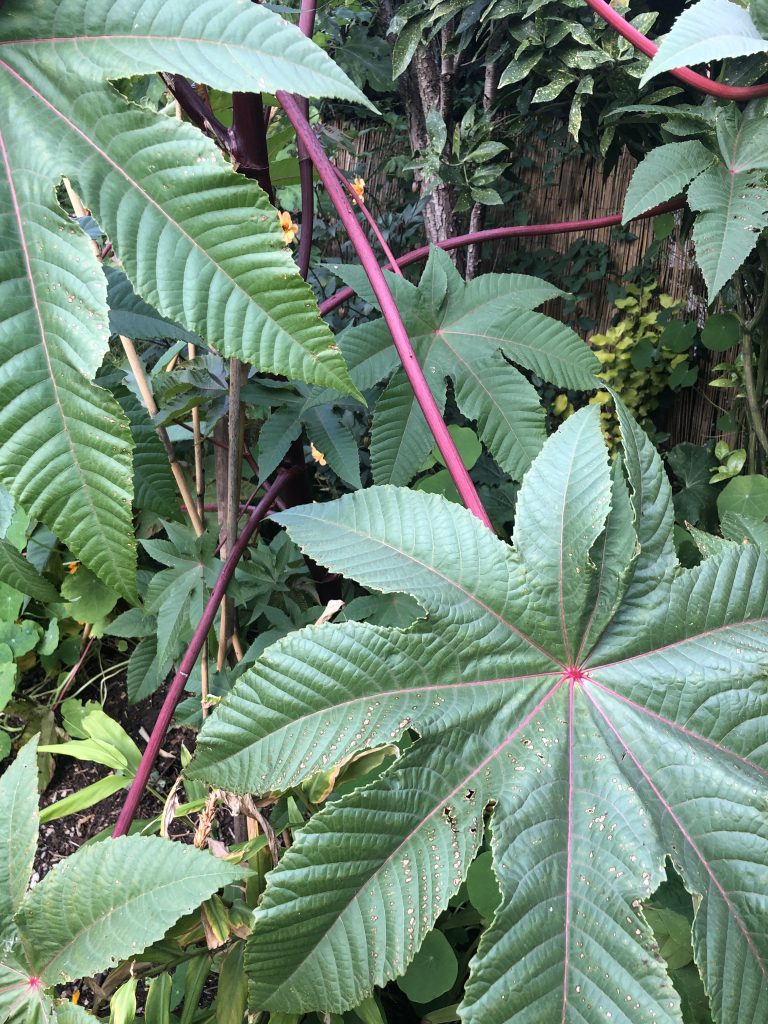
Description: Ricinus communis is a fast-growing, tall plant that can reach heights of up to 10-13 feet (3-4 meters) in a single growing season. It features large, glossy, palmate leaves that can be green, red, or purple, depending on the variety. The plant produces small, inconspicuous flowers, followed by spiny, seed-filled capsules.
Uses: Castor oil, extracted from the seeds, is widely used in pharmaceuticals, cosmetics, and industrial applications. However, it is essential to note that the seeds contain ricin, a highly toxic compound.
Ricinus communis, commonly known as the castor oil plant, comes in various cultivars that exhibit a range of colors, sizes, and leaf shapes. These different types are cultivated for their ornamental appeal as well as for their oil production. Here are some popular varieties:
Types
1. Ricinus communis ‘Carmencita’
Description: ‘Carmencita’ is known for its striking, deep red or bronze foliage and vibrant red flowers. The plant typically grows to about 4-6 feet (1.2-1.8 meters) tall.
Uses: Primarily grown for ornamental purposes due to its eye-catching color.
2. Ricinus communis ‘Gibsonii’
Description: ‘Gibsonii’ features dark, metallic green leaves with a hint of red. This variety grows up to 4-5 feet (1.2-1.5 meters) tall.
Uses: Often used in garden borders and as a decorative plant in landscaping due to its unique foliage.
3. Ricinus communis ‘Impala’
Description: ‘Impala’ has large, bronze to purple leaves and grows to about 4-5 feet (1.2-1.5 meters) tall. It also produces attractive red flowers.
Uses: Suitable for adding dramatic color to gardens and mixed borders.
4. Ricinus communis ‘New Zealand Purple’
Description: This variety is distinguished by its dark purple leaves and stems. It can grow up to 6-8 feet (1.8-2.4 meters) tall.
Uses: Highly valued for its bold color, making it a striking focal point in gardens.
5. Ricinus communis ‘Zanzibarensis’
Description: ‘Zanzibarensis’ is one of the largest varieties, capable of reaching heights of 10-15 feet (3-4.5 meters). It has massive green leaves and is often used as a dramatic backdrop in large gardens.
Uses: Ideal for creating a tropical look in gardens due to its impressive size and lush foliage.
6. Ricinus communis ‘Red Spire’
Description: ‘Red Spire’ features reddish-bronze leaves and can grow up to 8-10 feet (2.4-3 meters) tall. The plant is also known for its red stems and seed pods.
Uses: Perfect for adding vertical interest and color contrast in gardens.
7. Ricinus communis ‘Green Giant’
Description: As the name suggests, ‘Green Giant’ has large, green leaves and can grow up to 12-15 feet (3.6-4.5 meters) tall. It produces small, inconspicuous flowers.
Uses: Often used as a privacy screen or windbreak due to its tall, dense growth.
8. Ricinus communis ‘Sanguineus’
Description: ‘Sanguineus’ is known for its deep red leaves and stems. It can grow up to 6-8 feet (1.8-2.4 meters) tall and has red flowers.
Uses: Valued for its deep red coloration, making it a standout feature in any garden.
9. Ricinus communis ‘Blue Giant’
Description: This variety features bluish-green leaves and can grow up to 10-12 feet (3-3.6 meters) tall. It is less common but valued for its unique leaf color.
Uses: Ideal for adding a unique color variation to garden designs.
10. Ricinus communis ‘Northern Lights’
Description: ‘Northern Lights’ has green leaves with red veins and stems. It can reach heights of 6-8 feet (1.8-2.4 meters).
Uses: Often used in mixed borders and as a striking ornamental plant.
The diverse varieties of Ricinus communis offer gardeners a wide range of options for adding color, height, and texture to their landscapes. Whether you prefer the bold reds of ‘Carmencita’ and ‘Sanguineus’ or the towering presence of ‘Zanzibarensis’ and ‘Green Giant,’ there’s a castor oil plant variety to suit every garden style and purpose. When choosing a variety, consider your climate, garden space, and the visual impact you wish to achieve.
Care
2. Climate and Soil Requirements
Climate: Ricinus communis thrives in warm climates. It prefers temperatures between 77°F and 86°F (25°C to 30°C). In cooler regions, it can be grown as an annual, as it is sensitive to frost.
Soil: The plant prefers well-drained, fertile soil with a pH range of 5.5 to 7.0. It can tolerate various soil types, including sandy, loamy, and clay soils, but good drainage is crucial to prevent root rot.
3. Planting Ricinus communis
Propagation: Ricinus communis is usually propagated from seeds. Here’s a step-by-step guide to seed propagation:
- Seed Preparation: Soak the seeds in warm water for 24 hours to soften the seed coat and improve germination rates.
- Sowing Seeds: Plant the seeds directly in the garden after the last frost date or start them indoors 6-8 weeks before the last expected frost. Sow seeds about 1 inch (2.5 cm) deep and 3 feet (1 meter) apart.
- Germination: Seeds typically germinate within 10-14 days. Maintain a soil temperature of 70°F to 75°F (21°C to 24°C) for optimal germination.
4. Care and Maintenance
Watering: Keep the soil consistently moist but not waterlogged. Water the plants regularly, especially during dry periods, but avoid overhead watering to prevent leaf diseases.
Fertilization: Apply a balanced fertilizer (e.g., 10-10-10) every 4-6 weeks during the growing season. Alternatively, incorporate organic compost into the soil to provide a steady supply of nutrients.
Pruning: Pruning is generally not required for Ricinus communis, but removing spent flower spikes can promote bushier growth and improve the plant’s appearance.
5. Pest and Disease Management
Pests: Ricinus communis is relatively pest-resistant. However, it can occasionally be affected by aphids, whiteflies, and spider mites. Regular inspection and the use of insecticidal soap or neem oil can help manage these pests.
Diseases: The plant is susceptible to fungal diseases such as root rot and leaf spot, especially in poorly drained soils. Ensure proper spacing, adequate air circulation, and avoid overhead watering to minimize disease risk.
6. Harvesting and Handling
Harvesting Seeds: Allow the seed capsules to mature and turn brown on the plant. Wear gloves when handling the capsules, as the spines can be irritating. Dry the capsules in a well-ventilated area until they split open and release the seeds.
Handling Caution: Always handle Ricinus communis seeds with care due to the presence of ricin. Ensure seeds are kept out of reach of children and pets. When working with the plant, especially during seed harvesting, wearing gloves is advisable.
7. Safety Considerations
Toxicity: All parts of Ricinus communis, especially the seeds, are highly toxic if ingested. Educate family members about the plant’s toxicity and consider growing it in areas inaccessible to children and pets.
Environmental Impact: In some regions, Ricinus communis can become invasive. Monitor its growth and spread, and take appropriate measures to control its propagation if necessary.
Conclusion
Ricinus communis is a visually stunning and beneficial plant when grown with proper care and attention. By understanding its growing requirements and handling precautions, you can successfully cultivate this plant in your garden, enjoying its unique beauty and the practical benefits of castor oil. Whether grown for ornamental purposes or for its seeds, Ricinus communis can be a valuable addition to your plant collection.
Ricinus communis – Grow Guide
Common name: Castor Oil Plant
Family: Euphorbiaceae
Plant type: Tender perennial, often grown as an annual in the UK
Hardiness: RHS H1 – frost-tender; cannot survive UK winters outdoors
Height & spread: 2–4 m tall × 1–2 m wide (depending on variety and conditions)
Overview
Ricinus communis is a dramatic, fast-growing plant valued for its architectural foliage and bold presence in summer borders. Leaves are large, palmate, and glossy, often with deep red or purple varieties available. Though tender in the UK, it is widely grown as an annual specimen plant or in containers for patios and tropical-style gardens.
⚠️ Caution: All parts of the plant, particularly seeds, are highly toxic if ingested. Handle with care, especially around children and pets.
Position
- Full sun for vigorous growth and maximum leaf colour
- Sheltered from strong winds, as large leaves can tear
- Ideal for borders, patios, and large containers
Soil
- Fertile, well-drained soil
- Can tolerate poor soil but will perform best in nutrient-rich compost
- Slightly acidic to neutral pH preferred (6.0–7.0)
Planting
- Sow seeds indoors 6–8 weeks before last frost (March–April in the UK)
- Transplant outdoors after all risk of frost has passed
- Space plants 1–2 m apart depending on variety
- Can also be grown in large containers for easier mobility and winter protection
Watering
- Keep soil evenly moist during growth
- Reduce watering slightly once flowering ends
- Avoid waterlogging, which can damage roots
Feeding
- Apply a balanced liquid fertiliser every 2–3 weeks during the growing season
- Slow-release fertiliser at planting promotes strong early growth
- Avoid over-fertilising, which can produce excessive leaf growth at the expense of flowers
Growth & Habit
- Fast-growing, upright habit
- Palmate leaves 20–50 cm across, sometimes deep red, bronze, or green depending on cultivar
- Flower spikes are spiky and compact, appearing above the foliage in summer
- Can reach 2–4 m in a single season in ideal conditions
Flowering
- Months: July–September
- Flowers: Small, spiky clusters in green, red, or purple; mainly grown for foliage
- Excellent as a specimen plant in summer borders
Maintenance
- Pinch out growing tips early to encourage bushier growth if desired
- Remove dead leaves or flower spikes to tidy the plant
- Lift container-grown plants or cut back to store indoors in mild winter areas (optional)
- Watch for slug damage on young leaves
Pests & Problems
- Generally trouble-free
- Can attract slugs, snails, and occasional aphids
- Sensitive to frost; all parts die in UK winter outdoors
Propagation
- Seed: Fastest and easiest method; sow indoors 6–8 weeks before last frost
- Rarely by cuttings
- Seedlings grow rapidly and can be direct-planted in summer after frost risk
Garden & Display Use
- Architectural summer specimen in mixed borders
- Container planting for patios and terraces
- Tropical-style gardens, planted with Cannas, Phormium, and ornamental grasses
- Companion plants:
- Crocosmia
- Canna lilies
- Cannas
- Cordylines
Quick Reference Table
| Feature | Details |
|---|---|
| Hardiness | RHS H1 – frost-tender; grown as annual in UK |
| Height | 2–4 m |
| Spread | 1–2 m |
| Flowering | July–September |
| Position | Full sun; sheltered from wind |
| Soil | Fertile, well-drained; pH 6.0–7.0 |
| Water | Evenly moist during growth; reduce after flowering |
| Feeding | Balanced liquid fertiliser every 2–3 weeks |
| Propagation | Seed (indoors before last frost) |
| Maintenance | Pinch tips for bushiness; remove dead foliage; protect from frost |
| Best feature | Architectural palmate foliage and tropical summer presence |
| Toxicity | Highly toxic if ingested – handle with care |