
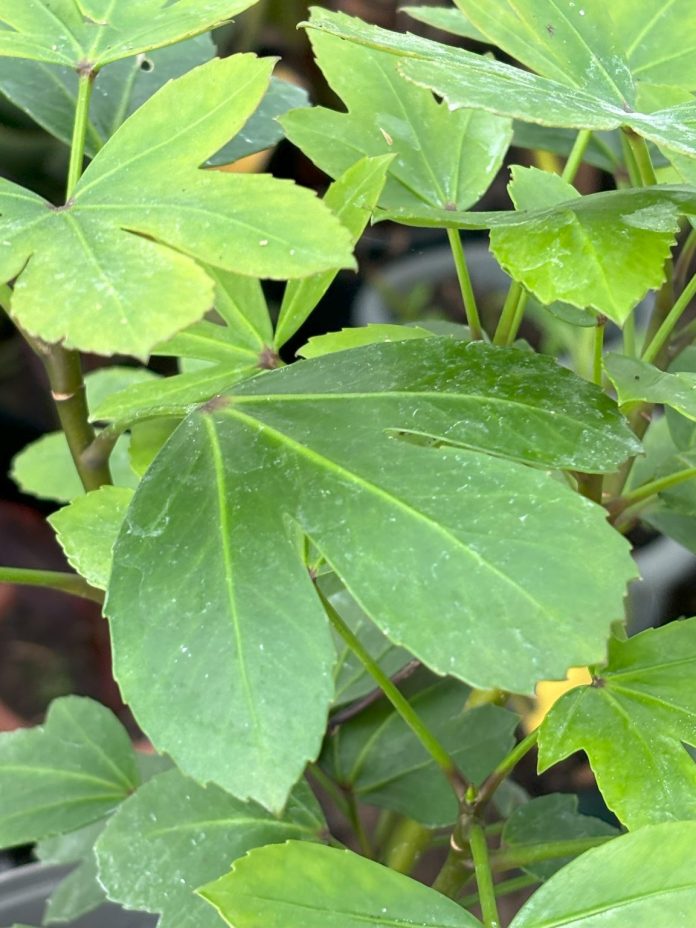
Pseudopanax ‘Cyril Watson’, also known as Mountain Toatoa, is a striking evergreen shrub native to New Zealand. Here’s a general guide on how to grow Pseudopanax ‘Cyril Watson’
- Climate and Location: Pseudopanax ‘Cyril Watson’ thrives in mild temperate climates and prefers partial shade to full sun. It’s best suited for USDA hardiness zones 9-11. Choose a location in your garden that receives dappled sunlight or partial shade, particularly during the hottest part of the day.
- Soil: This plant prefers well-draining, fertile soil. Sandy loam or loamy soil with good organic content is ideal. Ensure proper drainage to prevent waterlogging, which can cause root rot.
- Planting: Plant ‘Cyril Watson’ in the spring or fall. Dig a hole that’s slightly larger than the root ball of the plant. Place the plant in the hole and backfill with soil, gently firming it around the base of the plant. Water thoroughly after planting to settle the soil around the roots.
- Watering: Keep the soil consistently moist, especially during the plant’s establishment period. Once established, ‘Cyril Watson’ is moderately drought-tolerant but will benefit from regular watering during dry spells, particularly in warmer climates.
- Mulching: Apply a layer of organic mulch, such as bark chips or compost, around the base of the plant to help retain moisture and suppress weed growth. Leave a gap between the mulch and the stem to prevent rot.
- Fertilizing: Feed ‘Cyril Watson’ with a balanced, slow-release fertilizer in the spring. Follow the manufacturer’s instructions for application rates. Avoid over-fertilizing, as this can lead to excessive foliage growth at the expense of overall plant health.
- Pruning: Minimal pruning is typically required for ‘Cyril Watson’. Remove any dead, damaged, or diseased branches as needed to maintain a healthy and tidy appearance. You can also lightly prune to shape the plant or control its size, if desired.
- Protection: In colder climates, provide protection from frost during the winter months, especially for young plants. Covering the plant with a frost cloth or bringing containers indoors during cold spells can help prevent damage.
- Pests and Diseases: ‘Cyril Watson’ is generally resistant to pests and diseases, but occasional issues such as scale insects or leaf spot may occur. Monitor the plant regularly and treat any problems promptly with appropriate measures, such as insecticidal soap or fungicide.
- Propagation: ‘Cyril Watson’ can be propagated from seeds or semi-hardwood cuttings taken in late summer. Provide bottom heat and keep the cuttings in a humid environment until they root.
By following these guidelines, you can grow and care for Pseudopanax ‘Cyril Watson’ successfully, enjoying its unique foliage and architectural presence in your garden landscape.
Pseudopanax ‘Cyril Watson’ – Grow Guide
Common name: ‘Cyril Watson’ Lancewood
Family: Araliaceae
Type: Evergreen shrub / small tree
Hardiness: RHS H3–H4 – hardy in mild UK areas; frost protection recommended in colder gardens
Ultimate size: 3–4 m tall × 2–3 m wide
Overview
Pseudopanax ‘Cyril Watson’ is an evergreen, architectural New Zealand shrub with stiff, glossy lance-shaped leaves arranged in a dramatic rosette. It is highly valued for tropical-style borders or specimen planting, and its compact, upright habit makes it ideal for garden feature planting or large containers.
Position
- Light: Full sun to partial shade
- Sheltered from strong winds and frost
- Performs well in mild coastal gardens or sheltered urban sites
Soil
- Type: Fertile, well-draining soil
- Enrich planting area with compost or leaf mould for best growth
- pH: Neutral to slightly acidic
Planting
- When: Spring or autumn
- Space 2–3 m apart for specimen planting
- Plant at the same depth as grown previously, firming soil around roots
- Mulch base to conserve moisture and suppress weeds
Watering
- Water regularly during establishment (first 1–2 years)
- Once established, moderately drought-tolerant
- Avoid waterlogged soil, which can rot roots
Feeding
- Apply a slow-release fertiliser in spring
- Optional liquid feed during summer for vigorous growth
Growth & Habit
- Upright, compact evergreen shrub
- Stiff, glossy, lance-shaped leaves on strong stems
- Architectural habit provides year-round structure
- Can tolerate light pruning to maintain shape
Flowering
- Month: Summer (July–August)
- Flowers: Small, inconspicuous greenish-white clusters; main appeal is foliage and form
Maintenance
- Remove dead or damaged leaves as required
- Mulch around base in winter in colder areas
- Light pruning after flowering to maintain shape
- Protect young plants from hard frosts
Propagation
- Semi-hardwood cuttings: Summer, root in warm, humid conditions
- Seed: Slow and rarely used in cultivation
Pests & Problems
- Generally pest- and disease-free in the UK
- Occasional scale insects or aphids under glass or in sheltered conditions
- Frost damage possible in exposed sites
Garden Use
- Tropical-style borders or feature planting
- Large containers or patio specimens
- Architectural contrast with:
- Cordyline australis
- Phormium
- Dicksonia antarctica
- Gunnera
Quick Reference Table
| Feature | Details |
|---|---|
| Hardiness | RHS H3–H4 – hardy in mild UK gardens |
| Height | 3–4 m |
| Spread | 2–3 m |
| Flowering | Summer; small greenish-white clusters |
| Position | Full sun to partial shade; sheltered |
| Soil | Fertile, well-draining; neutral to slightly acidic |
| Water | Regular during establishment; moderate once established |
| Feeding | Slow-release in spring; optional summer liquid feed |
| Propagation | Semi-hardwood cuttings; seed (slow) |
| Maintenance | Remove damaged leaves; mulch; light pruning |
| Best feature | Stiff, glossy lance-shaped foliage and architectural habit |