
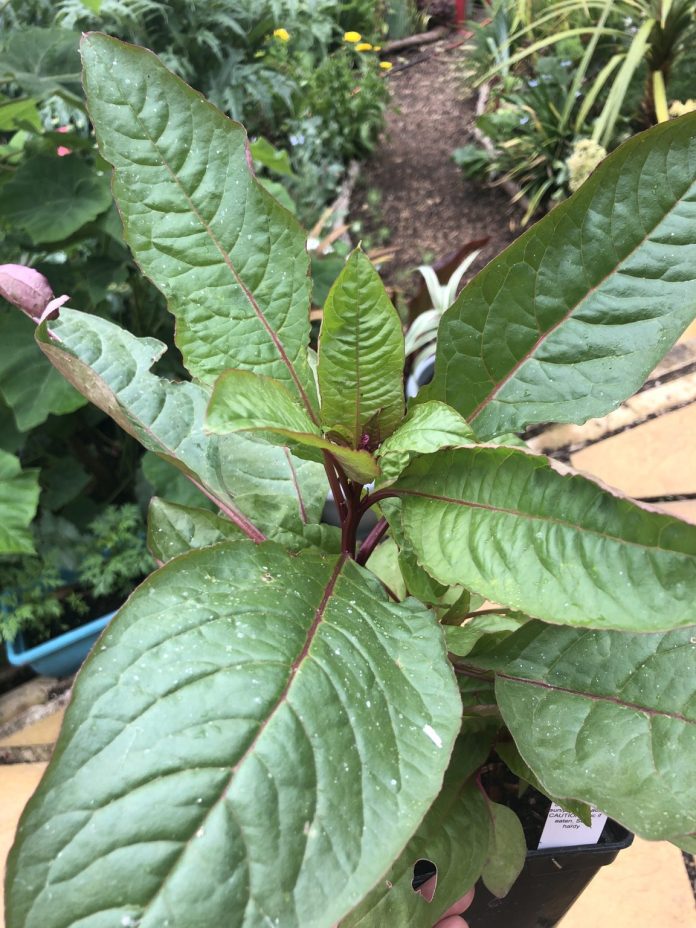
Phytolacca americana ‘Silberstein,’ commonly known as American pokeweed ‘Silberstein’ or Phytolacca laka boom, is a cultivar of the native American pokeweed. It is grown for its attractive, variegated foliage and berries. Here’s how to grow Phytolacca laka boom:
- Climate and Growing Conditions: Phytolacca laka boom is typically grown in temperate climates. It prefers full sun to partial shade and well-draining, fertile soil.
- Propagation: You can propagate Phytolacca laka boom through seeds or stem cuttings.
- Seeds: Collect mature berries from an existing plant in late summer or early fall. Crush the berries and extract the seeds. Clean the seeds and sow them in a seed-starting mix. Keep the soil consistently moist and place the container in a warm location with indirect sunlight. Germination may take several weeks.
- Stem Cuttings: Take 4-6 inch (10-15 cm) stem cuttings from a healthy plant in spring or early summer. Remove the lower leaves and dip the cut end in rooting hormone. Plant the cutting in a pot with a well-draining mix and keep it moist. Once the cutting has developed roots, it can be transplanted to its permanent location.
- Planting: Choose a suitable planting location with the right amount of sunlight. Prepare the soil by amending it with organic matter to improve its fertility and drainage. Space the plants about 2 to 3 feet apart to allow for their mature size.
- Watering: Phytolacca laka boom prefers consistent moisture but is relatively drought-tolerant once established. Water the plant regularly during the growing season, especially during dry spells.
- Mulching: Apply a layer of organic mulch around the plant to help retain soil moisture, regulate temperature, and prevent weed growth.
- Fertilizing: While Phytolacca laka boom can grow well in average garden soil, you can apply a balanced fertilizer in the spring to encourage healthy growth.
- Pruning: Regular pruning can help maintain the shape of the plant and prevent it from becoming too leggy. You can also remove any dead or damaged growth as needed.
- Winter Care: In regions with cold winters, Phytolacca laka boom may die back to the ground. Mulch around the base of the plant to protect the roots during winter.
- Pest and Disease Control: Phytolacca laka boom is relatively resistant to pests and diseases. However, like most plants, it can be susceptible to certain issues. Monitor your plant regularly for any signs of pests or diseases and take appropriate measures if needed.
Here’s a clear UK-focused grow guide for Phytolacca ‘Laka Boom’ (ornamental pokeweed), keeping its dramatic value and its cautions front and centre.
Phytolacca ‘Laka Boom’ – Grow Guide
Common name: Ornamental pokeweed
Family: Phytolaccaceae
Type: Herbaceous perennial
Hardiness: Hardy in most of the UK (H5–H6)
Ultimate size: 1.5–2 m tall × 1–1.5 m wide
Overview
Phytolacca ‘Laka Boom’ is grown for its huge leaves, thick purple stems, and long racemes of dark berries. It delivers instant, jungle-scale impact but is vigorous and self-seeding, and toxic if eaten.
Best used as a statement plant in bold, informal or tropical-style borders.
Position
- Light:
- Full sun to light shade
- Best colour and strongest growth in full sun
- Aspect:
- Sheltered from strong winds (stems can snap)
Soil
- Type:
- Fertile, moisture-retentive but free-draining soil
- pH:
- Neutral to slightly acidic
- Performs poorly on thin or dry soils
Planting
- When:
- Spring (preferred) or early autumn
- How:
- Plant at the same depth as grown in the pot
- Allow plenty of space—this plant gets big fast
- Mulch well after planting
Watering
- Water regularly during the first year
- Once established, fairly drought tolerant
- Growth is lushest with consistent moisture
Feeding
- Heavy feeder
- In spring apply:
- Well-rotted manure or compost
- Optional summer liquid feed for maximum size
Flowering & Berries
- Flowering:
- June–August
- Berries:
- August–October
- Flowers are small and greenish-white, followed by glossy deep purple-black berries
Growth Habit
- Fast-growing from late spring
- Dies back completely in winter
- Re-emerges late—often May in cooler areas
Maintenance
- Cut down to ground level after first frost
- Stake early if grown in exposed positions
- Remove flower spikes before seed sets if spread is a concern
Propagation
- Seed:
- Very easy (often self-sown)
- Division:
- Possible but rarely needed
⚠️ Dispose of unwanted seedlings responsibly.
Pests & Problems
- Generally pest-free
- Slugs may attack young shoots
- Main issue is self-seeding
Toxicity Warning
⚠️ All parts of Phytolacca are poisonous if ingested.
Do not grow where children or pets may eat berries.
Garden Use
- Tropical-style planting
- Bold herbaceous borders
- Exotic back-of-border feature
- Pairs well with:
- Ricinus
- Cannas
- Colocasia
- Large grasses