
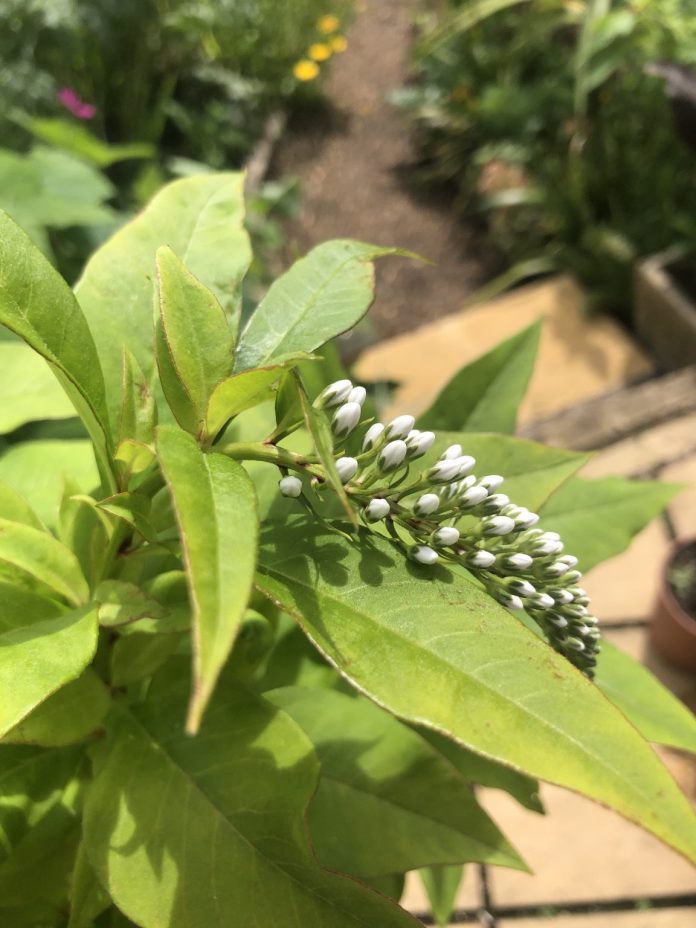
Lysimachia clethroides, commonly known as Gooseneck Loosestrife, is a beautiful herbaceous perennial that produces arching spikes of white, gooseneck-shaped flowers. Here’s how to grow and care for Lysimachia clethroides:
- Planting Time and Location: Plant Lysimachia clethroides in spring or early autumn. Choose a location that receives partial to full sun. While it can tolerate some shade, more sun generally results in better flowering. The plant prefers moist, well-draining soil.
- Soil Preparation: Prepare the planting area by loosening the soil and adding organic matter, such as compost. This will improve soil fertility, drainage, and moisture retention, which is beneficial for the plant’s growth.
- Planting: Dig a hole that is about the same depth as the nursery container or root ball and slightly wider. Place the plant in the hole and backfill with soil, gently firming it down. Water thoroughly after planting.
- Watering: Lysimachia clethroides prefers consistently moist soil. Water the plant regularly, especially during dry spells. However, avoid waterlogging, as the plant can be sensitive to excessive moisture.
- Mulching: Applying a layer of organic mulch around the base of the plant helps retain soil moisture and suppress weed growth. Make sure to keep the mulch away from the stems to prevent rotting.
- Fertilizing: Lysimachia clethroides generally doesn’t require heavy fertilization. If your soil is poor, you can apply a balanced, slow-release fertilizer in the spring. Avoid excessive use of nitrogen, as it may promote excessive foliage growth at the expense of flowers.
- Support: As the plant grows, the arching flower spikes might benefit from some support. You can use stakes or a discreet plant support to help keep the flowers upright.
- Propagation: You can propagate Lysimachia clethroides by dividing mature clumps in early spring or early autumn. Dig up the plant, separate the clumps into smaller sections, and replant them in their desired locations.
- Pruning: After the flowering period is over, you can deadhead the spent flowers to improve the plant’s appearance and encourage more blooms. In late autumn or early spring, you can cut back the old stems to the ground to promote new growth.
- Pest and Disease Management: Lysimachia clethroides is generally resistant to pests and diseases. However, like any plant, it’s good to keep an eye out for any issues and take appropriate action if necessary.


Lysimachia clethroides – Grow Guide
Common name: Gooseneck Loosestrife
Family: Primulaceae
Type: Herbaceous perennial
Hardiness: RHS H5 – fully hardy in the UK
Ultimate size: 60–90 cm tall × 60–90 cm wide
Overview
Lysimachia clethroides is known for its arching stems topped with elegant white flower spikes that curve like a gooseneck. Blooming in mid to late summer, it’s highly ornamental and dramatic, ideal for borders, wild gardens, or naturalistic plantings.
⚠️ Caution: It is very vigorous and spreading, forming colonies quickly via rhizomes. Best grown in contained areas or with root barriers.
Position
- Light: Full sun to partial shade
- Flowering is best in full sun, but partial shade can keep leaves fresh in hotter climates.
- Aspect: Sheltered from strong winds to prevent stems from flopping.
Soil
- Type: Moist, fertile, humus-rich soil
- pH: Neutral to slightly acidic
- Tolerates heavier soils if well-drained
Planting
- When: Spring or autumn
- How: Plant divisions or container-grown plants at same depth as grown in pot
- Spacing: 60–90 cm apart to allow for spread
- Consider planting in a root barrier or large sunken container to control spread
Watering
- Keep soil consistently moist, especially during dry spells
- Mulch around base to retain moisture
Feeding
- Apply general-purpose fertiliser in spring to encourage growth
- Optional liquid feed during flowering for enhanced blooms
Growth & Habit
- Clump-forming but spreads aggressively via rhizomes
- Arching stems with lance-shaped leaves
- Flower spikes rise above foliage, creating a dramatic effect mid to late summer
Flowering
- Month: July–August
- Flowers: White, densely packed, curved spikes (gooseneck shape)
- Attractive to bees, butterflies, and other pollinators
Maintenance
- Cut back foliage to ground in late autumn or early spring
- Remove flower spikes after flowering if desired
- Lift and divide clumps every 3–4 years to prevent overcrowding and control spread
Propagation
- Division: Main method; best in spring or autumn
- Root cuttings: Possible but slower
- Seed: Rarely used in gardens
Pests & Problems
- Generally pest-free
- Slugs may attack young shoots
- Can become invasive if left unchecked
- Watch for overcrowding, which can reduce flower quality
Garden Use
- Bold herbaceous borders
- Naturalistic or wild gardens
- Container planting for vigour control
- Combine with ferns, hostas, and tall perennials for a dramatic late-summer display
Quick Reference Table
| Feature | Details |
|---|---|
| Hardiness | RHS H5 |
| Height | 60–90 cm |
| Spread | 60–90 cm (vigorous rhizomes) |
| Flowering | July–August |
| Position | Full sun to partial shade |
| Soil | Moist, fertile, humus-rich |
| Water | Keep consistently moist |
| Feeding | General-purpose fertiliser in spring; optional liquid feed in summer |
| Propagation | Division (main), root cuttings |
| Maintenance | Cut back in late autumn; divide every 3–4 years |
| Pests | Slugs (minor), generally pest-free |
| Notes | Very vigorous; contain rhizomes or use barriers |