
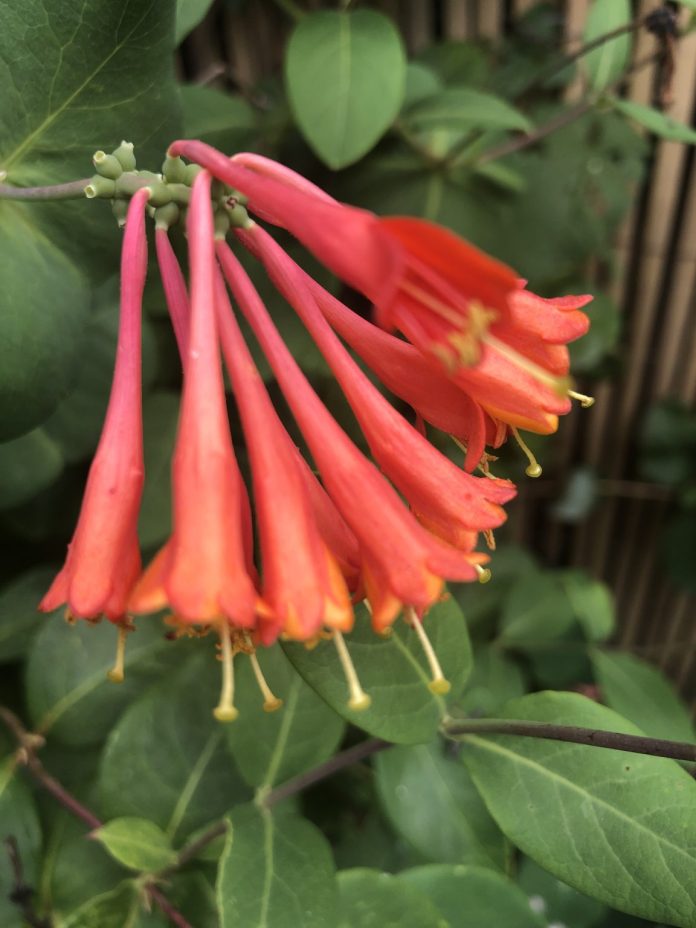
In the world of gardening, few plants capture the imagination quite like the Lonicera × brownii ‘Dropmore Scarlet’. Its fiery blooms and vigorous growth make it a standout choice for gardeners seeking to add a touch of drama and vibrancy to their outdoor spaces.
Introduction to Lonicera × brownii ‘Dropmore Scarlet’:
Lonicera × brownii ‘Dropmore Scarlet’, commonly known as Dropmore Scarlet Honeysuckle, is a deciduous vine prized for its stunning scarlet-red tubular flowers that bloom profusely from late spring to early summer. This hybrid cultivar is a cross between two species of honeysuckle, namely Lonicera brownii and Lonicera sempervirens, resulting in a plant that inherits the best traits of both parents.
Characteristics and Growth Habits:
One of the most striking features of ‘Dropmore Scarlet’ is its abundant and showy flowers. Each bloom boasts a brilliant scarlet hue that is sure to command attention in any garden setting. The tubular shape of the flowers not only adds visual interest but also attracts pollinators such as hummingbirds and butterflies, making it a valuable addition to wildlife-friendly landscapes.
In addition to its eye-catching blooms, ‘Dropmore Scarlet’ exhibits vigorous growth, quickly covering trellises, fences, and arbors with its twining vines. It can reach heights of 10 to 20 feet (3 to 6 meters) or more under ideal growing conditions, creating a lush green backdrop for its dazzling floral display.

Cultivation and Care:
Fortunately for gardeners, ‘Dropmore Scarlet’ is relatively low-maintenance and adaptable to a wide range of growing conditions. It thrives in full sun to partial shade and prefers well-draining soil with average moisture levels. Once established, it is tolerant of drought and can withstand occasional periods of dryness.
Regular pruning is recommended to maintain a tidy appearance and encourage prolific flowering. This can be done in late winter or early spring before new growth emerges. Removing spent flowers can also prolong the blooming period and prevent the plant from self-seeding.
Landscaping Uses:
The versatility of Lonicera × brownii ‘Dropmore Scarlet’ makes it a valuable asset in various garden settings. Whether used as a focal point in a mixed border, trained to climb a pergola or wall, or allowed to cascade over a trellis or fence, its bold presence never fails to make a statement.
In addition to its ornamental value, ‘Dropmore Scarlet’ can also serve functional purposes such as providing privacy screening, shading, or erosion control in the landscape. Its ability to attract pollinators further enhances its ecological importance in supporting local biodiversity.
Conclusion:
With its dazzling scarlet blooms, vigorous growth, and ease of cultivation, Lonicera × brownii ‘Dropmore Scarlet’ exemplifies the allure of ornamental vines in garden design. Whether adorning a cottage garden, urban balcony, or sprawling estate, this charismatic climber never fails to captivate the hearts of gardeners and nature enthusiasts alike, proving once again that beauty truly knows no bounds in the world of plants.
Lonicera × brownii ‘Dropmore Scarlet’ – Grow Guide
Common name: Dropmore Scarlet Honeysuckle
Family: Caprifoliaceae
Type: Deciduous or semi-evergreen climber
Hardiness: RHS H5 – fully hardy in most of the UK
Ultimate size: 3–5 m tall × 1.5–3 m wide
Overview
Lonicera × brownii ‘Dropmore Scarlet’ is a vigorous, flowering climber producing bright scarlet tubular flowers from late spring to autumn. Loved by bees, hummingbirds (outside the UK), and other pollinators, it is ideal for trellises, pergolas, fences, and walls in tropical-style or cottage gardens. Its long flowering season makes it an excellent summer colour plant.
Position
- Light: Full sun to light shade
- Performs best in sheltered, sunny sites for maximum flower production
- Protect from strong winds, especially when young
Soil
- Type: Fertile, well-draining soil
- Enrich planting hole with compost or well-rotted manure
- pH: Neutral to slightly acidic
Planting
- When: Spring or autumn
- Provide support for climbing (trellis, pergola, wall)
- Space plants 1.5–2 m apart for full coverage
- Mulch base to retain moisture and suppress weeds
Watering
- Water regularly during establishment
- Once established, moderately drought-tolerant
- Avoid waterlogged soil
Feeding
- Apply a general-purpose fertiliser in spring
- Optional liquid feed during flowering for vigorous bloom
Growth & Habit
- Fast-growing climbing shrub
- Twining stems can reach 3–5 m
- Semi-evergreen in milder coastal areas, deciduous elsewhere
- Can be pruned to shape or trained along supports
Flowering
- Months: June–October (UK)
- Flowers: Tubular, bright scarlet with a sweet scent
- Long flowering season attracts pollinators
Maintenance
- Prune lightly after flowering to remove dead wood and encourage new growth
- Mulch around base in winter to protect roots in colder areas
- Can be rejuvenated by hard pruning in late winter if needed
Propagation
- Softwood cuttings: Summer, root in moist, warm conditions
- Layering: Easy and effective
- Seed propagation is rare and slow
Pests & Problems
- Generally trouble-free
- Occasional aphids on new growth
- Mildew may appear in very humid conditions
Garden Use
- Trellises, pergolas, and fences
- Cottage-style or tropical-themed borders
- Attractive to bees and butterflies
- Works well with:
- Clematis species
- Campsis radicans (Trumpet vine)
- Passiflora
- Climbing roses
Quick Reference Table
| Feature | Details |
|---|---|
| Hardiness | RHS H5 – fully hardy |
| Height | 3–5 m |
| Spread | 1.5–3 m |
| Flowering | June–October; tubular scarlet flowers |
| Position | Full sun to light shade; sheltered |
| Soil | Fertile, well-draining; neutral to slightly acidic |
| Water | Regular during establishment; moderate once established |
| Feeding | General-purpose fertiliser in spring; optional liquid feed during flowering |
| Propagation | Softwood cuttings; layering; seed (slow) |
| Maintenance | Light pruning after flowering; mulch in winter |
| Best feature | Long season of bright scarlet, tubular flowers attracting pollinators |