
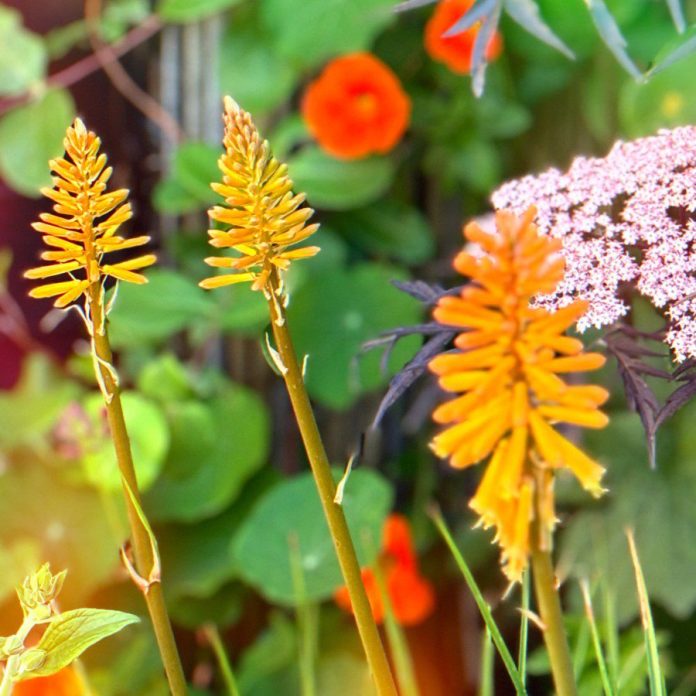
Kniphofia, commonly known as Red Hot Poker or Torch Lily, is a striking and vibrant perennial that adds a splash of color to any garden. Among the various cultivars, Kniphofia ‘Popsicle’ stands out with its vivid, eye-catching hues and relatively compact size. This guide will cover the history of the ‘Popsicle’ variety, methods of propagation, essential aftercare, and tips for planting it in a tropical-themed garden in the UK.
History of Kniphofia ‘Popsicle’
Kniphofia, named after the German botanist Johann Hieronymus Kniphof, has its origins in the grasslands of South Africa. The genus is part of the Asphodelaceae family and comprises about 70 species. The ‘Popsicle’ series is a modern development, bred to produce a more compact plant with a continuous blooming season. This series includes several color variations, such as ‘Mango Popsicle,’ ‘Redhot Popsicle,’ and ‘Papaya Popsicle,’ each named for its vibrant, tropical-like flower spikes.
Propagation of Kniphofia ‘Popsicle’
Propagating Kniphofia ‘Popsicle’ can be done through seed or division.
From Seed:
- Collect Seeds: Harvest seeds from mature flower spikes in late summer or early autumn.
- Sow Seeds: Sow the seeds in a seed tray filled with well-draining compost. Cover them lightly with compost or vermiculite.
- Germination: Place the tray in a warm location with temperatures around 20-25°C (68-77°F). Keep the compost moist but not waterlogged. Germination typically occurs within 4-6 weeks.
- Transplanting: Once seedlings have grown large enough to handle, transplant them into individual pots. Grow them on in a greenhouse or cold frame before planting out.
By Division:
- Timing: The best time to divide Kniphofia is in spring or autumn.
- Digging Up: Carefully dig up the clump, ensuring minimal root damage.
- Dividing: Use a sharp knife or spade to divide the clump into smaller sections, each with several roots and shoots.
- Replanting: Replant the divisions immediately, spacing them about 30-45 cm (12-18 inches) apart in prepared soil.
Aftercare for Kniphofia ‘Popsicle’
- Watering: Keep the soil consistently moist during the growing season, especially in the first year after planting. Once established, Kniphofia is relatively drought-tolerant.
- Fertilizing: Apply a balanced, slow-release fertilizer in spring. Avoid high-nitrogen fertilizers, as they can encourage excessive leaf growth at the expense of flowers.
- Mulching: Mulch around the base of the plants to retain moisture and suppress weeds. Use organic mulch like compost or bark chips.
- Deadheading: Remove spent flower spikes to encourage continuous blooming. Cut the spikes down to the base of the plant.
- Winter Care: In colder regions, apply a thick layer of mulch in late autumn to protect the roots from frost. In very harsh winters, consider covering the plants with horticultural fleece.
Where to Plant in a Tropical-Themed Garden in the UK
Despite the UK’s temperate climate, it is possible to create a tropical-themed garden by carefully selecting and positioning plants. Here’s how to integrate Kniphofia ‘Popsicle’ into such a garden:
- Sunlight: Kniphofia thrives in full sun. Choose a spot that receives at least 6-8 hours of direct sunlight daily.
- Soil: Plant in well-draining soil. Kniphofia does not tolerate waterlogged conditions, which can lead to root rot. If your garden soil is heavy clay, improve drainage by adding grit or organic matter.
- Position: Plant Kniphofia ‘Popsicle’ towards the middle or back of the border, where its tall flower spikes can stand out among shorter tropical plants like Canna lilies, ornamental grasses, and Hedychium.
- Companions: Pair with other tropical-looking plants that thrive in similar conditions, such as Crocosmia, Agapanthus, and Echinacea. This will enhance the exotic feel of your garden.
- Shelter: In more exposed gardens, provide some shelter from strong winds, which can damage the tall flower spikes. Planting near a wall or hedge can offer protection.
By following these guidelines, you can successfully grow Kniphofia ‘Popsicle’ and bring a touch of tropical vibrancy to your garden, even in the cooler climes of the UK. With proper care and the right planting conditions, these striking plants will reward you with their dazzling blooms year after year.
Kniphofia ‘Popsicle’ – Grow Guide
Common name: Red Hot Poker, Torch Lily
Family: Asphodelaceae
Plant type: Herbaceous perennial
Hardiness: RHS H5 – hardy in most of the UK
Height & spread: 60–90 cm tall × 30–45 cm wide
Overview
Kniphofia ‘Popsicle’ is a compact, clump-forming perennial grown for its bright, bi-coloured flower spikes, blending soft yellow and orange, resembling a “popsicle”. It’s ideal for borders, cottage gardens, and pollinator-friendly schemes, attracting bees, butterflies, and hummingbirds.
Position
- Full sun for best flowering and strong stem growth
- Tolerates partial shade, but flowering may be reduced
- Sheltered from strong winds to prevent stems breaking
Soil
- Well-drained, moderately fertile soil
- Prefers slightly acidic to neutral pH (6.0–7.0)
- Avoid heavy clay or waterlogged soil, which can cause crown rot
Planting
- Plant crowns at soil level in spring or autumn
- Space 30–45 cm apart
- Mulch after planting to retain moisture and suppress weeds
Watering
- Water regularly during establishment and dry periods
- Once established, moderately drought-tolerant
- Avoid overwatering, especially in winter
Feeding
- Apply a balanced fertiliser in spring as growth starts
- Optional high-potash feed in early summer to enhance flowering
Growth & Habit
- Clump-forming evergreen perennial with strap-shaped leaves
- Upright flower spikes rise above the foliage
- Deadhead spent flowers to encourage rebloom
Flowering
- Months: July–September
- Flowers: Dense, tubular florets; yellow at the base, orange at the tip
- Excellent for cutting and pollinator attraction
Maintenance
- Remove dead foliage in late winter
- Divide clumps every 4–5 years to rejuvenate plants
- Mulch in winter in colder UK regions to protect crowns
Pests & Problems
- Generally pest- and disease-resistant
- Occasional slugs, snails, or red spider mite in dry conditions
- Susceptible to crown rot if soil is poorly drained
Propagation
- Division of clumps in spring or autumn
- Seed: Rarely used in gardens; seedlings may vary from parent plant
Garden & Display Use
- Herbaceous borders and cottage-style gardens
- Pollinator-friendly planting
- Containers or raised beds
- Companion plants:
- Echinacea
- Rudbeckia
- Ornamental grasses
- Perennial salvias
Quick Reference Table
| Feature | Details |
|---|---|
| Hardiness | RHS H5 |
| Height | 60–90 cm |
| Spread | 30–45 cm |
| Flowering | July–September |
| Position | Full sun; partial shade tolerated |
| Soil | Well-drained, moderately fertile; pH 6.0–7.0 |
| Water | Regular in growth; moderate drought tolerance once established |
| Feeding | Balanced fertiliser in spring; optional high-potash feed |
| Propagation | Division |
| Maintenance | Deadhead, remove dead foliage, mulch in winter |
| Best feature | Bright, bi-coloured flower spikes attracting pollinators |