
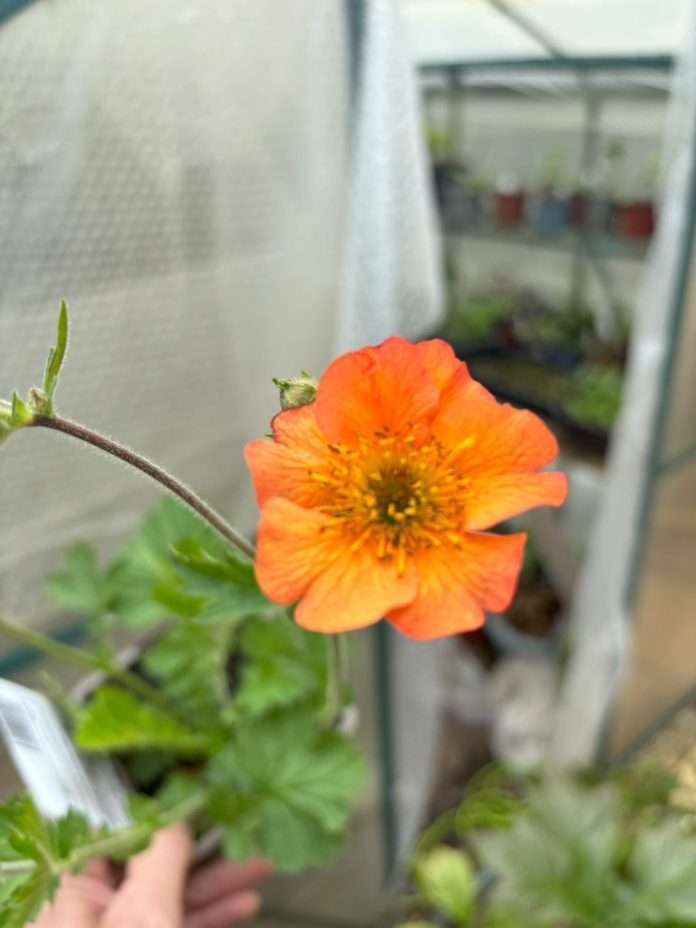
Geum ‘Totally Tangerine’ is a vibrant and long-blooming perennial that adds a splash of orange to any garden. With its striking tangerine-colored flowers and attractive foliage, this plant is a favorite among gardeners for its easy care and visual appeal. Here’s how to grow Geum ‘Totally Tangerine’ in your garden.
Understanding Geum ‘Totally Tangerine’
Geum ‘Totally Tangerine’ is a member of the Rosaceae family. It is known for its prolific flowering habit, producing masses of bright orange blooms from late spring through summer. The flowers are held on tall, wiry stems that rise above clumps of green, serrated foliage, creating a striking contrast. This plant typically grows to a height of 60-90 cm (24-36 inches) and spreads about 45-60 cm (18-24 inches).
Choosing the Right Location
To thrive, Geum ‘Totally Tangerine’ requires the following conditions:
Sunlight: This plant prefers full sun to partial shade. In regions with hot summers, some afternoon shade can help prevent the flowers from fading and keep the plant looking its best.
Soil: Geum ‘Totally Tangerine’ thrives in well-drained soil. It prefers moderately fertile soil that retains moisture without becoming waterlogged. Adding organic matter such as compost can improve soil structure and fertility.
Planting Instructions
Timing: The best time to plant Geum ‘Totally Tangerine’ is in early spring or autumn. This allows the plant to establish its roots before the extreme temperatures of summer or winter.
Preparation: Prepare the planting area by loosening the soil to a depth of about 30 cm (12 inches). Mix in plenty of organic matter to enhance soil fertility and drainage.
Planting: Dig a hole large enough to accommodate the plant’s root ball. Place the plant in the hole, ensuring the top of the root ball is level with the surrounding soil. Backfill with soil, firming it gently around the base. Water thoroughly after planting to help settle the soil around the roots.
Care and Maintenance
Watering: Geum ‘Totally Tangerine’ requires regular watering, especially during dry spells. Keep the soil consistently moist but not waterlogged. Mulching around the base with organic material can help retain soil moisture and suppress weeds.
Feeding: Apply a balanced, slow-release fertilizer in spring to support healthy growth. Additional feeding during the growing season can be beneficial, particularly if the soil is not naturally rich in nutrients.
Pruning: Deadhead spent flowers regularly to encourage continuous blooming and maintain a tidy appearance. In late autumn, after the flowering period, cut back the stems to ground level to prepare the plant for winter.
Pest and Disease Management: Geum ‘Totally Tangerine’ is generally hardy and resistant to most pests and diseases. However, keep an eye out for common issues such as aphids and powdery mildew. Treat infestations with appropriate organic or chemical controls.
Overwintering
Geum ‘Totally Tangerine’ is hardy and can withstand winter conditions in many regions. In areas with severe frost, adding a layer of mulch around the base can protect the roots from freezing temperatures.
Propagation
Division: The most effective way to propagate Geum ‘Totally Tangerine’ is by division. This is best done in spring or autumn. Carefully lift the plant, divide the root ball into sections, and replant immediately.
Seed: Growing from seed is possible but can be challenging and time-consuming. For best results, use division for propagation.
Design Ideas
Geum ‘Totally Tangerine’ is a versatile plant that works well in mixed borders, cottage gardens, and container gardens. Its vibrant flowers and neat foliage make it an excellent companion to other perennials such as salvias, lavender, and ornamental grasses. Additionally, it can add height and color to your garden beds and is particularly effective when planted in groups for a more dramatic display.
Conclusion
Growing Geum ‘Totally Tangerine’ can be a rewarding experience, adding bright, cheerful color and long-lasting blooms to your garden. With the right care and conditions, this perennial will flourish, providing stunning displays year after year. Whether you are an experienced gardener or a novice, following these guidelines will help ensure your Geum ‘Totally Tangerine’ thrives and becomes a highlight of your garden landscape.
Geum ‘Totally Tangerine’ – Grow Guide
Common name: Avens
Family: Rosaceae
Plant type: Herbaceous perennial
Hardiness: RHS H5–H6 – fully hardy across most of the UK
Height & spread: 30–45 cm tall × 30–40 cm wide
Overview
Geum ‘Totally Tangerine’ is a compact, long-flowering perennial with bright, tangerine-orange flowers on wiry stems above a neat rosette of foliage. Ideal for borders, containers, and cottage-style gardens, it provides vibrant summer colour and is particularly valuable for pollinators. Its tidy habit makes it a reliable choice for low-maintenance planting schemes.
Position
- Full sun to partial shade
- Flowers best in full sun
- Can tolerate some shade but may reduce flowering
Soil
- Moist, fertile, well-drained soil
- Neutral to slightly acidic (pH 6.0–7.0)
- Avoid heavy clay soils that retain water
Planting
- Plant in spring or autumn
- Space 30–40 cm apart
- Mulch after planting to retain moisture and suppress weeds
Watering
- Water regularly during dry spells, especially in the first growing season
- Once established, moderately drought tolerant
- Avoid waterlogging, which can rot the crown
Feeding
- Apply compost or well-rotted manure in spring
- Light feed with a balanced fertiliser during the growing season if needed
- Avoid excessive nitrogen, which encourages foliage over flowers
Growth & Habit
- Forms a compact rosette of green foliage
- Wiry stems carry single, bright tangerine-orange flowers 3–4 cm across
- Flowers appear repeatedly from late spring to early autumn
- Low, tidy habit makes it excellent for front-of-border planting
Flowering
- Months: June–September
- Flowers: Bright tangerine-orange, saucer-shaped, held above foliage
- Excellent for pollinators such as bees and hoverflies
Maintenance
- Deadhead regularly to prolong flowering
- Cut back foliage in late autumn to tidy the plant
- Mulch annually to retain moisture and suppress weeds
- Divide clumps every 3–4 years to maintain vigour
Pests & Problems
- Generally trouble-free
- Slugs and snails may attack young growth
- Avoid overwatering, which can cause crown rot
Propagation
- Division in spring or autumn is easiest
- Seed is possible but may not breed true to cultivar
- Ensure divisions include healthy roots and shoots
Garden & Display Use
- Borders, especially front or mid-border
- Containers and patio pots
- Cottage, pollinator, or low-maintenance gardens
- Companion plants:
- Geraniums
- Nepetas
- Salvia
- Alchemilla
Quick Reference Table
| Feature | Details |
|---|---|
| Hardiness | RHS H5–H6 |
| Height | 30–45 cm |
| Spread | 30–40 cm |
| Flowering | June–September |
| Position | Full sun to partial shade |
| Soil | Moist, fertile, well-draining; pH 6.0–7.0 |
| Water | Regular during dry spells |
| Feeding | Compost/manure in spring; balanced fertiliser if needed |
| Propagation | Division; seed rarely used |
| Best feature | Bright tangerine-orange flowers above compact foliage |