
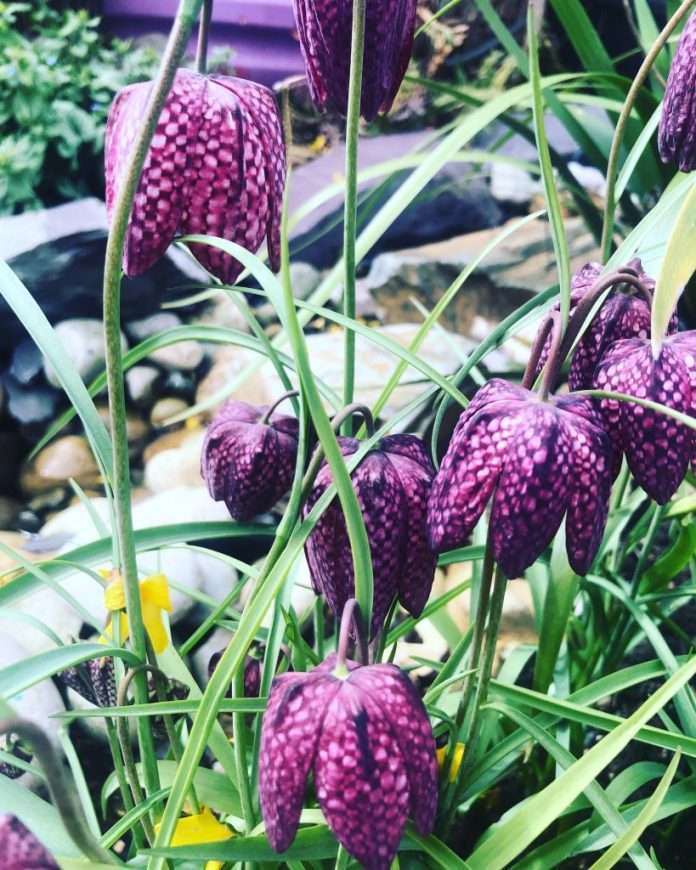
Sometimes called the Snake’s Head Fritillary or the Checkered Lily, Fritillaria meleagris is quite common in the UK but is not a native plant. With it’s nodding lantern like flowers it looks like it should be in the Far East and this is why it is a useful plant for exotic gardens in the UK.
Fritillaria meleagris might look delicate but it is in fact a tough and tolerant plant. It’s not too fussy about soil PH, preferring neutral soils but tolerant of mildly acid or alkaline. It will grow in a wide range of soil types as well. It will even grow quite well in clay soils.
For position, partial shade is probably best but it will grow in full sun. They look good around ponds and will sit in quite moist conditions quite happily.
Fritillaria meleagris flowers around about April time. If you’ve bought a flowering plant from a nursery or garden centre then they can go straight in the ground in April but if you’ve bought bulbs then the best time to plant them is in September or October. Plant the bulbs with their growing tips upwards at a depth of about 20cm. If you can’t find the tip then plant them on their side as at least they won’t have the growing tip facing down. They will not grow with the tip underneath facing downwards.
Keep an eye out for Lily beetle and slugs. The bulbs do not need to be lifted in the winter because they are hardy down to temperatures below minus ten degrees centigrade
Botanical Background
- Family: Liliaceae (Lily family)
- Genus: Fritillaria
- Species: meleagris
- Authority: L. (Carl Linnaeus)
- Common Names: Snake’s Head Fritillary, Guinea Flower
- Origin: Native to Europe, particularly damp meadows in the UK and central Europe
- Flowering Period: April to May
- Height: 15–30 cm
- Leaves: Narrow, linear, glaucous green
- Flowers: Nodding, bell-shaped, typically purple with a distinctive checkered pattern, occasionally white
Fritillaria meleagris is herbaceous and perennial, dying back to the bulb after flowering and going dormant over summer.
Best Planting Conditions
Light
- Prefers partial sun to light shade
- Too much sun in hot, dry conditions can scorch the foliage and shorten flowering
Soil
- Moist, humus-rich, well-drained soil
- Slightly acidic to neutral pH preferred
- Performs naturally in damp meadows, so aim for conditions that stay moist in spring but don’t remain waterlogged
Position
- Naturalistic areas such as meadow-style plantings, woodland gardens, or pond edges
- Can be interplanted with early spring bulbs like snowdrops, daffodils, and crocuses for a layered effect
Planting Guide
- Bulb planting depth: 8–10 cm
- Spacing: 10–15 cm apart
- Planting time: Autumn (September–November) for spring flowering
Tip: Plant in groups of at least 10–12 bulbs to create a natural drifts effect, mimicking their wild habitat.
Watering and Feeding
- Water: Keep soil moist during growth, especially in spring
- Dormancy: After foliage dies back in late spring or early summer, watering can be reduced
- Feeding: Apply a balanced, slow-release fertiliser at planting or use well-rotted compost to enrich soil
Maintenance
- Low-maintenance plant
- Allow foliage to die back naturally before removing
- Divide clumps every 3–4 years if bulbs become crowded
- Protect from slugs and snails, which can damage young shoots
Companion Plants
- Other early spring bulbs: Galanthus, Muscari, Crocus, Narcissus
- Shade-loving perennials: Primula, Brunnera, Pulmonaria
- Damp garden plants: Astilbe, Ligularia, Japanese Iris
The checkered flowers of Fritillaria meleagris provide visual interest and delicate texture, making them ideal for naturalistic or wildflower-style planting schemes.
Common Problems
- Poor flowering: Often due to overcrowded bulbs or dry soil in spring
- Leaf damage: Slugs and snails feeding on emerging foliage
- Rot: Waterlogged conditions can cause bulb rot
Summary
To successfully grow Fritillaria meleagris:
- Plant in autumn in moist, humus-rich soil
- Provide partial shade or light sun
- Allow foliage to die back naturally
- Plant in groups for the best naturalistic display
Handled correctly, Snake’s Head Fritillary will return year after year, bringing a graceful, woodland charm to your garden every spring.