
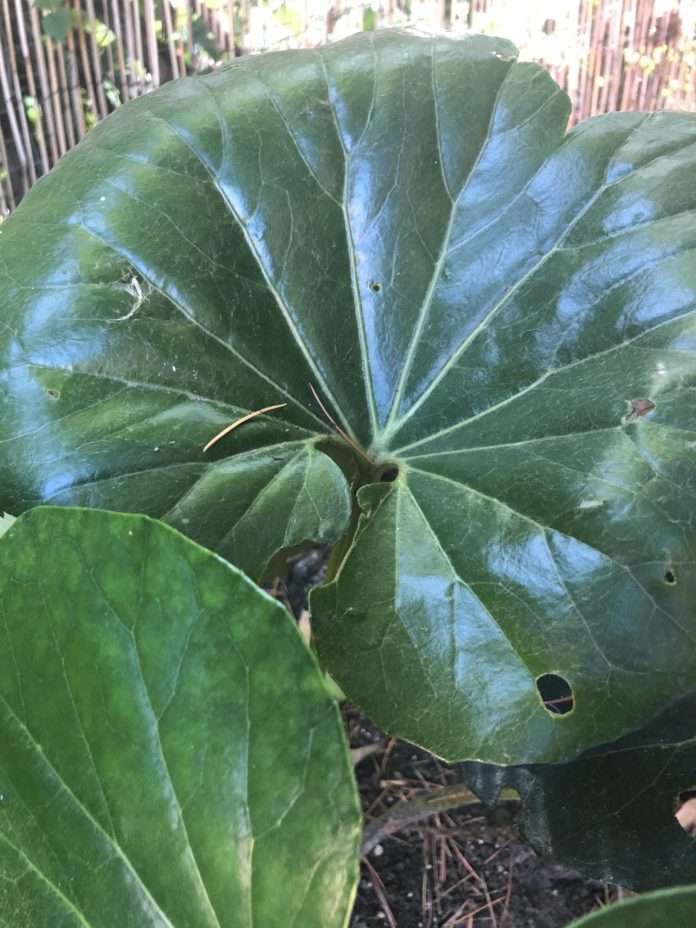
Farfugium japonicum, commonly called Leopard Plant, is a slow-growing, evergreen perennial valued for its bold, glossy, rounded leaves and bright yellow daisy-like flowers in autumn. Ideal for shady borders, woodland gardens, and damp areas, it adds year-round architectural foliage with seasonal floral interest.
Botanical Profile
- Family: Asteraceae (Sunflower family)
- Genus: Farfugium
- Species: japonicum
- Common Names: Leopard Plant, Ligularia tussilaginea (older synonym)
- Plant Type: Evergreen perennial
- Height: 40–60 cm
- Spread: 60–90 cm
- Foliage: Rounded, glossy, dark green leaves with sometimes golden spots or variegation
- Flowers: Bright yellow, daisy-like, borne on stems in autumn (October–November)
- Origin: Japan, Korea, and Taiwan
- Growth Habit: Clumping, evergreen, rhizomatous perennial
Farfugium japonicum is prized for shady, moist gardens, particularly where bold foliage is needed for winter interest.
Best Planting Conditions
Light
- Prefers partial to full shade
- Too much sun can scorch the leaves, especially variegated varieties
Soil
- Moist, humus-rich soil
- Well-draining but retains moisture; tolerates wet soil better than most shade plants
- Neutral to slightly acidic pH is ideal
Position
- Woodland borders, shaded patio containers, or alongside ponds and streams
- Plant in sheltered spots to protect from wind and leaf damage
Planting Guide
- Planting time: Spring or autumn
- Spacing: 50–90 cm apart for mature clumps
- Planting depth: Same as in nursery container, firm soil around roots
- Companion planting: Shade-loving perennials such as Hosta, Astilbe, Ferns, Heuchera
Tip: Mulch around plants to maintain soil moisture and suppress weeds
Hardiness
- UK hardiness: H5–H7 (RHS) – hardy in most of the UK, tolerates down to -15°C, with mulch protection in colder areas
- USDA zones: 7–10
- Winter behaviour: Evergreen; leaves may brown in harsh frost but new growth emerges in spring
Watering & Feeding
- Watering: Keep soil consistently moist, especially during active growth and flowering
- Feeding: Apply general-purpose fertiliser in spring to encourage foliage and autumn flowers
- Mulch with compost or leaf mould to retain moisture and improve soil fertility
Maintenance
- Remove yellowing or damaged leaves to tidy the plant
- Divide clumps every 3–4 years in early spring or autumn for healthy growth
- Protect young leaves from slugs and snails
Propagation
- By division:
- Best method; divide clumps in spring or autumn
- Replant immediately at the same depth
- By seed:
- Possible but slow and uncommon in garden practice
Division is quickest and ensures identical plants, especially for variegated forms
Flowering Period
- Autumn (October–November) in the UK
- Produces bright yellow daisy-like flowers on stems above the foliage
Common Problems
- Leaf scorch: Too much sun or dry soil
- Slugs/snails: Feed on young foliage
- Crowding: Overgrown clumps may reduce flowering; divide regularly
Quick Summary
- Type: Evergreen perennial
- Height: 40–60 cm
- Spread: 60–90 cm
- Light: Partial to full shade
- Soil: Moist, humus-rich, well-drained
- Planting: Spring or autumn; maintain 50–90 cm spacing
- Flowering: Autumn (October–November)
- Care: Keep moist, mulch, divide every 3–4 years, protect from pests
Farfugium japonicum is a reliable shade perennial with dramatic foliage and late-season yellow flowers, making it a standout in shaded borders and woodland-style gardens.