
The Newspaper For Gardeners

Looking Out for Hedgehogs...

Hedgehogs are some of the most endearing creatures in our gardens, but winter...

Prune Apple Trees

Pruning is an essential task for maintaining healthy, productive apple trees. Proper pruning...

Dividing Snowdrops: A Step-by-Step...

Snowdrops (Galanthus spp.) are a cherished sight in late winter, heralding the arrival...

Force Rhubarb: A Gardener’s...

Forcing rhubarb is a traditional gardening technique that produces tender, sweet stalks, perfect...
Wednesday, January 7, 2026
Acid soilHow to grow Ensete ventricosum maurelii

How to grow Ensete ventricosum maurelii

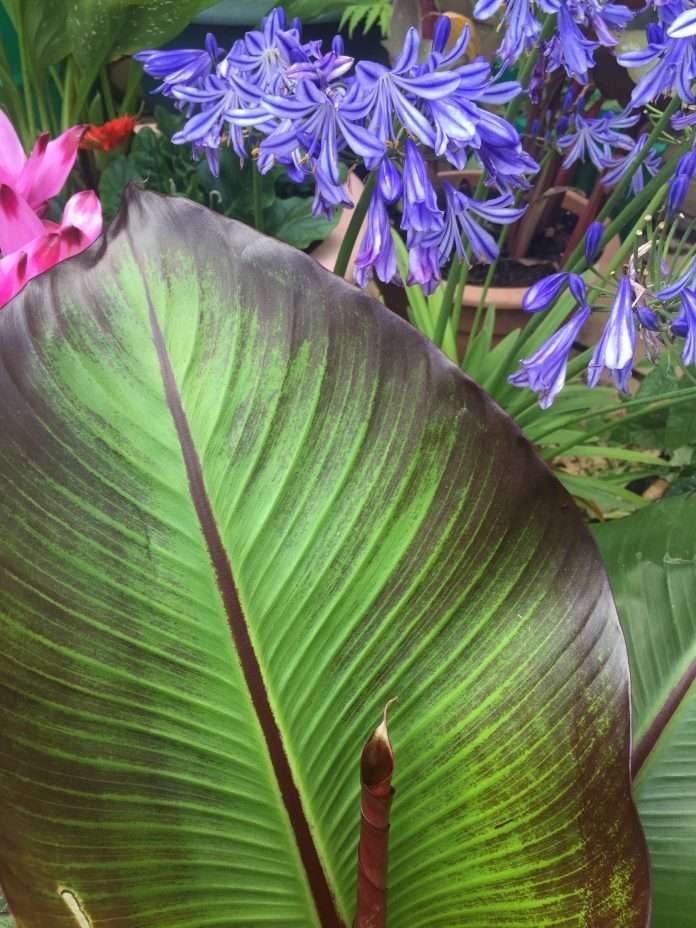
No exotic garden would be complete nowadays if it didn’t contain an Ensete Maurelii. The massive paddle leaves of glossy luminous green and purple make an unforgettable first impression in any UK garden. Growing up to 1.5m in it’s first season these foliage favourites can reach up to 5m in height in just a few years. We might not be coming across them in some forgotten corner of a neglected garden in ten years time though, like the once essential pampus grass, because these ‘must haves’ are not hardy. In fact, they are quite a tricky beast to get through the average UK winter freeze once they reach monster size. It’s easy in the first year, they can be treated as a houseplant if you have the room (but they must have as much light as you can muster or the leaves will wither), but in subsequent years the bigger boys will have to be dry stored.

Ensete bananas go under many common names including Abyssinian Banana, Ethiopian Banana and false banana. It originates from the east side of Africa and can be found in Ethiopia, Tanzania, Uganda and Kenya. It is monocarpic meaning that it flowers, makes seeds and then dies.
It is a significant source of food in Ethiopia. It is fast growing but is not frost hardy. Ensete bananas have been grown in Ethiopia for thousands of years.

Easy to grow during the summer if kept well watered. In the winter they must be taken into a frost free environment. Small plants can be treated as a house plant but larger plants must be dry stored. They first need digging up and their leaves removing and then the soil needs to be washed from the roots. Hang upside down for a week to dry and then store in perlite over winter in a dark place. Sulphur can be applied to the roots to prevent rot


spot_img

lOOKING FOR MORE WORK?

The free and easy way to get more customers. Just join Find Local Gardeners.

Farfugium japonicum, commonly called Leopard Plant, is a slow-growing, evergreen perennial valued for its bold, glossy, rounded leaves and bright yellow daisy-like flowers in...
Paulownia tomentosa, sometimes called the Foxglove tree, is grown in tropical style gardens for it’s enormous leaves that can get to 30cm long. It’s common...
Introduction to Colocasia ‘Blue Hawaii’ Colocasia ‘Blue Hawaii’ is a striking cultivar of the taro plant, renowned for its stunning blue-green leaves with dark veins...
Tigridia pavonia might be a short lived flower but when it opens, wow, what a flower! Tigridia pavonia flowers in July and August for...
If you are looking for a tall dazzler then Tithonia rotundifolia might be for you. This orange whopper grows to a height of about...

When to bring ensete bananas out of dormancy?

There is no right time to bring ensete bananas out of dormancy. The ideal time would be at the end of April as this would give the plant a full month to grow indoors before being safe to plant...

What temperature should I store my ensete banana at?

Ensete bananas should be stored at 10c. Any higher and they will start to grow. They cannot withstand sub zero temperatures, even when dormant. How to Store Ensete Bananas Over Winter in the UK Ensete bananas, like Ensete ventricosum cultivars such...

How to over winter Ensete bananas

Ensete bananas are not frost hardy and will need to be taken to a frost free place if they are to survive the winter. The problem is that they get too big to store in the average home after...

Take in Ensete ventricosum ‘Maurelii’

Ensete ventricosum 'Maurelii', commonly known as the red Abyssinian banana, is a stunning focal point in tropical-style gardens, thanks to its bold, red-tinged leaves and towering size. Unlike Musa basjoo, this banana is not hardy and cannot survive UK...

Continue reading

How to Grow Farfugium japonicum (Leopard Plant)

Farfugium japonicum, commonly called Leopard Plant, is a slow-growing, evergreen perennial valued for its bold, glossy, rounded leaves and bright yellow daisy-like flowers in autumn. Ideal for shady borders, woodland gardens, and damp areas, it adds year-round architectural foliage...

How to grow Paulownia

Paulownia tomentosa, sometimes called the Foxglove tree, is grown in tropical style gardens for it’s enormous leaves that can get to 30cm long. It’s common name of Foxglove tree comes from the flowers which bare a slight resemblance to the...

Growing Colocasia ‘Blue Hawaii’: Adding Exotic Elegance to UK Gardens

Introduction to Colocasia ‘Blue Hawaii’ Colocasia ‘Blue Hawaii’ is a striking cultivar of the taro plant, renowned for its stunning blue-green leaves with dark veins and a purple underside. This tropical plant, with its bold foliage, is perfect for creating...

SUBSCRIBE TO OUR YOUTUBE CHANNEL

Plant advice for unusual species plus updates from our tropical garden

SUBSCRIBE