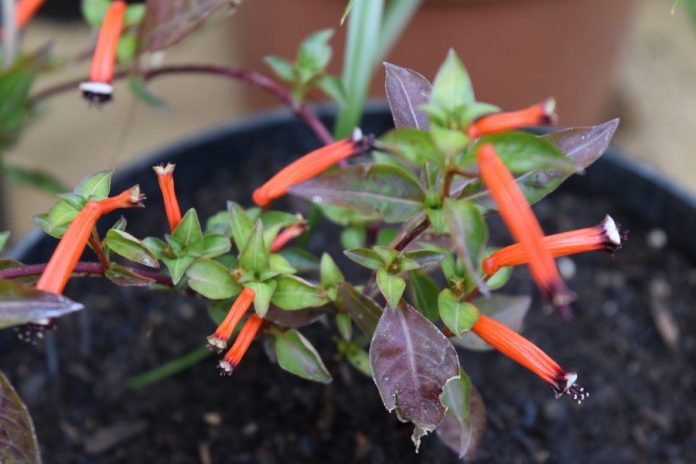
Cuphea ignea, commonly known as the cigar plant or firecracker plant, is a tropical flowering shrub that produces tubular, red-orange flowers that resemble a cigar or firecracker. It’s relatively easy to grow if you provide it with the right conditions. Here’s how to grow and care for Cuphea ignea:
1. Planting Location:
- Choose a planting location that receives full to partial sun. Cuphea ignea thrives in bright, indirect sunlight or light shade.
- Ensure the soil is well-draining, as these plants don’t like to sit in waterlogged soil. If your soil is heavy and retains too much moisture, consider amending it with organic matter like compost to improve drainage.
2. Planting Time:
- In areas with mild winters, you can plant Cuphea ignea outdoors in the spring after the last frost date.
- In regions with harsh winters, consider growing it as an annual or in containers that can be brought indoors during the cold season.
3. Planting Depth:
- Dig a hole that’s about as deep as the root ball and twice as wide. Place the plant in the hole, and backfill with soil. Water thoroughly after planting.
4. Watering:
- Keep the soil consistently moist but not waterlogged. Water when the top inch of soil feels dry to the touch. Be mindful not to let the plant dry out completely between waterings.
5. Fertilizing:
- Fertilize your Cuphea ignea with a balanced, slow-release fertilizer during the growing season (spring through summer). Follow the manufacturer’s recommendations for application.
6. Pruning:
- Prune your cigar plant to encourage bushy growth and remove spent flowers. Pinch back the tips of the branches to promote branching and more flowers.
7. Mulching:
- Applying a layer of mulch around the base of the plant can help retain moisture, regulate soil temperature, and control weeds.
8. Pests and Diseases:
- Keep an eye out for common garden pests like aphids, mealybugs, and spider mites. Treat any infestations promptly with insecticidal soap or neem oil.
- Cuphea ignea is relatively disease-resistant, but good garden hygiene practices can help prevent issues.
9. Overwintering:
- In regions with cold winters, you can either grow Cuphea ignea as an annual or bring it indoors for the winter. Place it in a well-lit area with temperatures above 50°F (10°C). Reduce watering during the winter months, as the plant’s growth will slow down.
10. Propagation:
- You can propagate Cuphea ignea from stem cuttings taken in the spring or early summer. Follow the same general steps for taking cuttings as mentioned earlier in this conversation, using a rooting hormone to encourage root development.
By following these care instructions, you can grow a healthy and vibrant Cuphea ignea, adding a splash of color to your garden with its unique and eye-catching flowers.
Cuphea ignea – Cigar Plant Grow Guide
Common name: Cigar Plant, Firecracker Plant
Family: Lythraceae
Type: Tender evergreen sub-shrub / bedding perennial
Hardiness: RHS H3 – frost-tender; overwinter frost-free in the UK
Ultimate size: 30–60 cm tall × 30–60 cm wide
Overview
Cuphea ignea is a compact, free-flowering plant producing masses of tubular red-orange flowers tipped with black and white, resembling lit cigars. It flowers continuously from late spring until autumn, making it ideal for pots, baskets, and summer bedding. Particularly popular in tropical and patio planting schemes.
Position
- Light: Full sun to light partial shade
- Best flowering in full sun
- Sheltered from cold winds
Soil
- Type: Fertile, well-drained compost or garden soil
- pH: Neutral to slightly acidic
- In containers, use a high-quality multipurpose compost with added drainage
Planting
- When: Late spring after the last frost
- Suitable for:
- Containers
- Hanging baskets
- Summer bedding displays
- Space plants 30–40 cm apart
Watering
- Water regularly during the growing season
- Allow the top of the compost to dry slightly between watering
- Avoid waterlogging, especially in containers
Feeding
- Feed with a liquid fertiliser every 1–2 weeks during flowering
- Use a balanced or high-potassium feed to encourage blooms
Growth & Habit
- Compact, bushy habit
- Evergreen in frost-free conditions
- Responds well to light trimming to maintain shape
Flowering
- Months: May to October (UK, under good conditions)
- Flowers: Tubular, red-orange with dark tips; very long-lasting
- Attractive to bees and other pollinators
Maintenance
- Pinch back young plants to encourage bushiness
- Lightly trim during summer to keep compact
- Overwinter indoors at 5–10 °C in bright light
- Reduce watering during winter
Propagation
- Softwood cuttings: Late spring to early summer
- Root easily in warm conditions
- Seed propagation possible but less common
Pests & Problems
- Aphids and whitefly, especially under glass
- Spider mites in hot, dry indoor conditions
- Root rot if compost becomes waterlogged
Garden & Container Use
- Patio pots and window boxes
- Hanging baskets
- Tropical-style summer displays
- Excellent combined with:
- Lantana
- Verbena
- Pelargoniums
- Ipomoea
Quick Reference Table
| Feature | Details |
|---|---|
| Hardiness | RHS H3 |
| Height | 30–60 cm |
| Spread | 30–60 cm |
| Flowering | May–October |
| Position | Full sun to light shade |
| Soil | Fertile, well-drained |
| Water | Regular; avoid waterlogging |
| Feeding | Liquid feed every 1–2 weeks |
| Propagation | Softwood cuttings |
| Maintenance | Pinch, trim, overwinter frost-free |
| Best feature | Continuous cigar-shaped flowers |