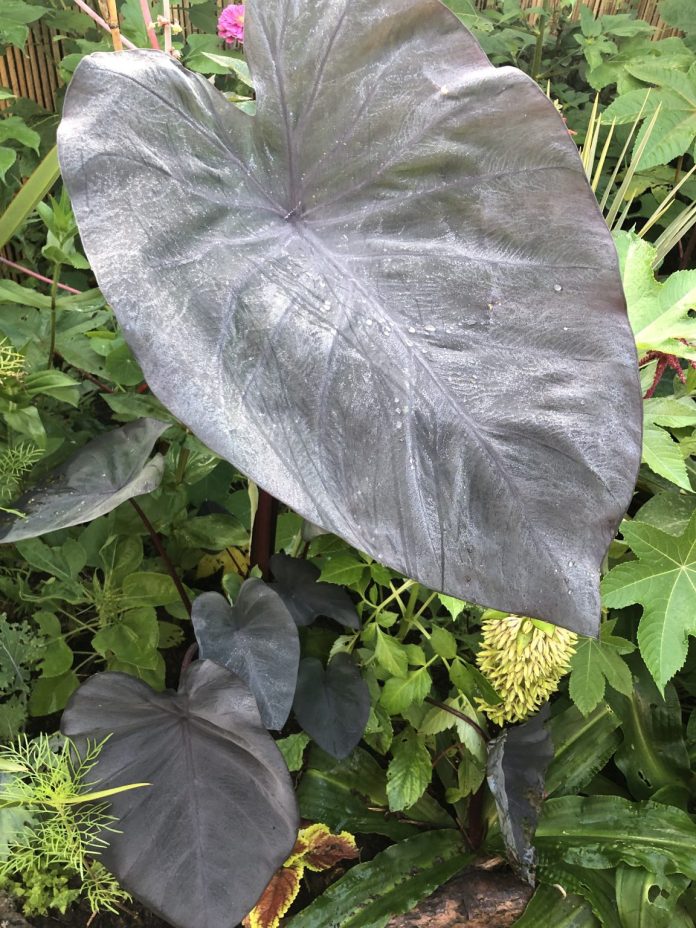
Colocasia esculenta ‘Black Magic,’ commonly known as Black Magic Elephant Ear or Black Taro, is a stunning tropical plant with large, dark-colored leaves. Growing this plant requires attention to its specific needs for light, water, soil, and temperature. Here’s a general guide on how to grow Colocasia esculenta ‘Black Magic’:
1. Light: Provide bright, indirect sunlight for optimal growth. Too much direct sunlight can scorch the leaves, so it’s best to place the plant in a location with filtered or dappled sunlight. In regions with intense sunlight, some shade during the hottest part of the day is beneficial.
2. Soil: Plant your Black Magic Elephant Ear in well-draining, nutrient-rich soil. A mixture of regular potting soil and organic compost works well. Make sure the soil retains moisture without becoming waterlogged.
3. Water: Keep the soil consistently moist but not waterlogged. The plant prefers high humidity, so misting the leaves regularly or placing a tray of water nearby can help maintain the desired moisture levels. Be cautious not to let the plant sit in standing water, as this can lead to root rot.
4. Temperature: Black Magic Elephant Ear is a tropical plant and thrives in warm temperatures. Keep it in an environment where temperatures stay between 65°F to 85°F (18°C to 29°C). Avoid exposing the plant to cold drafts or temperatures below 50°F (10°C).
5. Fertilization: Feed your Colocasia esculenta ‘Black Magic’ with a balanced, water-soluble fertilizer every 4-6 weeks during the growing season (spring and summer). Dilute the fertilizer to half or a quarter of the recommended strength to avoid overfeeding.
6. Potting and Repotting: If growing in a container, ensure the pot has drainage holes to prevent waterlogging. Repot the plant every couple of years into a slightly larger container to accommodate its growth. Use fresh potting soil during repotting.
7. Pruning: Trim off any yellowing or dead leaves regularly to maintain the plant’s appearance and overall health. Pruning can also help improve air circulation around the plant.
8. Pests and Diseases: Keep an eye out for common pests like aphids, mealybugs, and spider mites. If you notice any infestations, treat the plant with insecticidal soap or neem oil. Ensure good air circulation and avoid overwatering to prevent fungal diseases.
9. Winter Care: In colder climates, Black Magic Elephant Ear is usually grown as an annual or brought indoors during the winter. If you choose to keep it indoors, place it near a bright window and maintain a consistent temperature. Reduce watering frequency during the dormant winter period.
10. Propagation: You can propagate Colocasia esculenta ‘Black Magic’ by dividing the rhizomes during the active growing season. Ensure each divided section has a healthy rhizome and a few leaves. Plant the divisions in separate pots or areas of the garden.
Colocasia esculenta ‘Black Magic’ – Grow Guide
Common name: Black Magic Taro / Elephant Ear
Family: Araceae
Type: Tender perennial (tropical foliage plant)
Hardiness: RHS H3 – frost-tender; overwinter indoors or lift corms in the UK
Ultimate size: 90–150 cm tall × 60–90 cm wide
Overview
Colocasia esculenta ‘Black Magic’ is prized for its dramatic, almost black, glossy foliage. Its large, heart-shaped leaves make a striking statement in tropical-style borders, containers, or patio planting. Flowering is rare and insignificant; the plant is grown primarily for its foliage.
Position
- Light: Full sun to partial shade
- Partial shade preferred in very hot areas to avoid leaf scorching
- Sheltered from strong winds to prevent tearing of large leaves
Soil
- Type: Moist, fertile, humus-rich soil
- Well-draining but retains moisture
- pH: Slightly acidic to neutral
- Incorporate organic matter for best growth
Planting
- When: Spring after last frost
- Plant corms 5–10 cm deep
- Space plants 60–90 cm apart to allow foliage to reach full size
- Mulch around base to conserve moisture and protect roots in summer
Watering
- Keep soil consistently moist during the growing season
- Water generously during hot, dry periods
- Reduce watering as foliage dies back in autumn
Feeding
- Apply liquid fertiliser every 2–3 weeks during active growth
- Optional slow-release fertiliser at planting for sustained growth
Growth & Habit
- Upright, clump-forming perennial
- Stout stems support large, dark leaves
- Dies back naturally in late autumn
- Can be grown in large containers for easy overwintering
Flowering
- Flowers: Rare in the UK; small spathes typical of Colocasia
- Main ornamental feature is foliage
Maintenance
- Remove damaged or yellowing leaves regularly
- Lift corms in late autumn if frost is expected
- Store corms frost-free, dry, and cool (5–10 °C) over winter
- Divide corms every 2–3 years to maintain vigour
Propagation
- Corm division: Main method; separate offsets in spring before planting
- Seed: Rarely used, slow germination
Pests & Problems
- Slugs and snails may damage young leaves
- Aphids or spider mites occasionally indoors
- Root rot if soil is poorly drained
Garden Use
- Tropical-style borders and containers
- Striking patio displays
- Borders or pond-side plantings for bold foliage effect
- Pairs well with Cannas, Ricinus, Colocasia ‘Black Coral’, and lush ferns
Quick Reference Table
| Feature | Details |
|---|---|
| Hardiness | RHS H3 – frost-tender |
| Height | 90–150 cm |
| Spread | 60–90 cm |
| Flowering | Rare; foliage main feature |
| Position | Full sun to partial shade; sheltered |
| Soil | Moist, fertile, humus-rich; free-draining |
| Water | Keep consistently moist |
| Feeding | Liquid fertiliser every 2–3 weeks; slow-release optional |
| Propagation | Corm division (main), seed (rare) |
| Maintenance | Remove damaged leaves; lift corms in winter |
| Pests | Slugs, aphids, spider mites; root rot if overwatered |