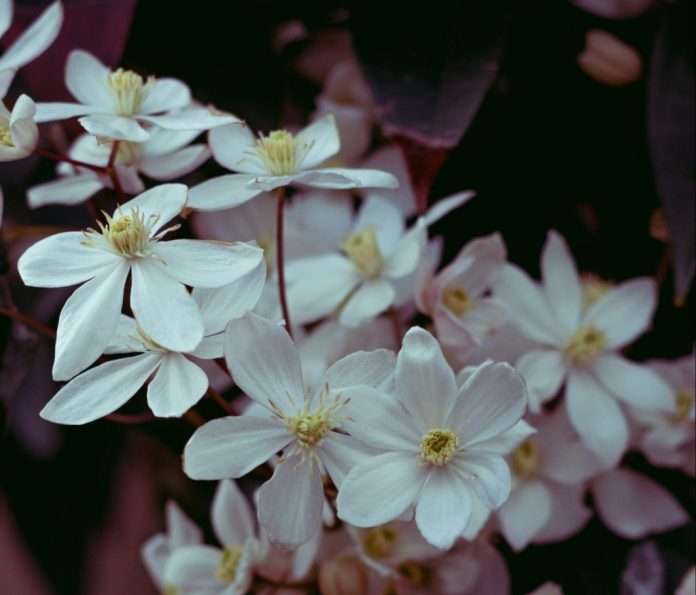
Clematis Armandii ‘Snowdrift’ is a breathtaking evergreen vine celebrated for its profusion of fragrant white flowers and lush foliage. With proper care and attention, this exquisite plant can grace your garden with its beauty for years to come. Whether you’re a seasoned gardener or a novice enthusiast, here’s a comprehensive guide on how to cultivate Clematis Armandii ‘Snowdrift’ and bring its elegance into your outdoor space.
- Selecting the Right Location:
- Clematis Armandii ‘Snowdrift’ thrives in locations with full to partial sunlight. Choose a spot in your garden that receives at least 6 hours of sunlight per day.
- Ensure the soil is well-draining and rich in organic matter. Clematis prefers slightly acidic to neutral soil pH.
- Provide sturdy support such as a trellis, arbor, or pergola for the vine to climb and twine around.
- Planting:
- Plant Clematis Armandii ‘Snowdrift’ in early spring or early fall, avoiding extreme temperatures.
- Dig a hole twice as wide and deep as the root ball. Amend the soil with compost or well-rotted manure to improve fertility and drainage.
- Gently remove the plant from its container, being careful not to damage the roots. Place it in the center of the hole and backfill with soil, firming it gently around the base of the plant.
- Water thoroughly after planting to settle the soil and encourage root establishment.
- Watering and Feeding:
- Keep the soil consistently moist, especially during the plant’s establishment period. Once established, Clematis Armandii ‘Snowdrift’ is moderately drought-tolerant but benefits from regular watering, especially during dry spells.
- Apply a balanced, slow-release fertilizer in early spring to promote healthy growth and abundant flowering. Avoid high-nitrogen fertilizers, as they can encourage excessive foliage growth at the expense of flowers.
- Pruning:
- Pruning is essential for maintaining the health and shape of Clematis Armandii ‘Snowdrift’.
- Prune lightly after flowering to remove any dead or damaged stems and encourage new growth.
- Avoid heavy pruning, as Clematis Armandii ‘Snowdrift’ blooms on previous year’s growth. Pruning too aggressively can reduce flowering.
- Pest and Disease Management:
- Keep an eye out for common pests such as aphids, spider mites, and caterpillars. Regularly inspect the foliage and treat infestations promptly with insecticidal soap or horticultural oil.
- Clematis Armandii ‘Snowdrift’ is generally resistant to most diseases, but it can be susceptible to root rot in poorly draining soil. Ensure adequate drainage and avoid overwatering to prevent fungal issues.
- Winter Care:
- In colder climates, provide protection from harsh winter conditions by applying a layer of mulch around the base of the plant. This helps insulate the roots and prevent frost damage.
- Consider wrapping the vine with burlap or a frost blanket during particularly cold spells, especially in the first few years after planting.
Conclusion:
Clematis Armandii ‘Snowdrift’ is a stunning addition to any garden, offering year-round interest with its glossy foliage and fragrant white blooms. By following these guidelines for planting, care, and maintenance, you can cultivate this beautiful vine and enjoy its beauty for years to come. With proper attention to sunlight, soil, watering, and pruning, your Clematis Armandii ‘Snowdrift’ will reward you with an abundance of elegant flowers and lush greenery, enhancing the charm of your outdoor space.
Clematis Armandii ‘snowdrift’ is a vigorous climber. It likes a sunny position but will tolerate dappled sunshine. Soil wise it’s not that fussy as it will grow in slightly acid or alkaline soils. It has two main selling points-it’s evergreen and it has scented flowers. The leaves are glossy with a tropical feel and they stay on all year. the flowers are scented and white. They come out in the spring around March time.
Clematis Armandii falls into to group one of the clematis pruning types. This means that it can be left untouched or just pruned to keep it contained to the desired size.
Clematis Armandii does not require regular feeding once planted.
To plant the clematis, dig a hole twice the width of the pot and quite deep. Add some compost to the hole and backfill the plant so that the clematis is a couple of inches lower than it was in the pot. It will need something to train the growth on such as canes or a wired wall.
Clematis Armandii is certainly a vigorous grower once it gets going and can reach a height of 40ft and a width of 30ft if left unchecked. When choosing a location they prefer a south or southwest facing position, away from exposure to strong winds if possible.
Why unpruned young Clematis armandii can die back
1. Vigorous growth in early years
Clematis armandii is a fast-growing evergreen climber. In the first few years, it can produce long, lush shoots if left completely unpruned. While this looks impressive, the plant is putting all its energy into lengthening stems rather than establishing a strong root system and woody framework.
2. Weak or overextended stems
- Long, unpruned stems are thin and less sturdy.
- They can be top-heavy, especially if the plant is climbing a trellis or wall.
- The plant may struggle to support its own weight, especially in wind or heavy rain.
This stress can lead to dieback from the tips or even the base. In severe cases, stems may snap or collapse, leaving bare sections that take a long time to regrow.
3. Poor energy distribution
Clematis armandii flowers on old wood, meaning next year’s blooms will appear on stems that have had a season to mature. If the plant grows unchecked:
- The stems are long and weak
- The plant cannot feed all of them effectively from its roots
This can result in branches dying back naturally as the plant essentially “sacrifices” weaker shoots to maintain the more vigorous ones.
4. Root establishment issues
Young, rapidly growing clematis that are left unpruned may have shallow or underdeveloped roots because energy is concentrated in the shoots. This makes them more susceptible to drought or stress, which can trigger further dieback.
How to prevent this
- Light pruning in the first 2–3 years
- Remove any excessively long or tangled shoots
- Encourage a few strong stems rather than letting everything sprawl
- Support the plant
- Train it onto a sturdy trellis or wires early
- Avoid letting stems hang unsupported
- Balance growth with feeding
- Fertilize lightly in early spring to promote healthy root development
- Avoid excessive nitrogen, which encourages too much leafy growth at the expense of woody stems
In short: if Clematis armandii is allowed to grow unchecked in its first few years, it can overextend itself, become weak, and suffer dieback, which sets back flowering and overall health. Early careful pruning ensures strong, balanced growth and a long-lived, floriferous plant.
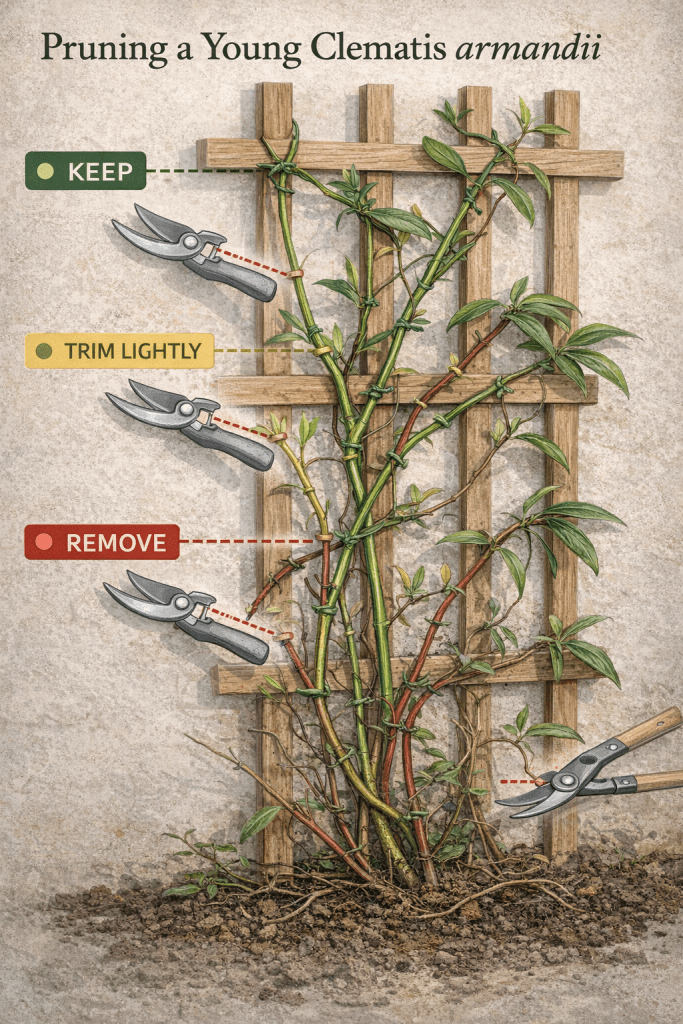
Step-by-Step Pruning Guide for Young Clematis armandii
Year 1: Establishment
- Planting: When you plant a new clematis, remove any damaged or very weak shoots.
- Light training: Tie the main shoots gently to a support (trellis, wires, or fence).
- Prune sparingly:
- Only remove shoots that are crossing, damaged, or overly long.
- Avoid cutting back too hard — the plant is still establishing roots.
Goal: Encourage 2–4 strong main stems while allowing some growth for root establishment.
Year 2: Early pruning
- After first flowering (if it flowers): Trim back any overly long, weak, or straggly shoots.
- Shape: Cut back side shoots lightly to maintain an open, airy structure.
- Remove dead or diseased wood: Always check for weak sections.
Tip: Clematis armandii flowers on old wood. Avoid cutting healthy main stems — you’ll remove next year’s flowers if you do.
Year 3: Encouraging strong framework
- Select main stems: Identify 3–5 strongest, healthiest stems to form the plant’s permanent framework.
- Prune secondary shoots: Cut away weak, overly long, or congested shoots to prevent shading and stress on main stems.
- Support growth: Tie long shoots as needed; encourage them to climb rather than flop.
Goal: A sturdy, well-ventilated structure with strong woody stems that can support flowering.
General tips for the first few years
- Do not leave everything unpruned: Overgrown young clematis risks dieback due to weak stems and overextension.
- Prune after flowering: For established growth, prune in late spring or early summer, once flowering finishes.
- Feed lightly: Balanced feed encourages healthy roots and woody stems without excessive leafy growth.
- Monitor for stress: Thin stems, tip dieback, or wilting often indicate the plant needs pruning or better support.
✅ Summary:
By pruning lightly in the first 2–3 years, selecting strong stems, and removing weak or excessive growth, you ensure Clematis armandii develops a sturdy framework, avoids dieback, and produces abundant flowers in future years.