
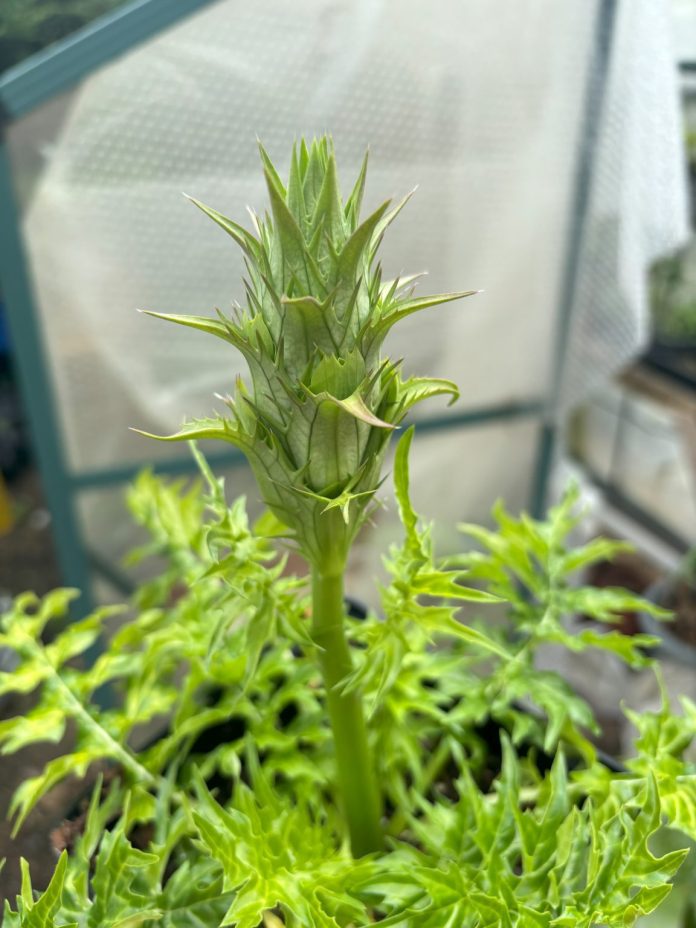
Acanthus ‘Morning’s Candle’, commonly known as Bear’s Breeches, is a striking perennial plant that adds architectural elegance to any garden. With its tall flower spikes, deep green foliage, and white flowers tinged with pink or purple, this plant is a standout feature in garden beds and borders. Here’s a comprehensive guide on how to grow Acanthus ‘Morning’s Candle’.
Choosing the Right Location
Acanthus ‘Morning’s Candle’ thrives in a location with partial to full sun. While it can tolerate some shade, especially in hotter climates, full sun is ideal for the best flowering results. Select a spot with well-draining soil to prevent root rot, as this plant does not do well in waterlogged conditions.
Soil Preparation
The plant prefers rich, loamy soil with a neutral to slightly alkaline pH. Before planting, work organic matter such as compost or well-rotted manure into the soil to improve fertility and drainage. Aim for a soil pH between 6.5 and 7.5.
Planting
- Timing: Plant Acanthus ‘Morning’s Candle’ in spring or early autumn. This allows the plant to establish roots before the extreme temperatures of summer or winter.
- Spacing: Space plants about 2-3 feet apart to give them room to grow and spread.
- Depth: Dig a hole twice the width of the root ball and deep enough so that the top of the root ball is level with the soil surface. Place the plant in the hole, backfill with soil, and firm it gently around the roots.
- Watering: Water thoroughly after planting to settle the soil around the roots.
Watering and Feeding
Acanthus ‘Morning’s Candle’ is relatively drought-tolerant once established but prefers regular watering during dry periods. Water deeply to encourage deep root growth, but avoid waterlogging. Mulch around the plant with organic mulch to conserve moisture and suppress weeds.
Feed the plant in early spring with a balanced, slow-release fertilizer to promote healthy growth and flowering. Avoid high-nitrogen fertilizers as they can promote excessive foliage at the expense of flowers.
Pruning and Maintenance
- Pruning: Remove spent flower spikes to encourage more blooms and prevent self-seeding. Cut back the foliage in late autumn after the first frost to tidy the plant and reduce pest issues.
- Pests and Diseases: Acanthus ‘Morning’s Candle’ is generally pest-resistant but can occasionally be affected by slugs and snails, particularly on young plants. Use slug pellets or organic slug deterrents if needed.
- Division: Divide the plant every 3-4 years in early spring or autumn to prevent overcrowding and rejuvenate growth. Dig up the clump, separate it into smaller sections with a sharp knife or spade, and replant immediately.
Overwintering
In colder regions, provide a layer of mulch or straw over the plant in late autumn to protect the roots from freezing temperatures. In milder climates, Acanthus ‘Morning’s Candle’ can usually survive winter without additional protection.
Design Tips
Acanthus ‘Morning’s Candle’ makes an excellent focal point in mixed borders and looks stunning when planted in groups. Pair it with other perennials such as ornamental grasses, Salvia, or Echinacea for a visually appealing contrast in textures and colors.
Conclusion
Growing Acanthus ‘Morning’s Candle’ can be a rewarding experience for any gardener. With its dramatic foliage and striking flower spikes, this plant adds a touch of elegance and structure to any garden setting. By providing the right conditions and care, you can enjoy the beauty of Bear’s Breeches for many years.
Acanthus ‘Morning’s Candle’ – Grow Guide
Common name: Bear’s Breeches
Family: Acanthaceae
Plant type: Herbaceous perennial
Hardiness: RHS H6 – fully hardy throughout the UK
Height & spread: 90–120 cm tall × 60–90 cm wide
Overview
Acanthus ‘Morning’s Candle’ is a compact, elegant form of bear’s breeches, valued for its upright spires of soft pink to mauve flowers and bold, glossy, deeply cut foliage. Compared with traditional Acanthus, it has a neater habit and is easier to place in borders while still delivering strong architectural impact.
Position
- Full sun to partial shade
- Flowers best in sun, but foliage remains lush in light shade
- Sheltered positions help protect flower spikes from strong winds
Soil
- Well-drained but moisture-retentive soil
- Thrives in fertile loam enriched with organic matter
- Neutral to slightly alkaline preferred (pH 6.5–7.5)
- Avoid waterlogged soils, particularly in winter
Planting
- Plant in spring or early autumn
- Space plants 60–90 cm apart
- Avoid disturbing roots once established, as Acanthus resents transplanting
Watering
- Water well during the first growing season
- Once established, plants are drought tolerant
- Prolonged drought may reduce flowering
Feeding
- Apply well-rotted manure or garden compost in spring
- A balanced fertiliser in late spring supports flowering
- Avoid excessive nitrogen, which can encourage leaf growth at the expense of flowers
Growth & Habit
- Forms a clump of large, deeply lobed, glossy green leaves
- Upright flowering spikes rise cleanly above the foliage
- Less invasive than some older Acanthus species
Flowering
- Months: June–August
- Flowers: Soft pink to mauve bracts with white highlights, held on tall, candle-like spikes
- Excellent for pollinators and architectural summer interest
Maintenance
- Remove spent flower spikes to tidy plants
- Cut back foliage in autumn once it begins to die back
- Mulch crowns in winter, especially on heavy soils
- Leave flower spikes over winter if structure is desired
Pests & Problems
- Generally trouble-free
- Occasional slugs and snails on young growth
- Crown rot possible in poorly drained soils
Propagation
- Root cuttings in winter or early spring
- Division is possible but should be done carefully, as plants dislike disturbance
Garden & Display Use
- Architectural focal point in mixed borders
- Gravel gardens and Mediterranean-style schemes
- Looks excellent with:
- Verbascum
- Alliums
- Grasses
- Eryngium
Quick Reference Table
| Feature | Details |
|---|---|
| Hardiness | RHS H6 |
| Height | 90–120 cm |
| Spread | 60–90 cm |
| Flowering | June–August |
| Position | Full sun to partial shade |
| Soil | Fertile, free-draining; pH 6.5–7.5 |
| Water | Moderate; drought tolerant once established |
| Feeding | Compost in spring; balanced fertiliser |
| Propagation | Root cuttings; careful division |
| Best feature | Upright candle-like flower spikes and bold foliage |