
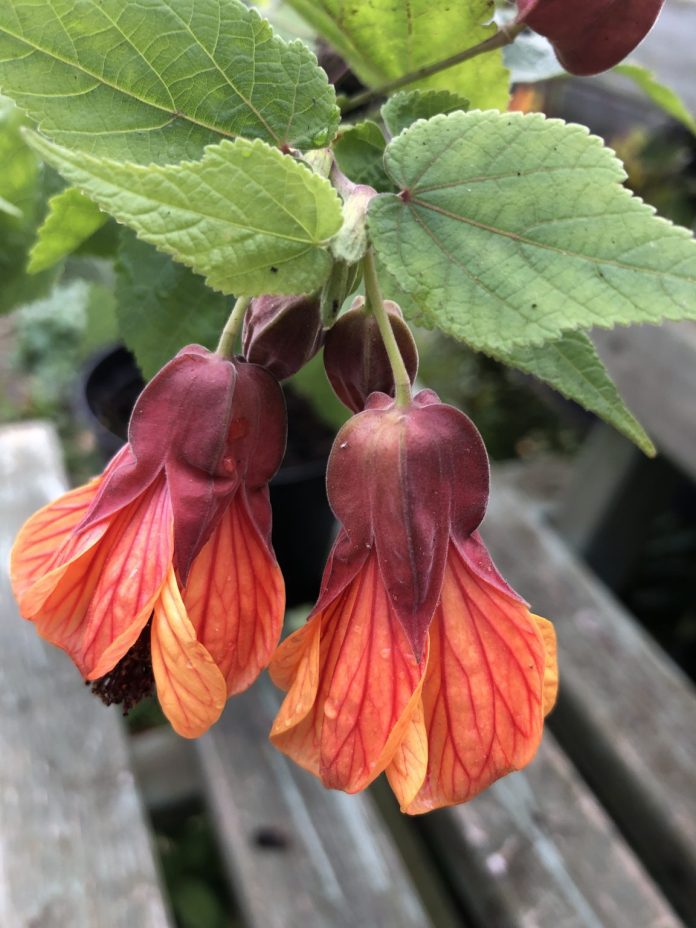
Abutilon Orange ‘Hot Lava,’ commonly known as Flowering Maple, is a beautiful and vibrant flowering shrub known for its striking orange blossoms and elegant foliage. Growing and caring for Abutilon ‘Hot Lava’ can be a rewarding experience. Here’s a step-by-step guide on how to cultivate and maintain this lovely plant:
1. Selecting a Suitable Location:
- Choose a location that receives bright, indirect sunlight. Abutilons prefer partial shade, especially during the hottest part of the day. In regions with hot summers, they may benefit from a bit of afternoon shade.
2. Soil Preparation:
- Abutilons thrive in well-draining, slightly acidic to neutral soil. You can improve the soil by adding organic matter like compost to enhance fertility and drainage.
3. Planting:
- When planting Abutilon Orange ‘Hot Lava,’ dig a hole slightly larger than the root ball. Place the plant in the hole, ensuring that it sits at the same level it was in the pot. Backfill the hole with soil and gently tamp it down to remove air pockets. Water thoroughly after planting.
4. Watering:
- Keep the soil consistently moist, but not waterlogged. Water the plant when the top inch (2.5 cm) of soil feels dry. Adjust the frequency of watering based on your local climate and the size of the plant. Always water at the base of the plant to prevent fungal issues.
5. Fertilization:
- Abutilon ‘Hot Lava’ benefits from regular feeding. Use a balanced, slow-release fertilizer or a liquid fertilizer diluted to half strength. Apply the fertilizer during the growing season, which is typically from spring to early autumn.
6. Pruning and Deadheading:
- Prune your Abutilon as needed to maintain its shape and remove dead or damaged branches. Deadheading (removing spent flowers) can encourage continuous blooming.
7. Winter Care:
- Abutilon is not cold-hardy and may not tolerate frost or freezing temperatures. In colder regions, it’s advisable to bring the plant indoors during the winter or protect it from freezing conditions.
8. Pests and Diseases:
- Keep an eye out for common pests like aphids, mealybugs, and whiteflies. Treat any infestations promptly with insecticidal soap or neem oil. Proper air circulation and good hygiene practices can help prevent pest and disease issues.
9. Staking (if needed):
- If your Abutilon ‘Hot Lava’ becomes tall and leggy, you may need to provide support or staking to keep it upright.
10. Repotting (if needed):
- As Abutilon ‘Hot Lava’ grows, you may need to repot it into a slightly larger container to accommodate its expanding root system. Repot in the spring when the plant is actively growing.
With proper care and attention to its needs, Abutilon Orange ‘Hot Lava’ can reward you with a profusion of striking orange blossoms and lush foliage, making it a vibrant addition to your garden or indoor space.


Abutilon ‘Hot Lava’ – Grow Guide
Common name: Flowering Maple, Chinese Lantern
Family: Malvaceae
Type: Evergreen or semi-evergreen shrub
Hardiness: RHS H3 – half-hardy; needs winter protection in most of the UK
Ultimate size: 1.5–2 m tall × 1–1.5 m wide
Overview
Abutilon ‘Hot Lava’ is a striking cultivar producing large, glowing orange, bell-shaped flowers over a very long season. With its soft maple-like foliage and continuous flowering from late spring until autumn (and often beyond under cover), it is ideal for sheltered borders, patios, and containers.
Position
- Light: Full sun to light partial shade
- Best flowering in full sun, but avoid scorching midday sun in very hot spots
- Requires a warm, sheltered position, protected from cold winds
Soil
- Type: Fertile, humus-rich, free-draining soil
- pH: Neutral to slightly acidic
- Improve planting soil with compost or well-rotted organic matter
Planting
- When: Late spring after risk of frost
- Ideal for:
- Large containers
- Sheltered borders
- Conservatories and patios
- Space plants 1–1.5 m apart
Watering
- Water regularly during active growth
- Keep soil evenly moist, but never waterlogged
- Container plants may need frequent watering in summer
Feeding
- Feed with a liquid fertiliser every 1–2 weeks during flowering
- Use a balanced or high-potassium feed
- Avoid excessive nitrogen, which promotes leaf growth over flowers
Growth & Habit
- Upright, bushy shrub
- Soft-wooded stems
- Responds well to pruning and shaping
- Can be kept compact or grown as a small shrub
Flowering
- Months: May–October (often longer under glass)
- Flowers: Large, pendulous, bright orange bells
- Extremely floriferous in warm, sunny conditions
- Attractive to bees
Maintenance
- Prune lightly in early spring to shape and encourage new growth
- Remove weak or crossing stems
- Overwinter frost-free at 5–10 °C in colder areas
- In mild coastal gardens, protect roots with a thick mulch
Propagation
- Softwood cuttings: Late spring to early summer
- Root easily with bottom heat
- Seed possible but cultivars do not come true
Pests & Problems
- Aphids and whitefly, especially under glass
- Red spider mite in hot, dry conditions
- Leaf drop usually caused by cold, drought, or sudden temperature changes
Garden & Container Use
- Patio pots and terraces
- Tropical or Mediterranean-style borders
- Conservatories and summerhouses
- Works well with:
- Brugmansia
- Fuchsia
- Cannas
- Pelargoniums
Quick Reference Table
| Feature | Details |
|---|---|
| Hardiness | RHS H3 |
| Height | 1.5–2 m |
| Spread | 1–1.5 m |
| Flowering | May–October |
| Position | Full sun to light shade |
| Soil | Fertile, free-draining |
| Water | Regular |
| Feeding | Every 1–2 weeks |
| Propagation | Softwood cuttings |
| Maintenance | Spring prune, winter protection |
| Best feature | Intense orange lantern flowers |