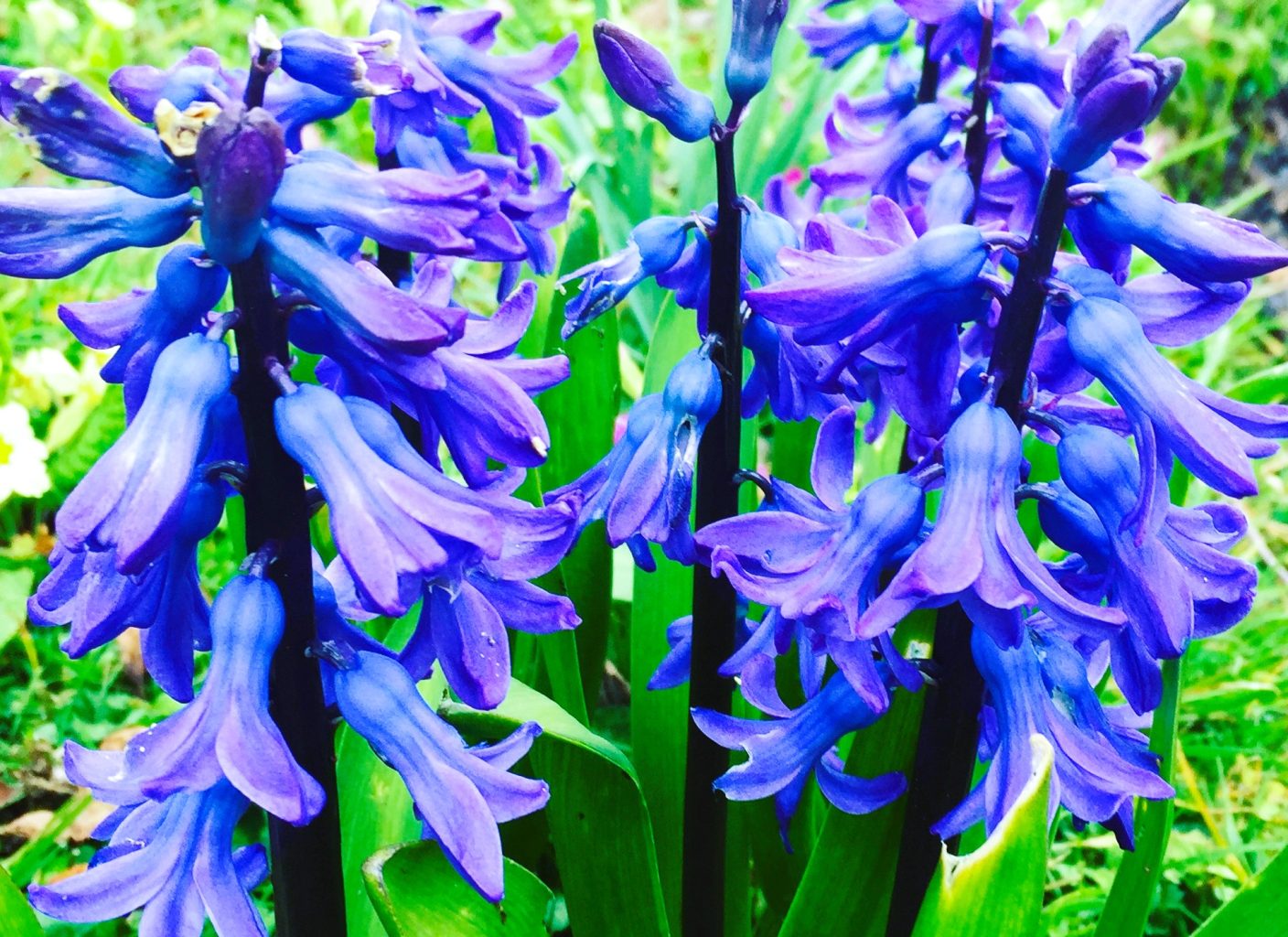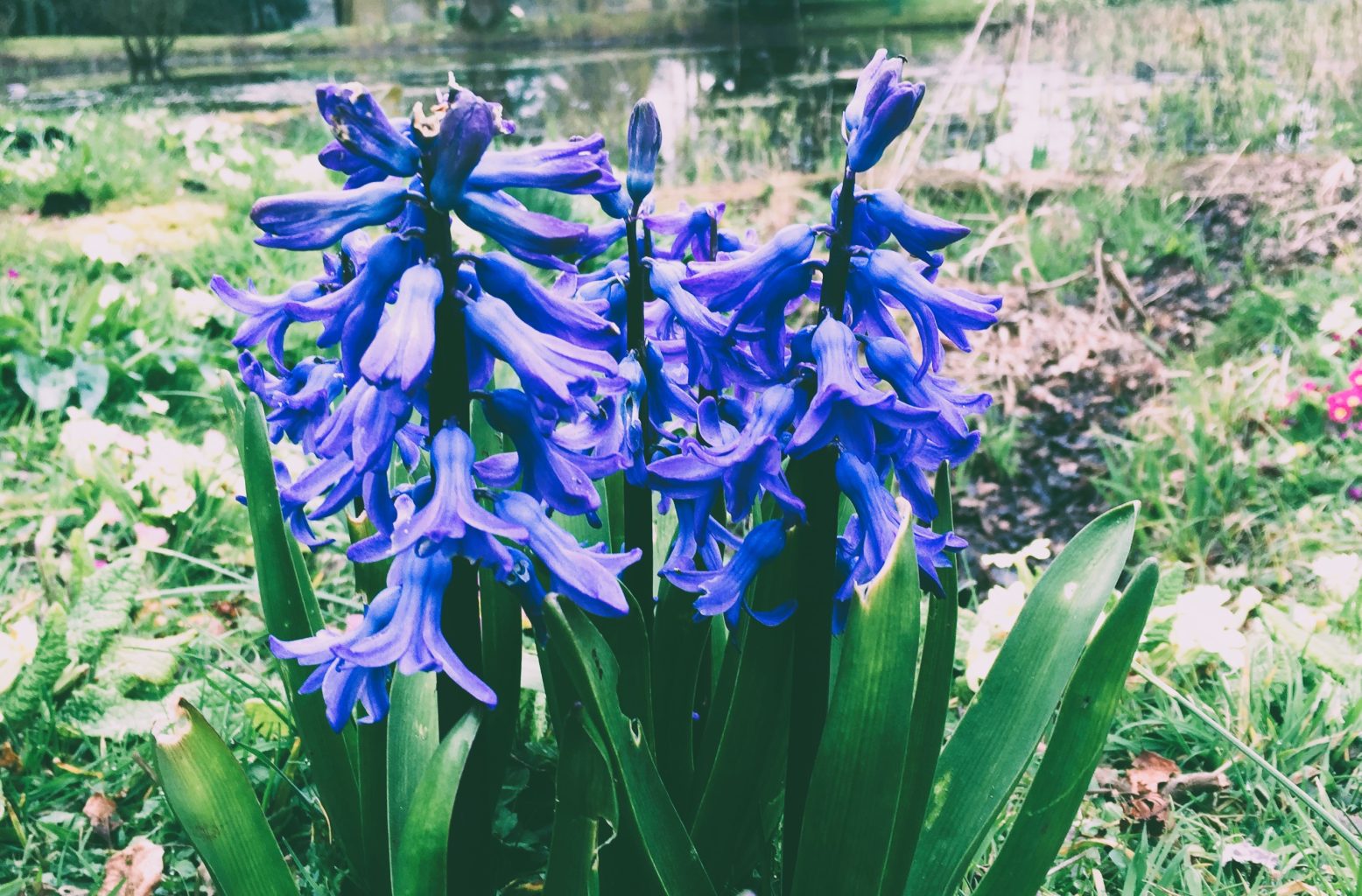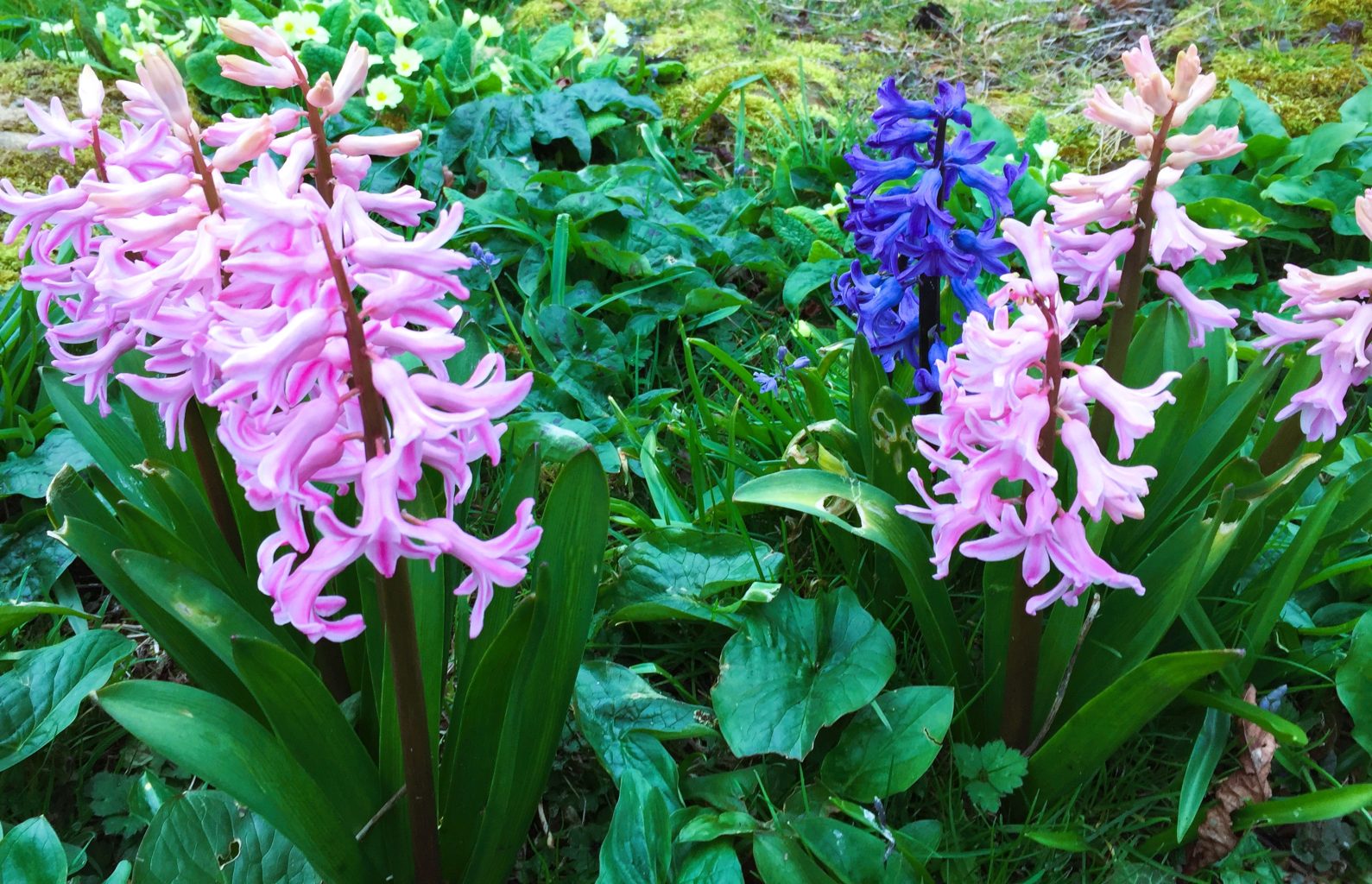
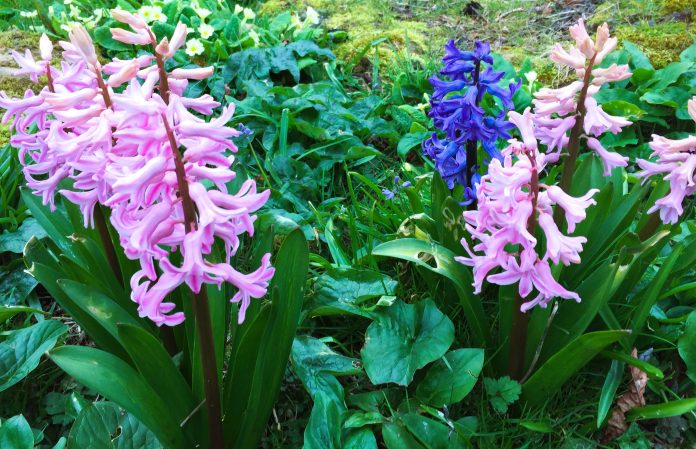
Hyacinths (Hyacinthus orientalis) are beloved for their vibrant colours and fragrant blooms, making them a popular choice for spring gardens and indoor displays. They’re relatively easy to grow in the UK and thrive in the country’s cool, temperate climate. Whether you’re planting them outdoors or trying to force Hyacinths to flower early for indoor enjoyment, here’s how to grow hyacinths successfully.
1. Choosing the Right Hyacinths
Hyacinths are available in a variety of colours, including blue, pink, white, yellow, and purple. For outdoor planting, select healthy, firm bulbs from a reputable supplier. If you plan to grow them indoors, look for “prepared” bulbs, which have been pre-chilled to mimic winter conditions and encourage earlier blooming. Hyacinths can be grown from seed but they can take up to six years before they produce a flower!
2. When to Plant
- Outdoor Planting: Plant hyacinth bulbs in autumn, ideally between late September and early November, before the first frost.
- Indoor Forcing: Start planting prepared bulbs in late September or October for flowers in December or January.
3. Site and Soil Preparation
Hyacinths thrive in well-drained soil and full sun to partial shade.
- Outdoor: Choose a site with good drainage to prevent bulb rot. If your soil is heavy clay, improve it with compost or grit.
- Indoor: Use a free-draining bulb compost or a mix of potting soil and sand in containers.
4. Planting Outdoor Hyacinths
- Depth and Spacing: Plant bulbs 10-15 cm deep and 8-10 cm apart, with the pointed end facing upwards.
- Watering: Water the bulbs after planting to help them establish, but avoid waterlogging.
- Mulching: Add a layer of mulch to insulate the bulbs during winter and suppress weeds.
5. Forcing Hyacinths Indoors
- Containers: Choose pots with drainage holes and add a layer of gravel or broken pottery at the bottom.
- Planting: Place the bulbs so their tops are just visible above the soil. Leave about 1 cm of space between the bulb and the edge of the pot.
- Pre-Chilling: For prepared bulbs, store the pots in a cool, dark place (a garage or shed works well) at around 5–9°C for 10–12 weeks.
- Bring Indoors: Once shoots are about 5 cm tall, move the pots to a warmer, bright location, avoiding direct sunlight until flowers begin to open.
What Are Prepared Hyacinth Bulbs?
Prepared hyacinth bulbs are specially treated to flower earlier than normal, making them ideal for indoor forcing. This treatment involves pre-chilling the bulbs to simulate the cold winter conditions they would naturally experience outdoors. By “tricking” the bulbs into thinking they’ve gone through winter, they can begin growing and blooming earlier when brought into a warmer environment.
How Are They Prepared?
Prepared bulbs are chilled at low temperatures (typically 5–9°C) for several weeks, mimicking the conditions they’d encounter in the soil during winter. This pre-chilling period breaks the bulb’s dormancy, encouraging them to sprout and flower when brought into warmer, brighter conditions.
Why Use Prepared Bulbs?
- Early Flowering: Prepared bulbs are perfect for creating indoor displays during the festive season, often blooming in December or January.
- Convenience: They save you the effort of pre-chilling bulbs yourself, as the process requires precise timing and conditions.
- Decorative Appeal: They bring a burst of colour and fragrance indoors when the garden is dormant.
Can You Reuse Prepared Bulbs?
Prepared bulbs can be planted outdoors after flowering indoors, but they usually won’t flower as well the following year. The forcing process can deplete the bulb’s energy. However, with proper care (allowing foliage to die back naturally, replanting in the garden), they may recover and bloom again after a year or two in the ground.
How Do Prepared Bulbs Differ from Regular Hyacinth Bulbs?
- Prepared Bulbs: Treated for early indoor flowering; bloom indoors in winter.
- Regular Bulbs: Intended for outdoor planting; bloom in spring following the natural seasonal cycle.
Forcing prepared hyacinths is an easy way to enjoy their beauty and fragrance during the colder months, brightening your home when it’s needed most!
6. Care and Maintenance
- Watering: Keep the soil moist but not soggy, both indoors and outdoors.
- Feeding: For outdoor hyacinths, apply a balanced fertilizer in early spring when growth starts. Indoor hyacinths don’t typically need feeding.
- Support: Tall hyacinths may need staking to prevent them from flopping over.
7. Post-Bloom Care
- Outdoor: Once the flowers fade, cut the flower stalk but leave the foliage intact. This allows the plant to store energy in the bulb for the next year. After the leaves yellow, you can lift and store the bulbs in a cool, dry place or leave them in the ground.
- Indoor: After flowering, indoor hyacinths can be planted in the garden. Allow the foliage to die back naturally, then plant the bulbs outdoors in autumn for blooms in subsequent years.
8. Common Issues
- Bulb Rot: Avoid overwatering and ensure good drainage.
- Poor Blooming: This can result from planting too late, insufficient chilling, or depleted bulbs.
- Pests: Watch out for slugs and snails, particularly when new shoots emerge in spring.
Here’s a timeline for growing hyacinths in the UK, including when to plant and when to expect blooms for both indoor and outdoor varieties:
Timeline for Outdoor Hyacinths
| Month | Activity | Expected Results |
|---|---|---|
| September–November | Plant bulbs outdoors in well-drained soil. | Bulbs establish roots during autumn. |
| December–February | Bulbs are dormant but protected in the soil. | N/A |
| March–April | Hyacinths bloom outdoors. | Bright, fragrant spring flowers. |
| May–June | Foliage dies back. | Bulbs store energy for next year. |
| July–August | Bulbs remain dormant (optional: lift and store). | N/A |
Timeline for Indoor Hyacinths (Forced Bulbs)
| Month | Activity | Expected Results |
|---|---|---|
| September–October | Plant prepared bulbs in pots and place in a cool, dark spot for 10–12 weeks. | Bulbs develop roots and shoots. |
| December–January | Move pots indoors to a bright, warm location. | Hyacinths bloom indoors. |
| February–March | Flowers fade. Allow foliage to die back naturally. | Energy stored for future planting. |
| April–May | Plant spent bulbs in the garden. | Bulbs establish outdoors for next year. |
Flowering Periods Summary
- Outdoor Hyacinths: Bloom in March–April.
- Indoor Hyacinths (Forced): Bloom in December–January (depending on planting and chilling schedule).
By planning your planting times, you can enjoy hyacinth blooms from mid-winter indoors to early spring outdoors!
Conclusion
Hyacinths bring a burst of colour and fragrance to gardens and homes alike, making them a delightful addition to any UK gardener’s repertoire. With a little planning and care, you can enjoy their stunning blooms year after year. Whether brightening your spring garden or adding cheer indoors during the winter, hyacinths are a timeless favourite.