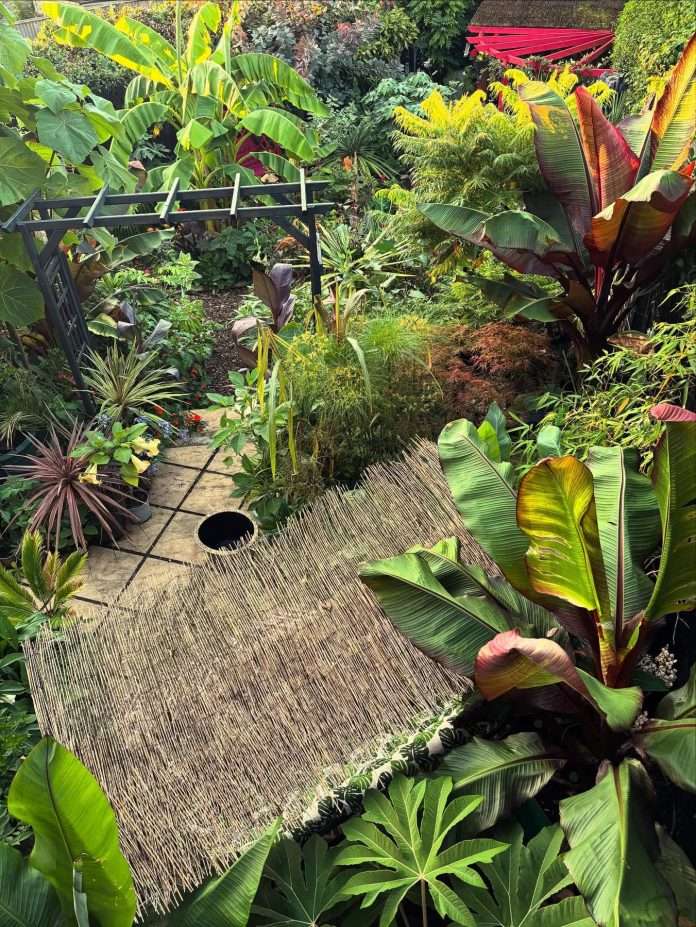
So how long does it take to make a tropical style garden in the UK? If you’ve been admiring any of the tropical style gardens that are popping up in the UK, you may be thinking that a half decent looking exotic garden like those on instagram would take decades to create. In a lot of cases this would be true but you can actually make a tropical style garden in one season with a little bit of pre planning. Of course there are many tropical style plants that need years to reach a good size but you don’t have to go out and spend thousands on mature shrubs and trees to get the exotic effect on year one.
As an example of the stellar growth rate of some of these plants the Ricinus pictured below was grown from a tiny seed in February and got to a height of eight feet in just one season! Ensete bananas are another rapid grower and can reach a couple of meters in height by September from a plant that was just a couple of feet tall at the start of the season.
The easiest way to get height in your new tropical style garden is to utilize existing plants. In this garden we already had Yucca gloriosa and Cordyline australis as well as the big cotinus with it’s fabulous red leaves. Adding to this existing structure gave the garden a feeling of semi maturity despite it’s youth.


The main stars of the garden are the Musa basjoo bananas with their giant paddle leaves. Not quite as quick as the Ensetes but still fast. The ones in the video were planted in the ground at about two feet tall. We had some of them in pots from the previous year but you could easily buy specimens of that height for £15 at the beginning of the season and end up with a whopper by September.
To get the big dinner plate type of leaves you could use the Foxglove tree. Ours has reached about five feet in height from a feeble looking 18″ plant in the spring. We will coppice this to get even bigger leaves next year. For the really mammoth leaves you cannot beat a Gunnera. There are basically two types manicata and tinctoria. You really want the manicata if possible because the leaves are slightly bigger and the plant is not as invasive as tinctoria. Tinctoria is on the invasive species list but is sometimes sold in error so be careful when buying, especially online. They are very difficult to tell apart and I’m still not 100% sure on what one I have in my garden!


For the Australian jungle look a firm favourite is the tree fern. Very expensive and certainly not a fast grower, only about 1.5 inches per year! If you like the leaf but don’t have the budget for a four figure eight foot plant then maybe go for a staghorn sumac. The leaves are dissected, fern like, and it’s a vigorous grower! It does like to sucker, but at least you won’t be short of new stems to transplant to another area of the garden a bit later!
For colour on year one there are some easy grow stunners. From the glaring orange of Tithonia and the dazzling yellow and red of Spanish flag, to the glowing magenta of cosmos – you are spoilt for choice on annuals. All from seed to massive six footers in a season! Of course for variety and exquisite blooms the hands down winner are Dahlias. A Massive range of colours and shapes and long lasting flowers, a surefire hit in any garden! For me though the best starter plant for a tropical style garden are Cannas. Fantastic leaves topped by dazzling long lasting flowers. The best part is that they are easy to propagate by division giving loads of new plants for the following year