
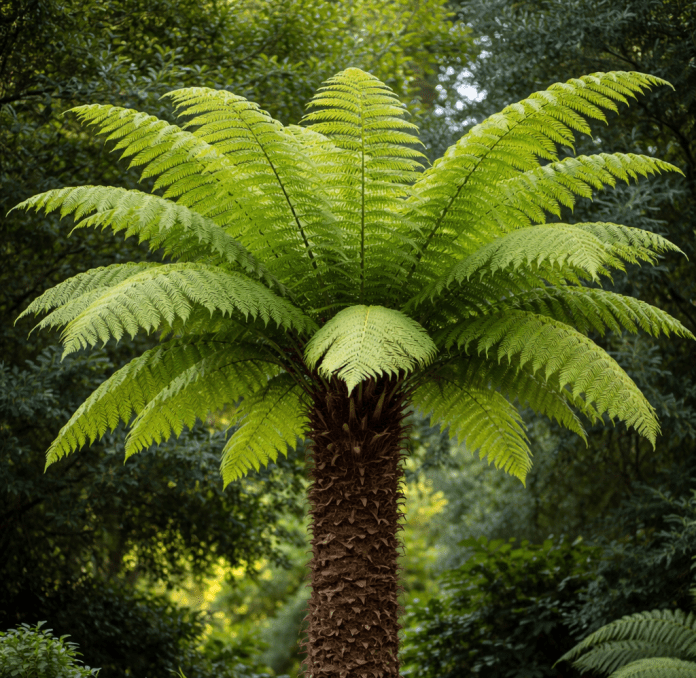
Tree ferns have a reputation for being slow, prehistoric plants, but the reality is a little more nuanced. How fast a tree fern grows depends very much on the species, the climate, and—most importantly—how well it’s looked after.
What “growth” actually means with tree ferns
Unlike trees, tree ferns don’t put on woody growth rings or branches. Their height comes from the slow extension of a single growing point (the crown) at the top of the trunk. If that crown is damaged, growth stops entirely. This is why consistent care is far more important for tree ferns than for many other plants.
Growth is usually measured in centimetres of trunk per year rather than overall size.
Typical growth rates
Under good conditions, most commonly grown tree ferns average:
- 5–10 cm of trunk per year in cool or temperate climates
- 10–20 cm per year in mild, frost-free or subtropical conditions
That may sound slow, but over a decade a healthy fern can gain a metre or more in height.
Differences between popular species
Dicksonia antarctica (Soft Tree Fern)
This is the most widely grown tree fern in the UK and northern Europe.
- Growth rate: typically 2–5 cm per year outdoors in the UK
- In very mild areas or with excellent care, it may reach 5–8 cm per year
Its slower growth is offset by its toughness and cold tolerance.
Cyathea cooperi (Australian Tree Fern)
Much faster-growing but less cold-hardy.
- Growth rate: 10–20 cm per year, sometimes more in warm climates
In frost-free gardens or greenhouses, it can appear to shoot up surprisingly quickly.
Cyathea australis and Cyathea medullaris
These sit somewhere between the two.
- Growth rate: around 8–15 cm per year in suitable conditions
They need warmth and humidity to perform well.
What affects growth speed most
Water
Tree ferns are thirsty plants. Regular watering of both the root zone and the trunk is essential. A dry trunk means no growth, even if the roots are damp.
Feeding
Light but frequent feeding during the growing season makes a noticeable difference. A balanced liquid feed or slow-release fertiliser helps maintain steady growth.
Temperature
Growth only really happens when temperatures are consistently above about 10°C. In cool summers, growth can slow almost to a standstill.
Shelter and humidity
Wind dries out fronds and trunks. Sheltered, humid positions encourage faster, healthier growth.
Light
Bright shade or dappled light is ideal. Too much sun can scorch fronds; too little can slow growth.
Imported trunks versus home-grown plants
Many larger tree ferns sold commercially are imported as cut trunks. These are often already decades old. Once established, they will resume growth at the same slow, steady rate as any other tree fern—don’t expect instant height gains just because the trunk is tall.
Smaller, nursery-grown plants may seem slower at first but often establish more reliably and grow consistently long-term.
How long before a tree fern looks “impressive”?
In UK conditions, patience is key.
- After 5 years, a healthy fern should show clear trunk development
- After 10–15 years, it can become a real structural feature
Tree ferns reward gardeners who think in decades rather than seasons.
The bottom line
Tree ferns are not fast plants in the conventional sense, but they are steady, dependable growers when treated properly. Give them water, shelter, and time, and they will quietly transform a garden into something that feels ancient, lush, and permanent.