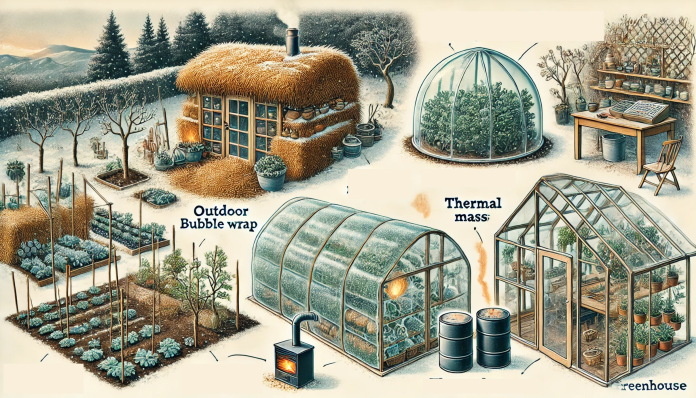
Retaining heat is a crucial aspect of winter gardening. Cold weather can damage or kill plants, but there are effective ways to protect them, both outdoors and in greenhouses. This guide explores practical heat retention methods, including estimated temperature gains, while emphasizing that these figures are approximations and depend on local conditions, materials, and setup.
Outdoor Heat Retention Methods
1. Mulching
Mulching insulates the soil, helping retain warmth. Organic mulches like bark, compost, and straw are particularly effective.
- How it works: Mulch traps warmth and reduces soil exposure to freezing air.
- Effectiveness: Can retain soil warmth by 1–3°C.
2. Straw or Hay Insulation
Straw or hay is commonly used to insulate tender plants and root crops.
- How it works: The hollow stems act as natural insulators.
- Effectiveness: Protects soil and plants, adding 1–2°C of protection.
3. Bubble Wrap on Pots and Plants
Wrap pots and young plants with bubble wrap to insulate against frost.
- How it works: Air pockets in the wrap create a barrier to cold.
- Effectiveness: May increase temperatures around plants by 0.5–2°C.
4. Garden Fleece or Fabric
Lightweight fleece or horticultural fabric shields plants from frost and cold winds.
- How it works: Creates a microclimate that traps ground warmth.
- Effectiveness: Adds 1–2°C of protection, depending on thickness.
5. Cloche Covers
Plastic or glass cloches act as mini-greenhouses.
- How it works: Traps solar heat during the day and retains it at night.
- Effectiveness: Can raise temperatures under the cloche by 2–4°C, depending on material and design.
6. Hot Water Bottles or Thermal Masses
Place hot water bottles or bricks near vulnerable plants.
- How it works: Releases stored heat slowly through the night.
- Effectiveness: Localized warming of up to 1–2°C.
7. Hedges and Windbreaks
Sheltering plants from cold winds with hedges, fences, or temporary windbreaks can help retain heat.
- How it works: Reduces wind chill, which cools plants and soil.
- Effectiveness: Prevents temperature drops by 1–2°C in sheltered zones.
Greenhouse Heat Retention and Heating Methods
Insulation Techniques
- Bubble Wrap Insulation
Line the inside of your greenhouse with bubble wrap for inexpensive insulation.
- Effectiveness: Helps retain heat, adding approximately 1–2°C of warmth.
- Thermal Screens or Curtains
Install thermal screens to trap heat inside the greenhouse overnight.
- Effectiveness: Provides an estimated 1–3°C boost in temperature.
- Double Glazing or Insulated Panels
Upgrade to double-glazed or polycarbonate panels for better insulation.
- Effectiveness: Improves heat retention by 2–4°C.
- Seal Gaps
Check for cracks and gaps in greenhouse frames and seal them with weatherproof tape or sealant.
- Effectiveness: Minimizes heat loss, conserving 1–2°C of warmth.
- Thermal Mass
Use large water barrels, stones, or concrete to store solar heat during the day and release it at night.
- Effectiveness: Stabilizes temperature, adding 0.5–2°C of nighttime warmth.
Heating Methods
- Paraffin Heaters
A budget-friendly heating option for small greenhouses.
- Effectiveness: May raise temperatures by 3–6°C, depending on heater size.
- Considerations: Ensure proper ventilation to prevent condensation or carbon monoxide buildup.
- Electric Heaters
Electric heaters with thermostats allow for precise temperature control.
- Effectiveness: Can increase temperatures by 5–10°C, depending on power and size.
- Solar Heaters
Solar-powered heaters are eco-friendly and work best in sunny locations.
- Effectiveness: Adds 2–5°C, depending on sunlight availability.
- Compost Heating
Place compost piles inside or near the greenhouse. Compost generates heat as it breaks down.
- Effectiveness: Can raise nearby temperatures by 1–3°C.
- Hotbeds
Create a hotbed by layering fresh manure under soil inside the greenhouse.
- Effectiveness: Soil temperatures may increase by 3–5°C above ambient levels.
- Candles or Tealights
Place candles under a ceramic pot for small-scale warmth.
- Effectiveness: Adds localized warmth of about 1–2°C.
- Heat Mats or Cables
Electric heat mats under seed trays or pots keep roots warm.
- Effectiveness: Maintains soil warmth, increasing temperatures by 2–4°C directly under the mat.
General Considerations
- Combine Methods: Layering techniques (e.g., insulation + heaters) maximizes efficiency.
- Monitor Temperatures: Use a thermometer to track greenhouse or plant protection effectiveness.
- Plan for Ventilation: Avoid overheating or condensation buildup in enclosed spaces.
By using these techniques, gardeners can provide effective frost protection and improve growing conditions during colder months. Remember that all temperature estimates are approximate and may vary based on your specific setup and climate.