
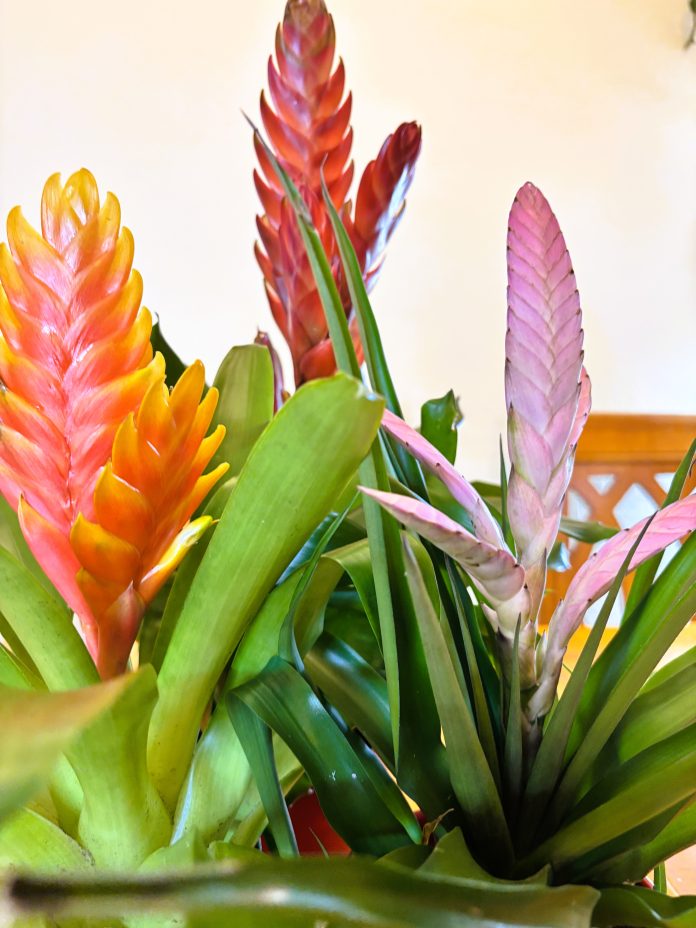
Bromeliads are often associated with steamy rainforests and exotic holiday destinations, yet many can be grown very successfully in the UK. With their sculptural rosettes, colourful bracts, and long-lasting flowers, they make striking houseplants and summer patio plants, and a few are even hardy enough to live outdoors all year in milder gardens.
This guide explains how to grow bromeliads in the UK climate, which types are easiest, and how to keep them looking their best.
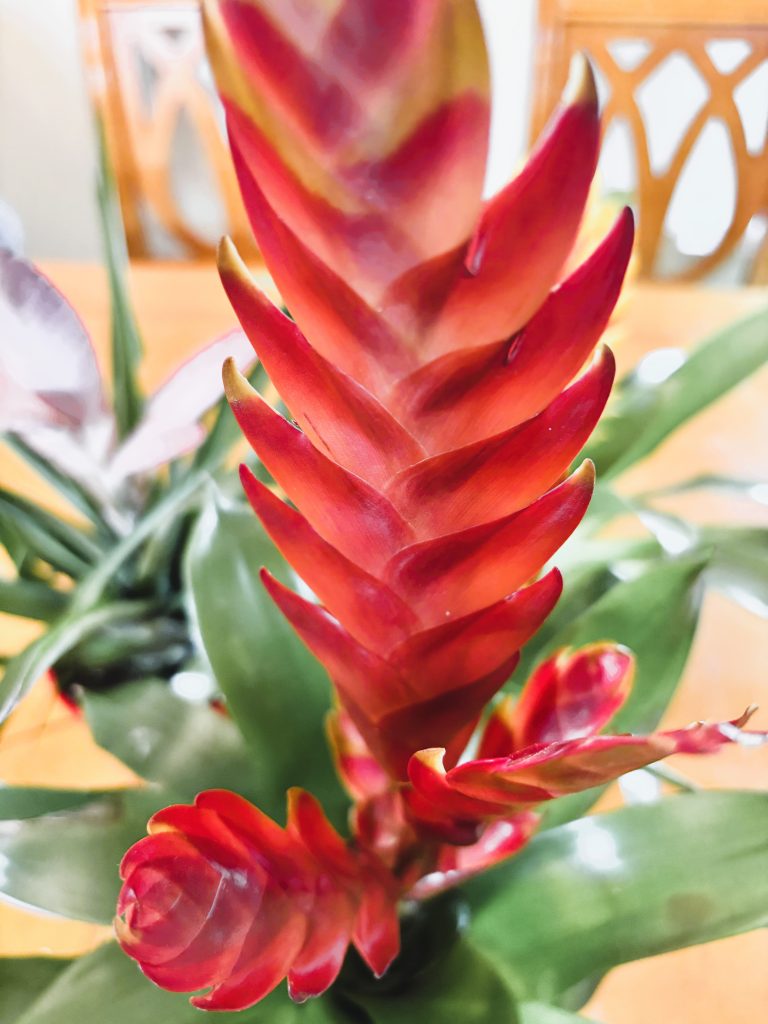
What Are Bromeliads?
Bromeliads belong to the family Bromeliaceae, a group of mainly tropical plants native to Central and South America. Many grow as epiphytes in trees rather than in soil, collecting water and nutrients in the central “tank” formed by their leaves.
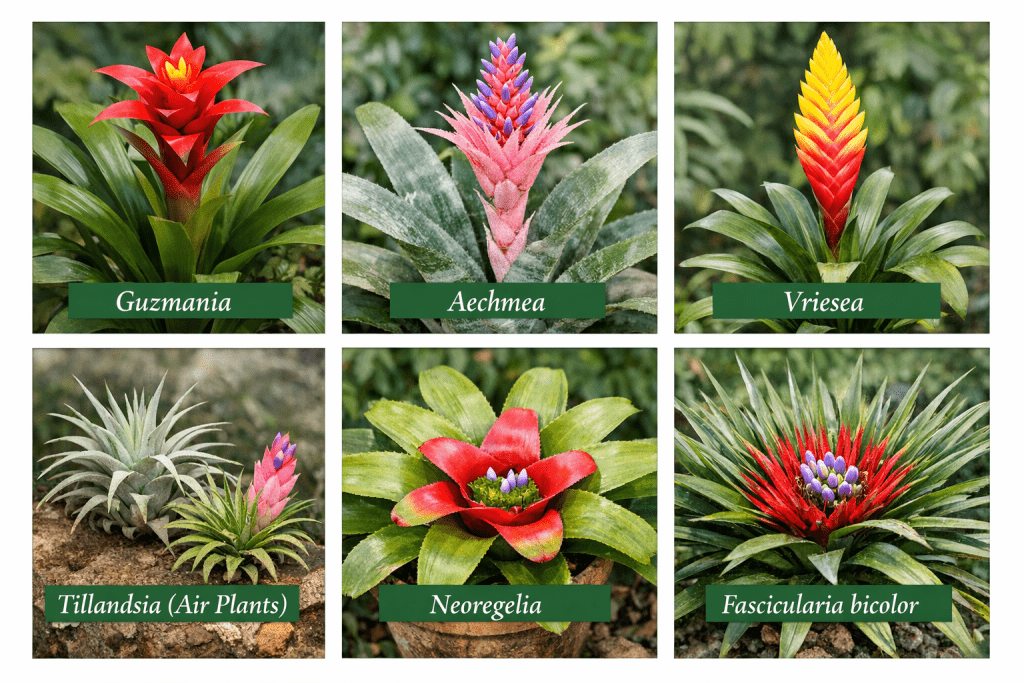
Commonly grown genera include:
- Guzmania – soft leaves, vivid flower spikes, ideal for indoors
- Vriesea – architectural forms, flat sword-like flowers
- Aechmea – tougher plants with spiny leaves, good for beginners
- Tillandsia (air plants) – soil-free epiphytes
- Fascicularia – one of the few genuinely hardy bromeliads
Are Bromeliads Hardy in the UK?
Most bromeliads are tender and must be protected from frost. However:
- Indoor bromeliads thrive year-round in heated homes
- Summer outdoor growing is very successful from late spring to early autumn
- Fascicularia bicolor can survive outdoors year-round in sheltered UK gardens, especially in the south and coastal areas
As a rule, if temperatures fall below 5°C, tender bromeliads should be brought indoors.
Growing Bromeliads Indoors
Light
Bromeliads prefer bright, indirect light. A position near an east- or west-facing window is ideal. Too much direct sun can scorch the leaves, while low light reduces flowering.
Temperature
- Ideal range: 18–24°C
- Avoid cold draughts and sudden temperature changes
- Keep away from radiators and fireplaces
Watering
Bromeliads are easily killed by overwatering, but they do have specific needs:
- Keep the central cup (tank) filled with rainwater where possible
- Empty and refresh the tank every few weeks to prevent stagnation
- Water the compost lightly, allowing it to dry slightly between watering
In winter, reduce watering significantly.
Humidity
UK homes can be dry, especially in winter. Increase humidity by:
- Misting occasionally (not daily)
- Standing pots on trays of damp gravel
- Grouping plants together
Compost and Potting
Bromeliads need excellent drainage. A suitable mix is:
- Houseplant compost mixed with orchid bark or perlite
- Alternatively, use a ready-made orchid compost
Repot only when necessary, as bromeliads prefer to be slightly pot-bound.
Growing Bromeliads Outdoors in Summer
From late May or early June, bromeliads can be moved outside once nights are reliably warm.
- Choose a sheltered, lightly shaded position
- Protect from heavy rain and strong winds
- Use pots rather than planting into the ground (except Fascicularia)
Outdoor summer growing often results in stronger plants and better colour.
Hardy Bromeliads for UK Gardens
Fascicularia bicolor
This is the most reliable bromeliad for outdoor planting in the UK.
- Forms dense clumps of spiny green leaves
- Turns brilliant red before flowering
- Survives temperatures down to around –8°C if well-drained
Grow in:
- Free-draining soil or raised beds
- Full sun to light shade
- A dryish position in winter
Good drainage is essential for winter survival.
Flowering and Aftercare
A bromeliad flowers only once, often lasting several months. After flowering:
- The main plant will slowly decline
- Offsets (pups) form at the base
Do not remove the parent plant until pups are at least one-third of its size. These can then be potted on and grown as new plants.
Common Problems
- Brown leaf tips – dry air or inconsistent watering
- Rot at the base – compost too wet or poor drainage
- No flowers – insufficient light or a plant not yet mature
Healthy bromeliads are generally pest-free in the UK.
Why Grow Bromeliads?
Bromeliads are long-lived, low-maintenance plants that offer colour and structure when many houseplants are simply green. For UK gardeners with a taste for the exotic, they are one of the easiest ways to bring a tropical feel into the home or summer garden.
With the right care and positioning, bromeliads can thrive in the UK and become a distinctive, reliable part of your plant collection.
Bromeliad – Grow Guide
Common name: Bromeliad
Family: Bromeliaceae
Type: Tender perennial / houseplant
Hardiness: RHS H1 – indoor only in the UK; frost-tender
Ultimate size: 30–90 cm tall × 30–60 cm wide (depending on species)
Overview
Bromeliads are exotic, tropical plants prized for their striking foliage and colourful, long-lasting flowers. Many form rosettes that hold water in the centre “tank,” providing a natural microhabitat. They are perfect for indoor tropical displays, bright rooms, or conservatories. Most bloom once, then produce offsets (“pups”) to continue the plant.
Position
- Light: Bright, indirect light
- Avoid direct sun, which can scorch leaves
- Many species tolerate partial shade indoors
Soil
- Type: Well-draining, airy potting mix
- Use a mix of orchid bark, perlite, and peat or specialist bromeliad compost
- Avoid heavy, water-retentive soils
Planting & Potting
- When: Anytime, especially when planting offsets
- Bromeliads can be grown in pots or mounted on bark/wood
- Use pots with good drainage
Watering
- Keep the central “tank” filled with water, refreshing every 1–2 weeks
- Water soil lightly; avoid waterlogging
- In dry indoor air, mist foliage occasionally
Feeding
- Use a liquid fertiliser at half-strength every 2–4 weeks during active growth
- Apply fertiliser into the central cup or to soil
Growth & Habit
- Evergreen, rosette-forming plants
- Foliage often brightly coloured, variegated, or spiny-edged
- Flowers rise from centre, sometimes producing dramatic spikes
- Produces offsets (“pups”) after flowering to continue the plant
Flowering
- Months: Depends on species; many bloom once a year, lasting weeks to months
- Flowers: Bright, long-lasting, often red, pink, yellow, or orange
- Main ornamental appeal can also be foliage
Maintenance
- Remove dead or dying leaves
- Trim spent flower spikes after blooming
- Separate pups when 1/3–1/2 the size of parent for propagation
- Maintain good air circulation to prevent rot
Propagation
- Offsets (“pups”): Most common; remove when sufficiently grown and pot separately
- Seed: Rarely used; slow to flower
Pests & Problems
- Mealybugs, scale insects, and aphids
- Root rot if overwatered or in poorly draining soil
- Leaf tip browning if water quality is poor or humidity low
Garden & Indoor Use
- Indoor tropical displays or conservatories
- Hanging baskets or mounted on decorative bark/wood
- Companion plants:
- Orchids
- Ferns
- Tropical foliage plants (Philodendron, Alocasia)
Quick Reference Table
| Feature | Details |
|---|---|
| Hardiness | RHS H1 – indoor only; frost-tender |
| Height | 30–90 cm (depending on species) |
| Spread | 30–60 cm |
| Flowering | Species-dependent; flowers once a year, lasting weeks to months |
| Position | Bright, indirect light; partial shade tolerated |
| Soil | Well-draining, airy mix; orchid bark + perlite + peat |
| Water | Keep central cup filled; lightly water soil; avoid waterlogging |
| Feeding | Half-strength liquid fertiliser every 2–4 weeks |
| Propagation | Offsets (“pups”); seed (rare) |
| Maintenance | Remove dead leaves; trim spent flowers; separate pups |
| Best feature | Striking foliage and long-lasting tropical flowers |