
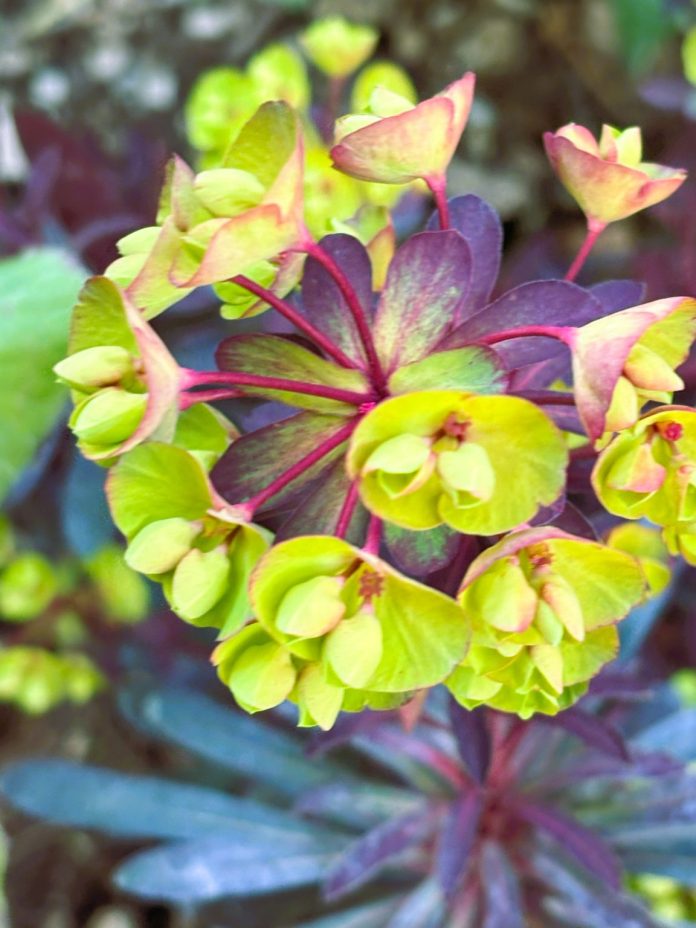
Plant Overview
- Botanical Name: Euphorbia ‘Miner’s Merlot’
- Common Name: Miner’s Merlot spurge
- Family: Euphorbiaceae
- Type: Evergreen perennial or subshrub
- Hardiness: RHS H4 (–10°C to –5°C)
- Height & Spread: 45–60cm tall × 45cm wide
- Foliage: Deep burgundy-purple with a silvery sheen
- Flowers: Lime-green bracts with maroon centers, in spring to early summer
- Scent: Not fragrant
Planting
- Best Time to Plant: Spring or early autumn
- Soil: Well-drained soil is essential
- Soil Type: Grows well in loam, chalk, or sandy soil
- Not Suitable For: Heavy clay unless amended with grit and compost for drainage
- pH: Tolerates neutral to alkaline soils
- Light Requirements: Full sun to light shade
- Spacing: Space 40–50cm apart
Tip: Avoid planting in areas prone to winter waterlogging – roots are prone to rot in soggy soils.
Seasonal Interest
- Flowering Time: April to June
- Foliage Interest: Year-round, particularly striking in winter and early spring
Care & Maintenance
Watering
- Drought tolerant once established
- Water new plants during dry spells until roots are established
Feeding
- Not heavy feeders
- Light mulch in spring with compost or fine gravel to keep weeds down
Pruning & Tidying
- Cut spent flower stems back to the base after flowering
- Wear gloves when cutting: milky sap can irritate skin and eyes
Pests & Diseases
- Generally pest- and disease-free
- May get root rot in poorly drained soils
Design Tips
- Great for modern borders, gravel gardens, Mediterranean or dry gardens
- Combines beautifully with grasses, Alliums, Eryngiums, and Sedums
- Colour contrast works well against silver-leaved or lime-green foliage plants
Container Growing
- Grows well in containers with free-draining compost (e.g., John Innes No. 2 + grit)
- Choose a sunny, sheltered spot
- Ensure pots do not sit in water in winter
Propagation
- By Cuttings:
- Take softwood or semi-ripe cuttings in late spring or early summer
- Allow milky sap to dry before inserting into compost
- By Division:
- Divide established clumps in early spring if needed, but not often required
Safety Note
- All parts are toxic if eaten
- Milky sap can irritate skin and eyes – always wear gloves when handling or pruning
Troubleshooting
| Problem | Likely Cause | Solution |
|---|---|---|
| Wilting or rot | Poor drainage, especially in winter | Improve soil or lift and replant in a drier spot |
| Lack of colour | Too much shade | Move to sunnier position |
| Leggy growth | Ageing stems or low light | Cut back to base in early spring |
Summary
Euphorbia ‘Miner’s Merlot’ is a tough, architectural plant perfect for modern and drought-tolerant gardens. Its year-round foliage interest and striking spring flowers make it a valuable plant for structure, colour, and texture in sun or light shade.
Euphorbia ‘Miner’s Merlot’ – Grow Guide
Common name: Miner’s Merlot Spurge
Family: Euphorbiaceae
Type: Evergreen perennial / subshrub
Hardiness: RHS H5 – fully hardy in most of the UK
Ultimate size: 50–80 cm tall × 50–60 cm wide
Overview
Euphorbia ‘Miner’s Merlot’ is a compact, architectural evergreen perennial prized for its rich burgundy-red foliage and striking green-bronze flowers in spring. Its colour contrast makes it an excellent accent plant in borders, rockeries, or mixed perennial planting schemes. It is drought-tolerant once established and generally low-maintenance, ideal for modern or tropical-style garden designs.
Position
- Light: Full sun to partial shade
- Performs best in sheltered, well-draining positions
- Leaf colour is deepest in full sun
Soil
- Type: Well-draining soil; tolerant of poor or sandy soils
- Avoid heavy, waterlogged conditions
- pH: Neutral to slightly alkaline
Planting
- When: Spring or autumn
- Space plants 50–60 cm apart for mature clumps
- Mulch base lightly to retain moisture and suppress weeds
Watering
- Water regularly during the first growing season to establish roots
- Once established, very drought-tolerant
- Avoid waterlogging, which can cause root rot
Feeding
- Low-maintenance; optional light feed in spring with a general-purpose fertiliser
- Avoid high-nitrogen fertilisers which encourage soft growth
Growth & Habit
- Upright, bushy evergreen perennial
- Compact habit with rich burgundy foliage throughout the growing season
- Spring flowers: greenish-yellow bracts contrasting with dark leaves
- Slow to moderate growth; long-lived
Flowering
- Months: April–June (UK)
- Flowers: Small green-bronze cyathia in compact clusters
- Main ornamental appeal is foliage colour rather than flowers
Maintenance
- Light pruning in early spring to remove old stems and shape the plant
- Cut back to encourage fresh growth and maintain compact habit
- Mulch base in winter for extra protection in exposed sites
Propagation
- Cuttings: Semi-hardwood in summer; root in moist, well-draining compost
- Division: Rarely used
Pests & Problems
- Generally pest- and disease-free
- Leaf burn if planted in waterlogged soil
- Sap is toxic and irritant; handle with gloves
Garden Use
- Borders, rockeries, or alpine-style planting
- Focal point in mixed perennial planting schemes
- Excellent companion plants:
- Heuchera (Coral Bells)
- Salvia
- Festuca (ornamental grasses)
- Geraniums
Quick Reference Table
| Feature | Details |
|---|---|
| Hardiness | RHS H5 – fully hardy |
| Height | 50–80 cm |
| Spread | 50–60 cm |
| Flowering | April–June; green-bronze clusters (cyathia) |
| Position | Full sun to partial shade; sheltered |
| Soil | Well-draining; tolerant of poor soils; neutral to slightly alkaline |
| Water | Regular during establishment; drought-tolerant once established |
| Feeding | Optional light feed in spring; avoid high nitrogen |
| Propagation | Semi-hardwood cuttings; division rarely |
| Maintenance | Light pruning in spring; mulch in winter |
| Best feature | Deep burgundy foliage and architectural form |