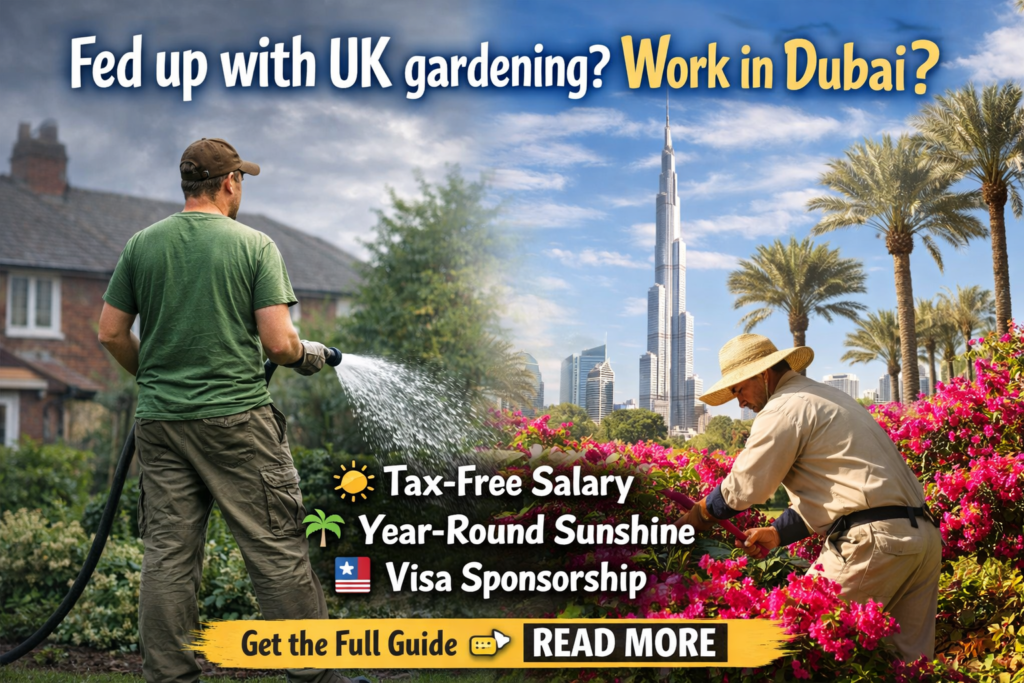
If you’re tired of wet winters, slow-growing plants, and low pay in the UK, the idea of working as a gardener in Dubai might have crossed your mind. But before you book a one-way ticket, here’s a practical guide on what to expect — including pay, taxes, visas, and real-life pros and cons.
🌞 Why Dubai Appeals to Gardeners
- Sunshine all year round – no grey winters. Plants grow continuously (with plenty of irrigation help).
- Exotic plants everywhere – tropical palms, hibiscus, bougainvillea, frangipani, and even imported temperate species in luxury developments.
- High-scale landscaping projects – resorts, golf courses, public parks; you’ll see gardens you could only dream of in the UK.
- Good pay and perks – salaries are often higher than the UK, and many employers provide visa sponsorship, accommodation, transport, and medical insurance.
- Tax-free salaries – Dubai has no personal income tax, meaning your salary goes further than the same gross pay in the UK.
⚖️ The Downsides (Be Realistic)
- Extreme heat – summers regularly hit 40–50°C. Outdoor work is mostly early mornings or evenings; mid-day is often off-limits.
- Work intensity – tropical and imported plants require constant care: irrigation, shading, and soil management. Mistakes can be costly.
- Cultural adjustment – Dubai has strict labour laws and a diverse workforce. Understanding local customs and professional expectations is essential.
- Cost of living – while salaries are good, rent, schooling (if moving with family), and general living expenses can be high.
🛠️ Practicalities Before You Move
- Visa & Work Permit
- You must have a sponsored work visa. Working on a tourist visa is illegal.
- Most horticulture employers provide visa sponsorship, including your residency visa and Emirates ID.
- Qualifications & Skills
- Experience with tropical, ornamental, or high-maintenance plants is highly desirable.
- Knowledge of irrigation systems, soil management, and pest control is a huge advantage.
- English is usually essential; Arabic can help in some companies.
- Living Conditions
- Accommodation varies: some employers provide housing, some allow private rentals.
- Outdoor roles are early morning; summers can be intense, so hydration and sun safety are crucial.
💰 Tax and Salary Reality
One of Dubai’s biggest draws: no personal income tax. Unlike in the UK, you keep 100% of your salary, which can make even a modest increase in pay feel significant.
- Example: A horticulturist earning £2,500/month in the UK might only take home around £1,900 after tax. In Dubai, the same salary (AED ~12,500/month) is yours in full.
- Other perks: Many jobs include accommodation, transport, and health insurance, effectively adding thousands to your take-home “benefits package.”
However, note: you may still have UK tax obligations if you keep UK residency or bank accounts. Consult a tax adviser before moving permanently.
🔍 Where to Look for Jobs
You don’t need live listings to get started:
- Job sites: Indeed UAE, Bayt.com, GulfTalent — search “gardener,” “horticulturist,” or “landscape supervisor.”
- Recruitment agencies: Many specialise in landscaping, resorts, and facilities management and handle visas.
- Company websites: Large resorts, golf courses, hotels, and landscaping contractors often post vacancies.
- Professional networks: LinkedIn, UK horticulture forums, and gardening groups. Networking can open doors faster than applications alone.
💡 Tip: Build a Dubai-friendly CV, highlighting irrigation skills, tropical plant experience, and any supervisory experience.
✅ Pros and Cons at a Glance
Pros:
- Year-round sunshine
- Exotic plants and high-profile projects
- Higher pay + tax-free salary
- Perks like visa, accommodation, transport, insurance
- Unique professional experience
Cons:
- Extreme heat in summer
- Plants need intensive care
- Cultural and regulatory adaptation
- Cost of living can be high
- Less romantic, more technical gardening
💡 What to Do Next
- Research the market — decide what kind of horticulture suits you (resorts, landscaping companies, nurseries, public parks).
- Update your CV and portfolio — highlight irrigation, tropical plant experience, and any management skills.
- Network — LinkedIn and UK gardening forums are excellent for making Dubai contacts.
- Prepare for the move — consider climate, housing, travel, visa timelines, and tax planning.
- Set realistic expectations — Dubai is exciting but challenging; gardening here is more technical than the UK.
Working in Dubai is a career adventure for gardeners willing to embrace heat, exotic plants, and a highly-managed landscape. With careful planning and a tax-free salary, it can be a life-changing move — just make sure you know what you’re signing up for.
Absolutely — here are clear, practical, no-nonsense facts about working in Dubai, especially relevant to UK gardeners and horticulturists. You can drop these straight into your article as a facts box or supporting section.
More Facts About Working in Dubai (What People Don’t Always Tell You)
🕒 Working Hours & Contracts
- Most contracts are 8–10 hours per day, typically 6 days a week.
- Outdoor roles often start very early (5–6am) to avoid peak heat.
- Contracts are usually 2 years, renewable.
- Overtime policies vary — some roles include it, others don’t.
📜 Employment Law Basics
- Employment is governed by UAE Labour Law, not UK-style employment rights.
- There is no trade union system.
- Disputes are handled through official labour channels, not courts in the first instance.
- End-of-service benefits (gratuity) are paid when you leave, based on length of service.
🏠 Accommodation Reality
- Some employers provide shared accommodation (common for entry-level roles).
- Others give a housing allowance, leaving you to rent privately.
- Renting privately often means paying rent upfront (e.g. quarterly or annually).
- Accommodation location matters — long commutes in heat can be exhausting.
🚗 Transport
- Many employers provide transport to and from work, especially for landscaping teams.
- Public transport is good in central Dubai but limited for remote sites.
- Owning a car is common but adds costs (insurance, fuel, parking).
🌡️ Heat & Health
- Summer heat is serious, not just “hot weather”.
- Hydration rules and mandatory rest periods exist, but enforcement varies.
- Sun protection is essential — hats, UV clothing, and breaks aren’t optional.
- If you struggle with heat, Dubai outdoor work will be challenging.
💰 Money, Banking & Sending Cash Home
- Opening a UAE bank account is usually arranged after your visa is issued.
- Sending money to the UK is straightforward via banks or transfer services.
- Many people save well due to tax-free income, but only if lifestyle costs are controlled.
- Dubai can be as cheap or as expensive as you make it.
🍺 Alcohol & Lifestyle
- Alcohol is legal but regulated.
- Drinking is restricted to licensed venues or private residences.
- Public behaviour standards are stricter than the UK.
- Dubai is safe, clean, and very controlled — some love this, others don’t.
🌍 Cultural Reality
- Dubai is extremely multinational — you’ll work with people from all over the world.
- Respect for local customs is expected, especially around dress and behaviour.
- It’s modern, but not Western in the UK sense.
- Adaptability matters as much as horticultural skill.
🌱 Career Impact
- Dubai experience looks strong on a CV:
- Large-scale projects
- Irrigation systems
- Tropical plant management
- Team supervision
- Many people work there short- to medium-term (2–5 years), then return home with savings and experience.
- It’s often seen as a career accelerator, not a forever move.
⚠️ Red Flags to Watch For
- Any employer asking you to work on a tourist visa
- Vague contracts with no salary breakdown
- No mention of medical insurance or visa sponsorship
- Pressure to pay recruitment fees (often a warning sign)
The Bottom Line
Working in Dubai can be financially rewarding and professionally eye-opening, especially if you’re frustrated with UK pay, weather, or limited opportunities. But it’s not a holiday — it’s structured, demanding, and heat-intensive.
Dubai suits people who are:
✔ Practical
✔ Resilient
✔ Open to different cultures
✔ Comfortable with systems, scale, and rules