
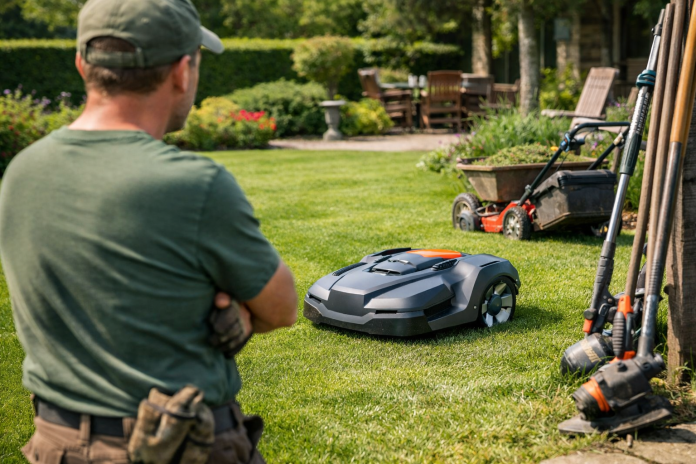
The gardening industry is evolving fast, with technology reshaping the way services are delivered. One area seeing rapid growth is robotic lawn mowers. For professional gardeners, the question isn’t just “Should I buy one?”—it’s “Should I offer a robot mower rental scheme to my clients?” .
Why Consider Robot Mowers?
- Changing Customer Expectations
Homeowners increasingly expect convenience. A robotic mower provides hands-free lawn care, and offering a rental scheme lets your clients experience the technology without a full commitment. - Attracting New Clients
Not everyone wants to buy a robot mower outright—high upfront costs can deter potential customers. A rental scheme lowers the barrier to entry and can bring new clients into your service network. - Additional Revenue Stream
Renting robot mowers could create a recurring income model. Monthly or seasonal rentals provide predictable revenue, which can help smooth out the seasonality of traditional gardening work. - Demonstrating Innovation
Offering cutting-edge solutions signals that your business is forward-thinking. This can differentiate your services from competitors and position you as a tech-savvy gardener.
Key Considerations
- Investment vs. Return
Robot mowers can be expensive. You’ll need to calculate how many rentals per season are needed to cover purchase costs and maintenance. - Maintenance and Support
Renting equipment means you’re responsible for servicing and repairs. Having a clear maintenance plan and service agreement is essential. - Insurance and Liability
Ensure you have coverage for rented equipment. Accidental damage or theft can be costly if not properly insured. - Client Education
Not every homeowner understands how a robot mower works. Providing demos, setup support, or even video tutorials can enhance client satisfaction and reduce service calls.
Tips for a Successful Rental Scheme
- Start Small – Test with a few units and see how your clients respond.
- Offer Seasonal Rentals – Spring to autumn covers most of the mowing season.
- Bundle Services – Include installation, maintenance checks, and remote troubleshooting in your rental price.
- Use Contracts – Clear agreements on usage, liability, and return conditions protect both you and the client.
Bottom Line
A robot mower rental scheme isn’t just a gimmick—it’s a smart way to future-proof your gardening business. It opens doors to new clients, adds recurring revenue, and positions you as an innovative professional. For gardeners willing to invest time, planning, and a few machines, it could be a game-changer for staying ahead in an increasingly tech-driven market.
Robot Mower Rental: Emerging Business Models Gardeners Should Know About
Although robot mower rental is still relatively new, a few clear business models are beginning to emerge. Understanding these helps gardeners decide which approach could work for their own business, skills, and customer base.
1. Simple Monthly Rental Model
This is the most straightforward approach.
The gardener owns the robot mower and rents it to the client for a fixed monthly fee, usually based on lawn size.
Typical features:
- Monthly fee (e.g. £40–£120 depending on lawn size)
- Installation included
- Basic user training
- Servicing and breakdowns handled by the gardener
- Client provides electricity and Wi-Fi if required
Best suited to:
- Domestic gardens
- Clients who want predictable costs
- Gardeners already visiting nearby properties regularly
This model works well as an entry-level offering and is easy to explain to customers.
2. Managed Lawn Care Subscription
This model combines robot mower hire with professional oversight.
Rather than just renting a machine, the gardener provides a managed service, positioning themselves as the lawn expert while the robot does the cutting.
Typical features:
- Monthly subscription fee (higher than basic rental)
- Robot mower hire included
- Installation and seasonal setup
- Regular checks, blade changes, and software updates
- Occasional lawn inspections and advice
- Optional extras: feeding, edging, scarifying
Best suited to:
- Higher-value gardens
- Clients who want “hands-off” lawn care
- Gardeners who want to protect their professional role rather than replace it
This model helps avoid the fear of robots “taking work away” by reframing the gardener as a manager, not a mower.
3. Seasonal Hire Model
Instead of year-round contracts, the mower is hired only for the growing season.
Typical features:
- Rental period from spring to autumn (e.g. April–September)
- Fixed seasonal price or monthly fee
- Winter collection, servicing, and storage
- Reinstallation the following spring
Best suited to:
- Clients unsure about long-term commitment
- Gardeners wanting better control of assets
- Areas with strong seasonal growth patterns
This approach can work well alongside traditional winter gardening services.
4. Long-Term Lease Style Model
This model mirrors equipment leasing rather than short-term hire.
The client commits to a longer agreement, spreading the cost of robot mowing over several years.
Typical features:
- 2–5 year agreements
- Lower monthly cost
- Installation, servicing, and repairs included
- Optional upgrades at the end of the term
Best suited to:
- Larger gardens
- Commercial sites
- Clients replacing a regular mowing contract
This provides stable, predictable income for the gardener.
5. Try-Before-You-Buy or Trial Hire
A short-term rental designed to reduce customer hesitation.
Typical features:
- Weekly or monthly trial period
- Full installation and removal
- Rental fee deducted if the client later commits long-term
Best suited to:
- New or sceptical customers
- Upselling into longer rental or managed contracts
This model helps build trust and reduces objections.
What These Models Have in Common
Across all approaches, a few themes keep appearing:
- Customers prefer monthly payments over large upfront costs
- Installation and support are as valuable as the machine itself
- Ongoing service is where gardeners retain their relevance
- Robots work best when combined with professional knowledge
Why This Matters for Gardeners
Robot mowers don’t have to replace gardeners — but they will change expectations.
By adopting one of these business models, gardeners can:
- Create recurring income
- Reduce physical strain
- Stand out from competitors
- Keep control of the client relationship
- Future-proof their business as automation increases
The key is choosing a model that adds value, not just technology.