
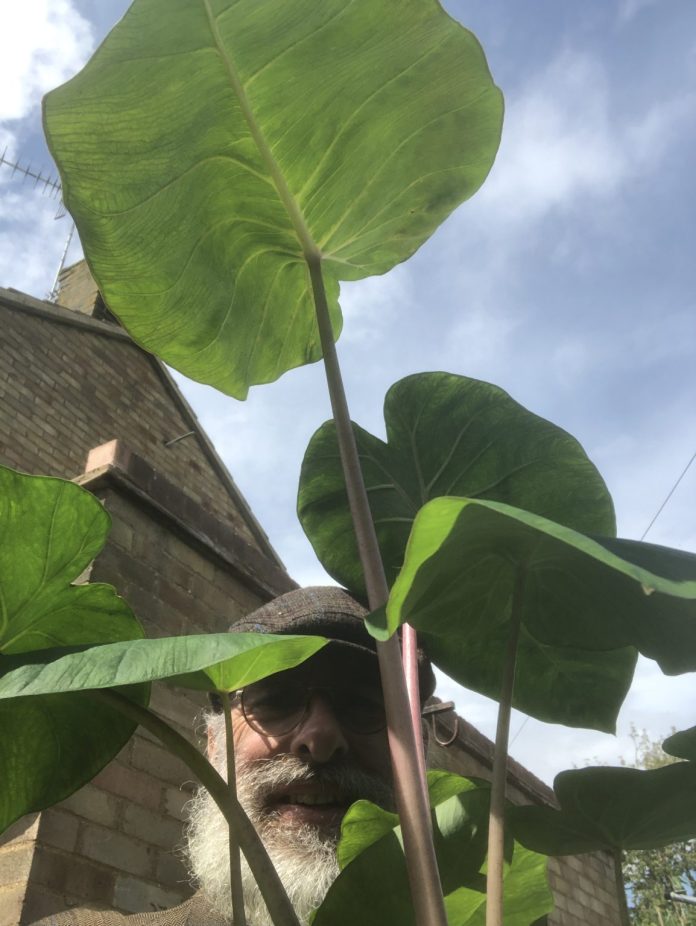
The chances of Pink China bulbs (Colocasia esculenta ‘Pink China’) surviving a UK winter are relatively good, provided some precautions are taken. Pink China is one of the hardier varieties of elephant ears, known for its cold tolerance compared to other Colocasia varieties. It can withstand temperatures down to around -10°C (14°F) when well-established. Wet and waterlogged conditions will cause the bulbs to rot. It is essential to have good drainage if you are going to leave them out
However, to maximize their chances of survival, gardeners in the UK should consider the following steps:
- Mulching: Apply a thick layer of mulch around the base of the plant to insulate the bulbs from freezing temperatures. This helps to maintain a more stable soil temperature.
- Well-drained soil: Ensure the bulbs are planted in well-draining soil to prevent waterlogging, which can lead to rot during wet winter conditions.
- Sheltered location: Planting in a sheltered spot, such as near a south-facing wall, can provide additional warmth and protection from cold winds.
- Lifting and storing: In particularly harsh winters or colder regions of the UK, it may be beneficial to lift the bulbs in autumn and store them in a cool, dry place over winter before replanting in spring.
If you decide to lift the bulbs
- Dig Up the Bulbs: As temperatures start to drop in the fall, carefully dig up the bulbs (rhizomes) of your Colocasia ‘Pink China.’ This is typically done after the first frost, as the foliage will have died back by then.
- Trim and Clean: Trim off any remaining foliage from the bulbs. Gently remove excess soil from the bulbs, but do not wash them, as the bulbs shouldn’t be exposed to excess moisture during storage.
- Cure Bulbs: Allow the bulbs to air dry for a few days in a cool, dry place. This helps prevent rot during storage.
- Store Bulbs: Place the cured bulbs in a container filled with dry peat moss, vermiculite, or dry wood shavings. Store the container in a cool, dark, and dry location with temperatures ideally between 45°F to 50°F (7°C to 10°C). Check the bulbs periodically to ensure they are not rotting or drying out too much.
- Monitor Moisture: While you want to keep the bulbs dry, you don’t want them to become completely desiccated. Check the storage medium occasionally to make sure it’s not overly dry or damp.
- Planting in Spring: In the spring, as temperatures start to warm up and the risk of frost has passed, you can replant the bulbs outdoors in well-draining soil. You can also start them indoors a few weeks earlier and transplant them once the weather is suitable.
Propagating Colocasia ‘Pink China’ can be accomplished through several methods, with the most common being division and planting of offsets. Here’s a step-by-step guide on how to propagate Colocasia ‘Pink China’:
1. Division
Division is the most straightforward method and usually yields the best results.
When to Divide
- The best time to divide Colocasia ‘Pink China’ is in spring, just as new growth begins. This ensures the plants have an entire growing season to establish themselves.
How to Divide
- Prepare the Plant: Water the plant thoroughly the day before you plan to divide it to ensure the roots are well-hydrated.
- Dig Up the Plant: Carefully dig around the base of the plant, lifting it from the ground with as much of the root system intact as possible.
- Separate the Clumps: Gently shake off excess soil and look for natural divisions in the clump. Use a clean, sharp knife or garden spade to cut the clump into sections, ensuring each section has at least one growing point or “eye” and a good portion of the root system.
- Replant the Divisions: Replant the divisions at the same depth they were growing originally. Space them out to allow room for growth. Water well after planting.
2. Planting Offsets
Offsets or “pups” are small shoots that grow from the base of the main plant.
When to Harvest Offsets
- Offsets can be harvested when they are a few inches tall and have developed their own root systems, typically in spring or early summer.
How to Plant Offsets
- Remove the Offset: Carefully dig around the base of the offset and gently separate it from the mother plant. Make sure the offset has some roots attached.
- Potting or Planting: Plant the offset in a pot filled with well-draining potting mix or directly in the garden in well-prepared soil. Ensure the offset is planted at the same depth as it was originally growing.
- Watering: Water the newly planted offset thoroughly. Keep the soil consistently moist but not waterlogged.
3. Growing from Bulbs or Corms
While not as common, Colocasia ‘Pink China’ can also be propagated from its bulbs or corms.
When to Plant Bulbs/Corms
- Plant the bulbs or corms in spring after the danger of frost has passed.
How to Plant Bulbs/Corms
- Prepare the Soil: Ensure the planting site has well-draining soil rich in organic matter.
- Planting Depth: Plant the bulbs or corms 4-6 inches deep with the pointed end facing up.
- Spacing: Space the bulbs/corms about 18-24 inches apart to allow room for growth.
- Watering: Water well after planting and keep the soil moist but not soggy.
By following these methods, you can successfully propagate Colocasia ‘Pink China’ and enjoy its lush, tropical foliage year after year.
Colocasia esculenta ‘Pink China’ – Grow Guide
Common name: Pink China Elephant Ear
Family: Araceae
Type: Tender perennial (tropical foliage plant)
Hardiness: RHS H3 – frost-tender; overwinter indoors or lift corms in the UK
Ultimate size: 90–150 cm tall × 60–90 cm wide
Overview
Colocasia esculenta ‘Pink China’ is grown for its dramatic tropical foliage, featuring dark green leaves with deep purple veins and stems and midribs that show striking pink tones. Its large, upright leaves create a tropical statement in borders, containers, or patio displays. Flowers are rare; the main ornamental feature is the foliage.
Position
- Light: Full sun to partial shade
- Partial shade preferred in very hot areas to prevent leaf scorching
- Sheltered from strong winds to avoid tearing large leaves
Soil
- Type: Moist, fertile, humus-rich soil
- Free-draining but moisture-retentive
- pH: Slightly acidic to neutral
- Enrich soil with compost or well-rotted organic matter for best growth
Planting
- When: Spring after all risk of frost
- Plant corms 5–10 cm deep
- Space 60–90 cm apart to allow full leaf development
- Mulch around base to retain moisture and protect corms during summer growth
Watering
- Keep soil consistently moist during active growth
- Water generously in hot, dry periods
- Reduce watering when foliage dies back in autumn
Feeding
- Apply liquid fertiliser every 2–3 weeks during the growing season
- Optional slow-release fertiliser at planting for continuous nutrients
Growth & Habit
- Upright, clump-forming perennial
- Stout stems support large, tropical-style leaves with pink highlights
- Dies back naturally in late autumn
- Can be grown in large containers for overwintering indoors
Flowering
- Flowers: Rare in UK gardens; small spathes typical of Colocasia
- Main ornamental value is foliage
Maintenance
- Remove damaged, yellowing, or dying leaves to maintain appearance
- Lift corms in late autumn if frost is expected
- Store corms in frost-free, dry, cool conditions (5–10 °C) over winter
- Divide corms every 2–3 years to maintain vigour
Propagation
- Corm division: Primary method; separate offsets in spring
- Seed: Rarely used; slow and unreliable
Pests & Problems
- Slugs and snails may attack young leaves
- Aphids or spider mites occasionally indoors
- Root rot if soil is poorly drained or waterlogged
Garden Use
- Tropical-style borders and containers
- Patio displays or terraces for bold foliage
- Borders or pond-side plantings
- Pairs well with Cannas, Colocasia ‘Black Magic’, Colocasia ‘Black Coral’, and lush ferns
Quick Reference Table
| Feature | Details |
|---|---|
| Hardiness | RHS H3 – frost-tender |
| Height | 90–150 cm |
| Spread | 60–90 cm |
| Flowering | Rare; foliage main feature |
| Position | Full sun to partial shade; sheltered |
| Soil | Moist, fertile, humus-rich; free-draining |
| Water | Keep consistently moist |
| Feeding | Liquid fertiliser every 2–3 weeks; slow-release optional |
| Propagation | Corm division (main), seed (rare) |
| Maintenance | Remove damaged leaves; lift corms in winter |
| Pests | Slugs, aphids, spider mites; root rot if overwatered |