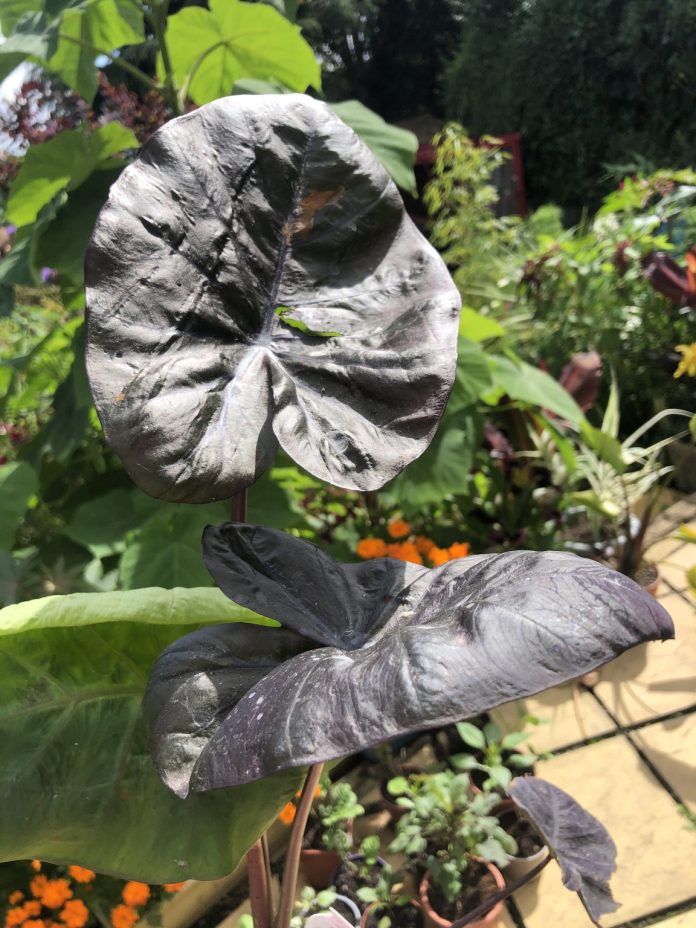
Colocasia ‘Black Coral’ and similar varieties, also known as elephant ears, can be a bit more challenging to grow in the UK due to its climate. These plants are native to tropical and subtropical regions and thrive in warm, humid conditions. The UK’s climate, which is more temperate and can be cooler, especially during the winter months, might require some extra care to successfully grow Colocasia ‘Black Coral’.
Here are a few considerations if you’re looking to grow Colocasia ‘Black Coral’ in the UK:
- Temperature: These plants are sensitive to cold temperatures and frost. They are typically grown as summer ornamentals and should be protected from frost during the colder months. If you’re in a colder region of the UK, you might need to dig up the bulbs and store them indoors during winter or provide them with winter protection.
- Sunlight: Colocasia plants prefer bright, filtered sunlight. In the UK, they might benefit from being placed in a location that receives ample sunlight during the summer months, but not direct midday sun which can be too intense.
- Soil and Water: Colocasia plants like consistently moist soil, but they don’t tolerate waterlogged conditions. Plant them in well-draining soil and ensure they receive regular watering, especially during the growing season.
- Humidity: Colocasia plants prefer high humidity. In the UK’s drier climate, you might need to mist the leaves regularly or place the plant in a location with higher humidity, like a bathroom or near a humidifier.
- Container Growing: If you’re concerned about the cold temperatures, you can consider growing Colocasia ‘Black Coral’ in containers. This allows you to move the plant indoors during colder periods and control its environment more effectively.
- Mulching: Applying a layer of organic mulch around the plant’s base can help retain moisture and provide some insulation during cooler periods.
- Feeding: Provide the plant with a balanced fertilizer during the growing season to support healthy growth and foliage development.


Colocasia ‘Black Coral’ – Grow Guide
Common name: Black Coral Elephant Ear
Family: Araceae
Type: Tender perennial (tropical-style foliage)
Hardiness: RHS H3 – frost-tender; overwinter indoors or lift corms in UK
Ultimate size: 90–120 cm tall × 60–90 cm wide
Overview
Colocasia ‘Black Coral’ is grown primarily for its dramatic, deep purple-black foliage, creating a striking tropical effect. Large, heart-shaped leaves emerge on stout stems, making it a standout in borders, containers, or tropical-style planting. Flowers are rare and insignificant; the foliage is the main ornamental feature.
Position
- Light: Full sun to partial shade
- Partial shade preferred in very hot areas to prevent leaf scorching
- Sheltered from strong winds to protect large leaves
Soil
- Type: Moist, fertile, humus-rich soil
- Free-draining but moisture-retentive
- pH: Slightly acidic to neutral
Planting
- When: Spring after all frost risk has passed
- Plant corms 5–10 cm deep
- Space plants 60–90 cm apart to allow foliage to develop fully
- Mulch to retain moisture and protect corms in summer
Watering
- Keep soil consistently moist, especially in dry weather
- Water generously during active growth
- Reduce watering when foliage dies back in autumn
Feeding
- Feed every 2–3 weeks with liquid fertiliser during the growing season
- Apply slow-release fertiliser at planting for sustained growth
Growth & Habit
- Upright, clump-forming habit
- Stout stems support large, dramatic leaves
- Dies back naturally in late autumn
- Can be grown in large containers for easier overwintering
Flowering
- Flowers: Rare in the UK; small spathes typical of Colocasia
- Mainly grown for ornamental foliage
Maintenance
- Remove damaged or yellowing leaves to maintain appearance
- Lift corms in late autumn in frost-prone areas
- Store corms in a frost-free, dry, cool place for winter (5–10 °C)
- Divide corms every 2–3 years to maintain vigour
Propagation
- Corm division: Main method; separate offsets in spring before planting
- Seed: Rarely used; slow germination
Pests & Problems
- Slugs and snails may damage young leaves
- Aphids or spider mites occasionally indoors
- Root rot if soil is waterlogged
Garden Use
- Tropical-style borders, patio containers, pond margins
- Striking contrast plant with light-leaved or green-foliage perennials
- Combines well with Cannas, Ricinus, Colocasia esculenta, and lush ferns
Quick Reference Table
| Feature | Details |
|---|---|
| Hardiness | RHS H3 – frost-tender |
| Height | 90–120 cm |
| Spread | 60–90 cm |
| Flowering | Rare; foliage main feature |
| Position | Full sun to partial shade; sheltered |
| Soil | Moist, fertile, humus-rich; free-draining |
| Water | Keep consistently moist |
| Feeding | Liquid fertiliser every 2–3 weeks; slow-release at planting |
| Propagation | Corm division (main), seed (rare) |
| Maintenance | Remove damaged leaves; lift corms in winter |
| Pests | Slugs, aphids, spider mites; root rot if overwatered |