
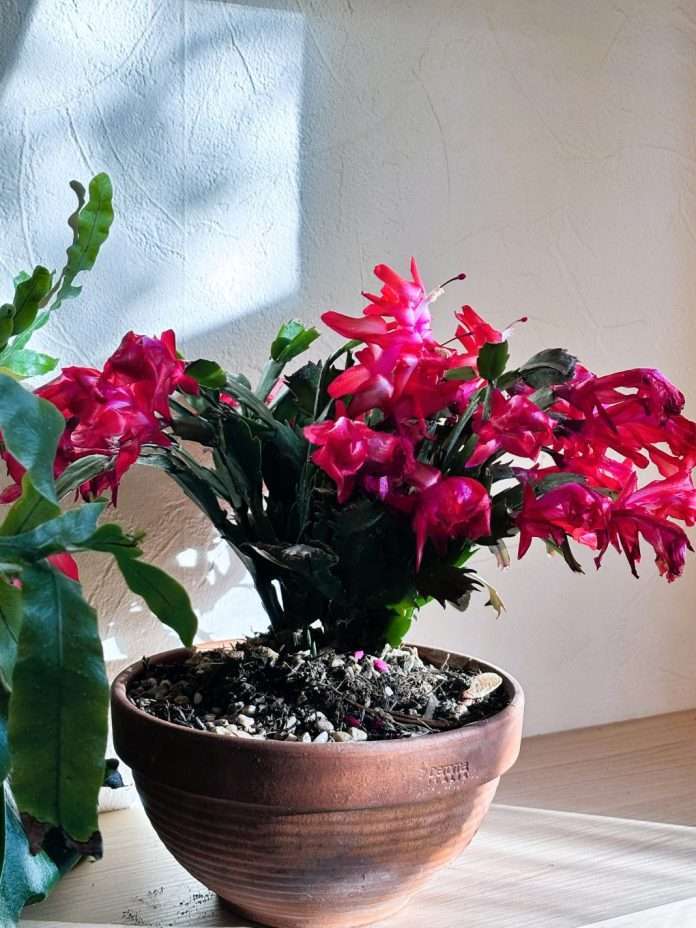
The Christmas cactus is a popular indoor plant valued for its bright, long-lasting flowers in winter. With the right care, it can bloom year after year and live for decades.
1. Plant Overview
- Botanical name: Schlumbergera spp.
- Common names: Christmas cactus, Holiday cactus, Thanksgiving cactus (closely related)
- Origin: Brazilian coastal forests
- Plant type: Tropical epiphytic succulent
- Growth habit: Flattened, segmented stems; trailing or arching branches
- Flowering: Winter (November–January in the UK)
2. Light Requirements
- Ideal: Bright, indirect light
- Avoid: Direct sun, especially through windows, which can scorch stems
- Tip: East- or north-facing windows work well; in bright south-facing rooms, filter sunlight with a sheer curtain
3. Temperature & Humidity
- Day temperature: 18–24 °C
- Night temperature: 12–15 °C (cooler nights help flower buds set)
- Humidity: Prefers moderate to high humidity; mist occasionally or place near a humidifier
4. Watering
- Growing season (spring–summer): Keep the soil lightly moist; water when the top 2 cm of soil feels dry
- Autumn–flowering period: Reduce watering slightly to encourage bud formation
- Winter (post-flowering): Water sparingly, allowing soil to dry slightly between waterings
Tip: Avoid waterlogging—Christmas cactus roots are prone to rot. Use a pot with drainage holes.
5. Soil & Potting
- Soil: Well-draining, slightly acidic mix
- Use cactus/succulent compost or mix: 2 parts potting soil, 1 part perlite, 1 part orchid bark
- Potting: Repot every 2–3 years in spring after flowering; choose a pot slightly larger than the root system
6. Feeding
- Growing season (spring–summer): Feed every 2–4 weeks with a balanced liquid fertiliser (e.g., 10:10:10 NPK)
- Autumn (bud formation): Switch to a high-phosphorus fertiliser to encourage flowers
- Winter: Fertiliser is usually not needed
7. Flowering & Bud Formation
- Trigger: Flowering is triggered by shorter daylight hours and cooler nights
- Care tips for bloom:
- Keep in a cool (12–15 °C) room for 6–8 weeks before flowering
- Avoid moving the plant or changing light conditions once buds appear, or buds may drop
- Maintain moderate watering; do not let the soil dry out completely
8. Pruning & Maintenance
- After flowering: Lightly prune segments to encourage bushier growth
- Pinching tips: Pinch off 1–2 stem segments at branch tips in spring to encourage branching
- Cleaning: Remove dead or shriveled segments
9. Pests & Problems
- Common pests: Mealybugs, spider mites, aphids
- Signs of overwatering: Yellowing segments, mushy stems, root rot
- Solution: Remove affected parts, improve drainage, reduce watering
10. Propagation
- Method: Stem cuttings
- Steps:
- Cut 2–3 segments
- Let the cut end dry for 24 hours
- Plant in moist, well-draining soil
- Keep in bright, indirect light until roots form (2–3 weeks)
Quick Tips
- Keep cool nights in autumn to set buds
- Avoid moving the plant when buds appear
- Provide bright, indirect light year-round
- Repot every 2–3 years in spring
- Water moderately, never waterlogged
The Christmas cactus is a popular indoor plant valued for its bright, long-lasting flowers in winter. With the right care, it can bloom year after year and live for decades.
1. Plant Overview
- Botanical name: Schlumbergera spp.
- Common names: Christmas cactus, Holiday cactus, Thanksgiving cactus (closely related)
- Origin: Brazilian coastal forests
- Plant type: Tropical epiphytic succulent
- Growth habit: Flattened, segmented stems; trailing or arching branches
- Flowering: Winter (November–January in the UK)
2. Light Requirements
- Ideal: Bright, indirect light
- Avoid: Direct sun, especially through windows, which can scorch stems
- Tip: East- or north-facing windows work well; in bright south-facing rooms, filter sunlight with a sheer curtain
3. Temperature & Humidity
- Day temperature: 18–24 °C
- Night temperature: 12–15 °C (cooler nights help flower buds set)
- Humidity: Prefers moderate to high humidity; mist occasionally or place near a humidifier
4. Watering
- Growing season (spring–summer): Keep the soil lightly moist; water when the top 2 cm of soil feels dry
- Autumn–flowering period: Reduce watering slightly to encourage bud formation
- Winter (post-flowering): Water sparingly, allowing soil to dry slightly between waterings
Tip: Avoid waterlogging—Christmas cactus roots are prone to rot. Use a pot with drainage holes.
5. Soil & Potting
- Soil: Well-draining, slightly acidic mix
- Use cactus/succulent compost or mix: 2 parts potting soil, 1 part perlite, 1 part orchid bark
- Potting: Repot every 2–3 years in spring after flowering; choose a pot slightly larger than the root system
6. Feeding
- Growing season (spring–summer): Feed every 2–4 weeks with a balanced liquid fertiliser (e.g., 10:10:10 NPK)
- Autumn (bud formation): Switch to a high-phosphorus fertiliser to encourage flowers
- Winter: Fertiliser is usually not needed
7. Flowering & Bud Formation
- Trigger: Flowering is triggered by shorter daylight hours and cooler nights
- Care tips for bloom:
- Keep in a cool (12–15 °C) room for 6–8 weeks before flowering
- Avoid moving the plant or changing light conditions once buds appear, or buds may drop
- Maintain moderate watering; do not let the soil dry out completely
8. Pruning & Maintenance
- After flowering: Lightly prune segments to encourage bushier growth
- Pinching tips: Pinch off 1–2 stem segments at branch tips in spring to encourage branching
- Cleaning: Remove dead or shriveled segments
9. Pests & Problems
- Common pests: Mealybugs, spider mites, aphids
- Signs of overwatering: Yellowing segments, mushy stems, root rot
- Solution: Remove affected parts, improve drainage, reduce watering
10. Propagation
- Method: Stem cuttings
- Steps:
- Cut 2–3 segments
- Let the cut end dry for 24 hours
- Plant in moist, well-draining soil
- Keep in bright, indirect light until roots form (2–3 weeks)
Quick Tips
- Keep cool nights in autumn to set buds
- Avoid moving the plant when buds appear
- Provide bright, indirect light year-round
- Repot every 2–3 years in spring
- Water moderately, never waterlogged
Christmas Cactus – Schlumbergera Grow Guide
Common name: Christmas Cactus, Holiday Cactus
Family: Cactaceae
Type: Tender perennial / houseplant
Hardiness: RHS H1 – indoor only in the UK; frost-tender
Ultimate size: 30–40 cm tall × 40–50 cm wide (in pot)
Overview
The Christmas Cactus is a popular indoor succulent known for its bright, tubular flowers in winter. Native to Brazilian rainforests, it prefers bright, indirect light and humid conditions, making it ideal for indoor tropical-style displays. Flowers appear around November–December, adding festive colour during the darker months.
Position
- Light: Bright, indirect sunlight
- Avoid direct sun, which can scorch leaves
- Thrives in north or east-facing windows, or filtered light indoors
Soil
- Type: Well-draining potting mix, ideally for cacti or succulents
- Add perlite or grit to improve drainage
- Avoid heavy, water-retentive soils
Planting & Potting
- When: Spring is best for repotting
- Use a slightly larger pot with drainage holes
- Repot every 2–3 years to refresh soil and encourage growth
Watering
- Water moderately during growth (spring–summer)
- Keep soil slightly moist in autumn to encourage flower buds
- Reduce watering in winter when dormant
- Avoid waterlogging, which causes root rot
Feeding
- Use a balanced liquid fertiliser every 2–4 weeks during active growth
- Switch to a phosphorus-rich fertiliser in autumn to encourage flowering
Growth & Habit
- Evergreen, segmented succulent stems
- Cascading habit makes it ideal for hanging baskets or elevated pots
- Flowers appear along stem edges in winter
- Can live for decades with proper care
Flowering
- Months: November–December (UK indoors)
- Flowers: Tubular, shades of red, pink, white, or purple
- Flowers last 2–3 weeks, bringing bright winter colour indoors
Maintenance
- Remove dead or shrivelled stems
- Pinch or lightly prune after flowering to encourage branching
- Maintain humidity around 50–70%; mist leaves occasionally
- Avoid sudden temperature changes, which can cause flower bud drop
Propagation
- Stem cuttings: Most common; root in moist, well-draining compost
- Take 2–3 segment cuttings in spring, allow to callus before potting
Pests & Problems
- Susceptible to mealybugs, spider mites, and scale insects
- Root rot from overwatering
- Leaf drop if exposed to cold drafts or sudden temperature changes
Garden & Indoor Use
- Indoor hanging baskets or tabletop display
- Excellent in tropical-themed indoor displays
- Companion plants: other succulents or shade-loving tropical houseplants
Quick Reference Table
| Feature | Details |
|---|---|
| Hardiness | RHS H1 – indoor only; frost-tender |
| Height | 30–40 cm (in pot) |
| Spread | 40–50 cm (cascading habit) |
| Flowering | November–December; tubular flowers in red, pink, white, or purple |
| Position | Bright, indirect sunlight; avoid direct sun |
| Soil | Well-draining cactus or succulent compost; add perlite |
| Water | Moderate in growth; keep slightly moist for buds; reduce in winter |
| Feeding | Balanced liquid fertiliser spring–summer; phosphorus-rich in autumn |
| Propagation | Stem cuttings; callus before potting |
| Maintenance | Remove dead stems; maintain humidity; avoid drafts |
| Best feature | Winter flowering with vibrant tubular blooms |