Bleeding (Botanical Term)
Definition:
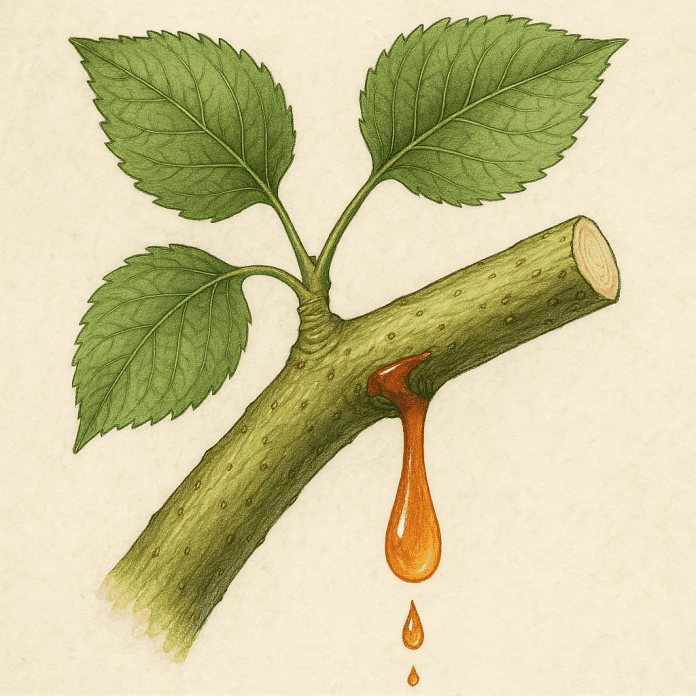
In botany, bleeding refers to the exudation of sap or other plant fluids from a wound or incision in a plant’s vascular system, particularly from the xylem or phloem tissues. This phenomenon often occurs when a branch or stem is cut during periods of high sap pressure, such as early spring, especially in deciduous trees.
Mechanism:
Bleeding is typically caused by positive root pressure, where water and dissolved minerals are actively pushed up through the xylem by osmotic forces in the roots. When a stem or branch is severed during this time, sap may flow freely from the cut surface. In some species, phloem sap may also be released, which is usually rich in sugars and can attract insects or pathogens.
Occurrence:
Notable in species such as:
- Acer spp. (Maples) – especially Acer saccharum (sugar maple)
- Betula spp. (Birches)
- Vitis vinifera (Grapevine)
- Juglans spp. (Walnuts)
These plants may “bleed” heavily if pruned at the wrong time of year. In some species, like sugar maples, bleeding sap is intentionally harvested for syrup production.
Ecological and Practical Relevance:
- Sap Harvesting: Bleeding is exploited in agricultural and cultural practices, such as tapping trees for syrup or latex.
- Wound Response: While bleeding is a natural response, excessive sap loss can stress the plant and expose it to infection. However, in many cases, the sap contains compounds that help seal the wound or deter herbivores.
- Timing of Pruning: Knowledge of bleeding is crucial for proper horticultural practices. Pruning should be done during dormancy or after leaf-out to minimize sap loss in susceptible species.
Related Terms:
- Exudation – general term for fluid discharge from plant tissues.
- Guttation – loss of water droplets from leaf margins, also due to root pressure but not from wounds.
- Latex – a type of sap that may also “bleed” when tissues are damaged.
- Phloem sap / Xylem sap – the fluids involved in transport and bleeding.
See Also:
- Sap Flow
- Pruning Wounds
- Plant Vascular System
- Wound Healing in Plants