
The Newspaper For Gardeners

Looking Out for Hedgehogs...

Hedgehogs are some of the most endearing creatures in our gardens, but winter...

Prune Apple Trees

Pruning is an essential task for maintaining healthy, productive apple trees. Proper pruning...

Dividing Snowdrops: A Step-by-Step...

Snowdrops (Galanthus spp.) are a cherished sight in late winter, heralding the arrival...

Force Rhubarb: A Gardener’s...

Forcing rhubarb is a traditional gardening technique that produces tender, sweet stalks, perfect...
Monday, January 12, 2026
A-ZABlack Spot

Black Spot

Black Spot (Plant Disease: Caused by Diplocarpon rosae)

Classification:

  • Kingdom: Fungi
  • Phylum: Ascomycota
  • Class: Leotiomycetes
  • Order: Helotiales
  • Family: Dermateaceae
  • Genus: Diplocarpon
  • Species: Diplocarpon rosae

Description:

Black spot is a fungal disease that primarily affects roses (Rosa spp.), though it can also impact other ornamental plants. It is one of the most common and destructive foliar diseases of roses, leading to defoliation, weakened plants, and reduced flowering. The disease thrives in warm, humid conditions, spreading rapidly in wet weather.

Symptoms:

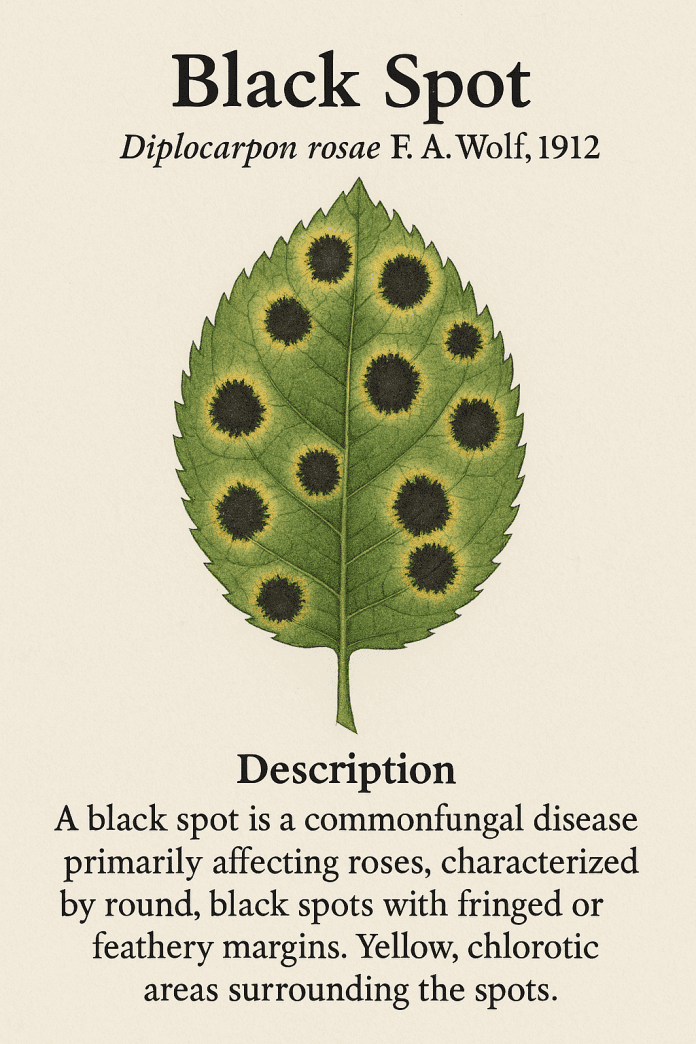
  • Circular black spots with fringed or irregular edges on leaves.
  • Yellowing of leaves surrounding the spots.
  • Premature leaf drop, leading to defoliation.
  • In severe cases, weakening of the plant, reducing flowering and overall vigour.
  • Dark purple or black streaks may appear on young stems.

Life Cycle and Transmission:

Diplocarpon rosae overwinters in fallen leaves and infected stems. The fungus produces spores that spread via water splash from rain or irrigation. Infection occurs when spores land on wet leaf surfaces, with symptoms appearing within 5 to 14 days. Continuous wet conditions promote repeated cycles of infection throughout the growing season.

Control and Management:

  • Sanitation: Regularly remove and dispose of fallen leaves and pruned infected stems.
  • Resistant Varieties: Plant disease-resistant rose cultivars.
  • Air Circulation: Space plants properly and prune for good airflow to reduce humidity.
  • Watering Practices: Water at the base of plants to keep foliage dry.
  • Fungicides: Apply fungicidal sprays as a preventive measure or at the first sign of infection.
  • Mulching: Use mulch around the base of plants to prevent spores from splashing onto leaves.

Conclusion:

Black spot is a persistent and damaging disease for roses, but with proper cultural practices and preventive treatments, it can be managed effectively. Integrated disease management, including sanitation, resistant varieties, and environmental control, is key to maintaining healthy plants.


spot_img

lOOKING FOR MORE WORK?

The free and easy way to get more customers. Just join Find Local Gardeners.

Canna viruses are a group of plant viruses that can infect and cause diseases in cannas, which are popular ornamental plants known for their...
If your Washingtonia robusta leaves are turning yellow, there could be several reasons behind this issue. Here are some common factors that can contribute...
Does Hollyhock Rust Spread to Other Plants? Hollyhock rust is one of the most common and frustrating diseases gardeners encounter when growing hollyhocks. The appearance...
How to diagnose, prevent and treat Box Blight and Box Tree Caterpillar in accordance with UK law Box hedges (Buxus sempervirens and related species) have...
BoltingCategory: Plant Physiology / Growth Disorders Definition:Bolting is the premature production of a flowering stem in plants before the crop has been harvested, typically triggered...

Continue reading

Is there a cure for Canna virus?

Canna viruses are a group of plant viruses that can infect and cause diseases in cannas, which are popular ornamental plants known for their colorful flowers and striking foliage. Unfortunately, there is no specific cure for viral infections in...

Why are my washingtonia robusta leaves going yellow?

If your Washingtonia robusta leaves are turning yellow, there could be several reasons behind this issue. Here are some common factors that can contribute to yellowing leaves on Washingtonia robusta: Natural Aging: It is normal for older leaves to turn...

Does hollyhock rust spread to other plants

Does Hollyhock Rust Spread to Other Plants? Hollyhock rust is one of the most common and frustrating diseases gardeners encounter when growing hollyhocks. The appearance of orange-brown pustules on the leaves often raises an immediate concern: will it spread to...

SUBSCRIBE TO OUR YOUTUBE CHANNEL

Plant advice for unusual species plus updates from our tropical garden

SUBSCRIBE