Benzene Hexachloride (BHC)
Overview:
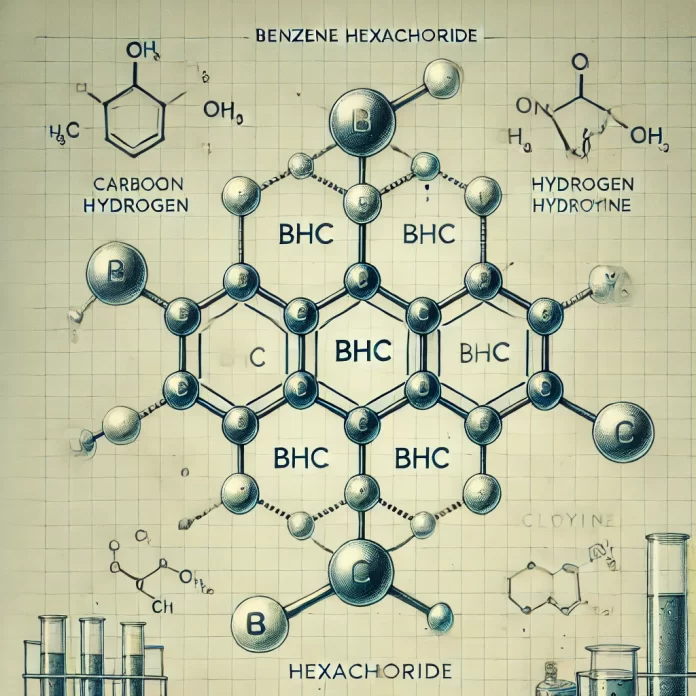
Benzene hexachloride (BHC) is an organochlorine compound with the molecular formula C₆H₆Cl₆. It exists in several isomeric forms, with the gamma-isomer (γ-BHC) being the most biologically active and widely known as lindane. Historically used as an insecticide and pesticide, BHC has been largely phased out in many countries due to its environmental persistence and toxicity.
Chemical Properties:
- Molecular Formula: C₆H₆Cl₆
- Molar Mass: 290.83 g/mol
- Appearance: White crystalline solid with a musty odor
- Solubility: Insoluble in water, soluble in organic solvents (e.g., acetone, benzene)
- Stability: Stable under normal conditions but decomposes under strong heat
Isomerism and Forms:
Benzene hexachloride consists of six stereoisomers, produced by the chlorination of benzene in the presence of UV light:
- Alpha (α-BHC)
- Beta (β-BHC)
- Gamma (γ-BHC) – Lindane
- Delta (δ-BHC)
- Epsilon (ε-BHC)
- Other minor isomers
Of these, γ-BHC (lindane) is the most biologically active and was widely used as an insecticide and pharmaceutical treatment for lice and scabies.
Uses and Applications:
- Agriculture: Previously used as an insecticide for crops such as cotton, wheat, and vegetables.
- Public Health: Lindane was used to control lice and scabies in humans.
- Veterinary Medicine: Applied in formulations to treat ticks and mites in livestock.
- Wood and Seed Treatment: Used as a preservative to protect wood and seeds from pests.
Toxicity and Environmental Concerns:
- Bioaccumulation: BHC is persistent in the environment, accumulating in soil, water, and living organisms.
- Health Effects: Prolonged exposure can lead to neurotoxicity, liver damage, and endocrine disruption. It is classified as a possible carcinogen by the International Agency for Research on Cancer (IARC).
- Bans and Restrictions:
- Many countries, including those in the European Union and the United States, have banned or severely restricted BHC use.
- The Stockholm Convention on Persistent Organic Pollutants (POPs) lists lindane as a restricted substance.
Degradation and Disposal:
- BHC degrades slowly in the environment, primarily breaking down through microbial action in the soil.
- Disposal methods include incineration at high temperatures or specialized chemical treatment.
Modern Alternatives:
Due to its toxicity and persistence, safer alternatives such as pyrethroids, neonicotinoids, and integrated pest management (IPM) strategies have replaced BHC in many applications.
Benzene hexachloride played a significant role in 20th-century pest control, but its long-term environmental and health impacts have led to global restrictions and the search for safer, biodegradable pesticides.