Bark Ringing (Girdling in Trees and Shrubs)
Definition
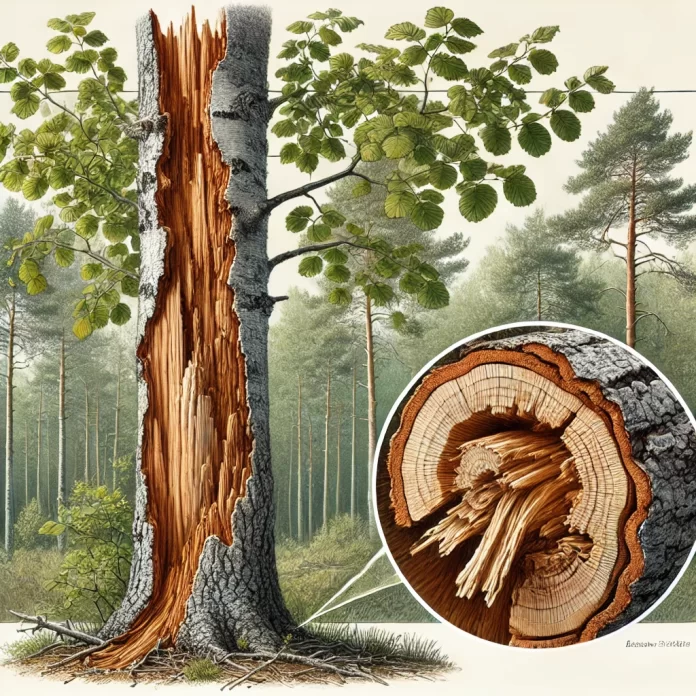
Bark ringing, also known as girdling, is the removal or damage of a complete ring of bark around the trunk or branch of a tree or shrub. This disrupts the vascular system, preventing the flow of water and nutrients between the roots and foliage. If left untreated, girdling can lead to decline or even death of the affected plant.
Causes
- Animal Damage: Rabbits, deer, rodents, and livestock may chew or strip bark, especially in winter when food is scarce.
- Mechanical Injury: Strimmers, mowers, and improper staking or tying can create girdling wounds.
- Insects and Pests: Some boring insects or larvae feed on the cambium layer, leading to partial or complete girdling.
- Human Practices: Deliberate ringing techniques (such as for fruit tree management) can restrict growth and alter plant physiology.
- Natural Growth Issues: Some trees develop girdling roots that constrict the trunk over time.
Symptoms
- Wilting, yellowing, or premature leaf drop above the girdled area.
- Reduced or stunted growth.
- Bark cracking, peeling, or complete detachment.
- Dieback of branches and, in severe cases, total tree death.
Prevention & Management
- Protecting Trees: Use tree guards or mesh to prevent animal damage.
- Careful Maintenance: Avoid strimmer and mower damage near trunks.
- Proper Tying & Staking: Use loose, flexible materials and remove them once the tree is established.
- Bridge Grafting: In cases of severe damage, grafting healthy bark strips across the ringed area may restore some function.
- Mulching & Watering: Keeping trees well-hydrated and reducing stress can aid recovery from minor girdling.
Affected Species
- Young trees, especially fruit trees like Malus (apple) and Prunus (cherry, plum).
- Thin-barked species such as Acer (maple) and Betula (birch).
- Trees growing in areas with high rodent or deer populations.
Related Conditions
- Bark-Bound Syndrome: A separate issue where the bark becomes excessively tight, restricting growth.
- Girdling Root Syndrome: Roots encircle the trunk and constrict vascular flow.
- Sunscald & Frost Cracking: Sudden temperature changes cause bark splitting, sometimes leading to ringed damage.
Bark ringing is a serious issue that requires early intervention, but with proper care, many trees can recover and continue to thrive.