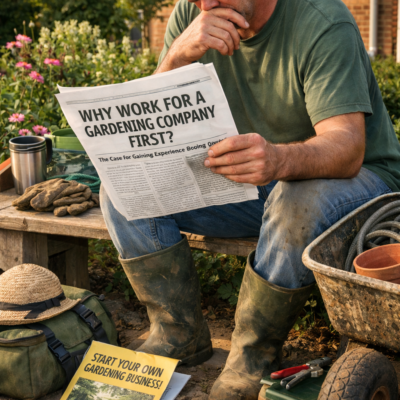

There’s a big difference between loving your own garden and earning your living from other people’s. One is a hobby and the other is being a professional gardener
Professional gardening isn’t a hobby with invoices attached. It’s physical, commercial, weather-exposed work that demands discipline, plant knowledge, and people skills in equal measure.
If you’re considering going pro — or wondering whether you’ve truly got what it takes — here’s an honest assessment.
1. A Professional Gardener Has To Handle Physical Work — Day After Day?
This is not weekend pruning.
Professional gardening means:
- Lifting and moving heavy materials
- Operating machinery
- Working in rain, heat, and freezing mornings
- Repeating physical tasks consistently
It’s not just strength — it’s endurance.
If you already work long days outdoors and recover well, that’s a strong indicator. If you struggle with sustained physical effort, the reality of commercial work may come as a shock.
2. Do You Have Real Plant Knowledge?
Clients are paying for:
- Correct pruning
- Seasonal timing
- Soil preparation
- Pest and disease identification
- Plant selection
You don’t need to be a botanist — but you do need competence.
A professional gardener should understand:
- Latin plant names
- Growth habits
- Long-term plant performance
- Structural pruning principles
Guesswork quickly becomes expensive.
3. Can You Work to Someone Else’s Standards?
Your own garden reflects your taste.
Professional gardening reflects the client’s taste.
You may prefer naturalistic planting — but the client wants sharp edges and formal lines. You may love tropical drama — but the client wants clipped box and lawns.
Can you deliver excellence even when it’s not your personal style?
That’s professionalism.
4. Are You Commercially Minded?
Being skilled with plants is only half the job.
You must also:
- Price correctly
- Quote confidently
- Manage cash flow
- Handle late payments
- Schedule efficiently
- Track profit
Whether you operate as a sole trader or through a limited company registered at Companies House, you are running a business — not just cutting hedges.
And tax obligations to HM Revenue & Customs don’t disappear because you had a wet week.
5. Can You Deal With People?
Professional gardening is as much about relationships as plants.
You’ll encounter:
- Perfectionist estate owners
- Budget-conscious homeowners
- Last-minute changes
- Unrealistic expectations
Clear communication, boundaries, and calm professionalism are essential.
If confrontation makes you avoidant, this job will test you.
6. Are You Prepared for the Quiet Months?
Gardening income can fluctuate:
- Winter slowdowns
- Weather disruption
- Client cancellations
Can you budget?
Can you save during busy months?
Can you manage irregular income?
Financial discipline separates professionals from hobbyists with invoices.
7. Do You Take Pride in Standards?
Professional gardening means:
- Straight edges
- Clean cuts
- Proper waste removal
- Well-maintained tools
- Reliable arrival times
Reputation is everything.
One careless job spreads faster than ten excellent ones.
8. Can You Keep Learning?
Plants evolve.
Pests evolve.
Design trends evolve.
A professional gardener keeps improving — through experience, observation, and continued study.
If you think you already know everything, you probably don’t.
Signs You Are Cut Out for being a professional gardener
- You enjoy working outdoors in all conditions
- You notice detail others miss
- You take pride in craftsmanship
- You’re comfortable charging properly for your work
- You can combine physical work with business thinking
Signs You May Not Be Ready (Yet)
- You dislike early starts
- You struggle with physical stamina
- You avoid difficult conversations
- You undercharge because you feel awkward
- You treat it like a hobby, not a profession
None of these are permanent — but they must be addressed.
The Hard Truth
Professional gardening can be deeply rewarding:
- Independence
- Outdoor work
- Tangible results
- Loyal clients
- Long-term relationships with landscapes
But it is earned through:
- Discipline
- Consistency
- Commercial awareness
- Physical resilience
It’s not romantic. It’s professional.
Final Question
Do you want to “work in gardens”?
Or do you want to run a professional gardening business?
They are not the same thing.