
The Newspaper For Gardeners

Looking Out for Hedgehogs...

Hedgehogs are some of the most endearing creatures in our gardens, but winter...

Prune Apple Trees

Pruning is an essential task for maintaining healthy, productive apple trees. Proper pruning...

Dividing Snowdrops: A Step-by-Step...

Snowdrops (Galanthus spp.) are a cherished sight in late winter, heralding the arrival...

Force Rhubarb: A Gardener’s...

Forcing rhubarb is a traditional gardening technique that produces tender, sweet stalks, perfect...
Sunday, January 11, 2026
QuestionsAre Butia capitata and Butia odorata different plants?

Are Butia capitata and Butia odorata different plants?

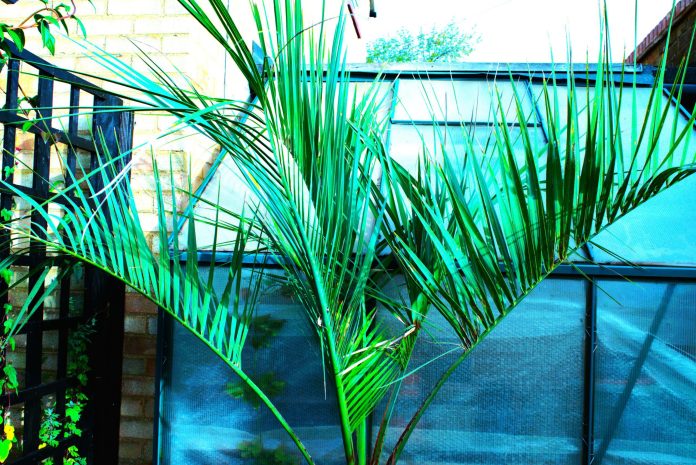
The distinction between Butia capitata and Butia odorata is a result of taxonomic revision and improved botanical understanding over time. Both are members of the Arecaceae family and commonly referred to as jelly palms due to their edible fruit.

Historical Background & Taxonomic Changes

Originally, Butia capitata was the widely accepted name for a group of feather-leaved palms native to South America. However, this name was based on a description of a palm from Bahia, Brazil, which turned out to be quite different from the plants commonly cultivated under that name in horticulture.

In more recent taxonomic studies, botanists determined that the species widely grown in gardens—particularly in the UK, Europe, and the United States—is actually a different species, now recognized as Butia odorata. The true Butia capitata is a rarer palm restricted to Brazil, while Butia odorata is native to Uruguay and southern Brazil.

Differences Between Butia capitata and Butia odorata

  1. Geographical Distribution
    • Butia capitata: Found mainly in Bahia, Brazil, in warmer, drier climates.
    • Butia odorata: More widespread in southern Brazil, Uruguay, Paraguay, and northeastern Argentina, in cooler and more humid regions.
  2. Size and Growth Habit
    • Butia capitata: Typically a smaller palm with a more compact trunk.
    • Butia odorata: Tends to be larger and more robust, often with a thicker trunk.
  3. Leaf and Crown Appearance
    • Butia capitata: Has stiffer, more upright leaves with a bluish-green tint.
    • Butia odorata: More graceful, arching fronds that appear greener.
  4. Hardiness and Cultivation
    • Butia odorata is better adapted to temperate climates and is much more commonly grown in gardens, particularly in the UK.
    • Butia capitata is less commonly cultivated outside its native range.

Why the Name Change?

For many years, horticulturalists used Butia capitata to refer to what is now Butia odorata, which led to widespread confusion. Botanists later reviewed the original specimens and found that the plant grown in gardens was actually a separate species, necessitating the recognition of Butia odorata as its own distinct entity.

In practical terms, if you’re growing a “jelly palm” in the UK or elsewhere in Europe, it’s almost certainly Butia odorata, not Butia capitata. However, older plant labels and references may still use Butia capitata, even though it’s incorrect for most cultivated specimens.

Details on growing Butia odorata in the UK

spot_img

lOOKING FOR MORE WORK?

The free and easy way to get more customers. Just join Find Local Gardeners.

Tigridias, also known as tiger flowers or Mexican shellflowers, are eye-catching bulbs that add exotic flair to a garden with their brightly colored, intricate...
Tree ferns, such as the popular Dicksonia antarctica, are prized for their exotic beauty and structural presence, making them a focal point in many...
While all cannas benefit from winter protection in the UK, some varieties are notably hardier than others. These differences in hardiness depend on their...
Ensete ventricosum ‘Maurelii’, commonly known as the red Abyssinian banana, is a stunning focal point in tropical-style gardens, thanks to its bold, red-tinged leaves and...
To wake up Colocasias from dormancy in the UK, you need to provide warmth, moisture, and light at the right time. Best Time to Start in...

Growing Butia odorata in the UK

Butia odorata (formerly misidentified as Butia capitata) is one of the hardiest feather palms suitable for UK gardens, particularly in milder regions. Its graceful, arching fronds and edible fruit make it a striking feature in exotic and tropical-style plantings. Climate & Hardiness Hardy...

Continue reading

How hardy are tigridias in a uk garden?

Tigridias, also known as tiger flowers or Mexican shellflowers, are eye-catching bulbs that add exotic flair to a garden with their brightly colored, intricate blooms. However, they aren’t fully hardy in the UK, as they’re native to warm, frost-free...

What’s the best way to protect tree ferns over winter?

Tree ferns, such as the popular Dicksonia antarctica, are prized for their exotic beauty and structural presence, making them a focal point in many UK gardens. However, as native plants of the cool, moist forests of Australia and New...

What are the hardiest Cannas?

While all cannas benefit from winter protection in the UK, some varieties are notably hardier than others. These differences in hardiness depend on their parent species, with some cannas tolerating light frost and damp soils better than others. Here’s...

SUBSCRIBE TO OUR YOUTUBE CHANNEL

Plant advice for unusual species plus updates from our tropical garden

SUBSCRIBE