
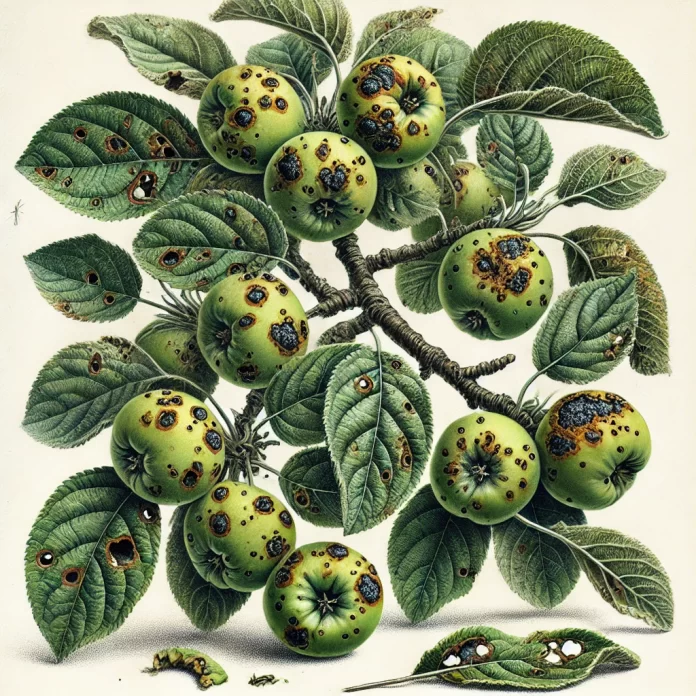
Apple Scab (Venturia inaequalis)
Overview
Apple scab is a fungal disease caused by Venturia inaequalis, affecting apple (Malus domestica) and crabapple (Malus spp.) trees. It is one of the most common and economically significant diseases in apple production worldwide. The fungus primarily attacks leaves and fruit, leading to reduced fruit quality and defoliation in severe cases.
Symptoms
- Leaves: Dark, olive-green to black spots develop on young leaves, often with a velvety texture. As the infection progresses, affected leaves may become distorted and yellow before falling prematurely.
- Fruit: Scabby, rough lesions appear on developing fruit, often leading to cracking and secondary infections by other pathogens. Severely affected fruit may become misshapen.
- Twigs: In some cases, the fungus may also cause lesions on young twigs, although this is less common.
Disease Cycle
Apple scab overwinters in fallen infected leaves, where the fungus produces ascospores in the spring. These spores are released during wet conditions and are spread by wind and rain to infect new leaves and fruit. Secondary infections occur throughout the growing season via conidia, leading to further spread of the disease, especially in humid environments.
Conditions Favoring Infection
- Cool, wet weather in spring and early summer (optimal temperatures: 16–24°C).
- Extended periods of leaf wetness (at least 9 hours).
- Dense, unpruned canopies that reduce air circulation.
Management and Control
- Cultural Practices:
- Raking and removing fallen leaves in autumn to reduce overwintering spores.
- Pruning to improve air circulation and reduce humidity within the canopy.
- Using resistant apple varieties such as ‘Enterprise,’ ‘Liberty,’ and ‘Freedom.’
- Chemical Control:
- Preventative fungicides, such as those containing captan, mancozeb, or myclobutanil, can be applied in early spring and throughout the growing season as needed.
- Organic options include sulfur or Bordeaux mixture, though these require frequent application.
- Biological Control:
- Some biocontrol agents, such as Trichoderma spp., have shown potential in suppressing V. inaequalis.
Economic and Agricultural Impact
Apple scab is a major concern for commercial apple growers, as severe infections can significantly reduce marketable yield. The disease necessitates frequent fungicide applications, increasing production costs. In regions where organic apple production is emphasized, scab-resistant cultivars are essential to maintaining profitability.